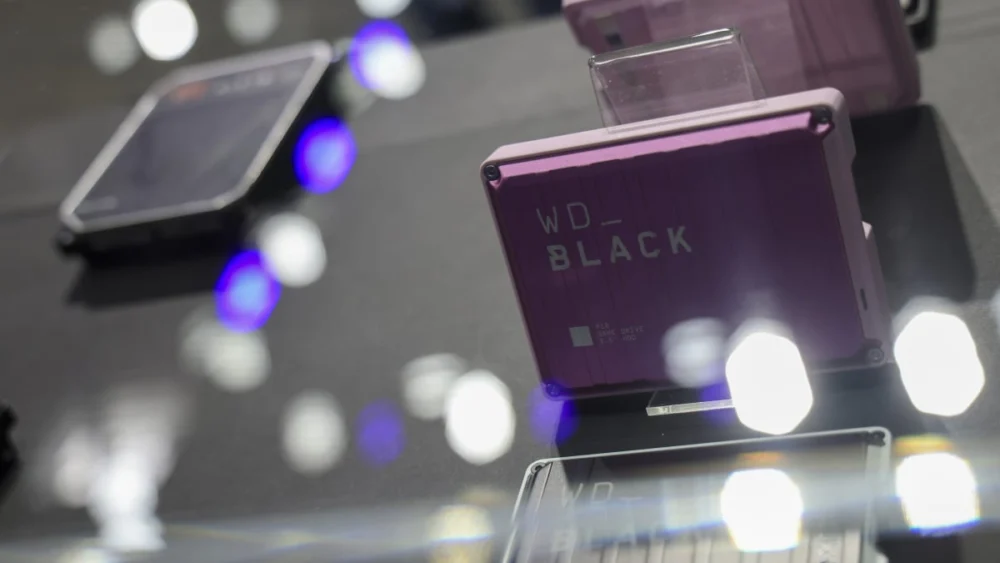
Western Digital, a global leader in data storage manufacturing, has announced that its entire hard drive production capacity for the 2026 calendar year is already fully committed to buyers. The revelation comes as the artificial intelligence boom continues to reshape the global technology supply chain, prioritizing large-scale enterprise infrastructure over traditional consumer retail markets. With more than 10 months remaining in the current fiscal cycle, the company’s inability to fulfill new orders highlights a growing crisis in hardware availability that could persist for years.
The announcement was made by Western Digital CEO Irving Tan during a recent quarterly earnings call, where he confirmed that the company has effectively reached its limit for the foreseeable future. Tan noted that the overwhelming majority of the company’s storage capacity has been pre-allocated to a select group of high-volume clients, leaving little to no inventory for the broader market. This development signals a significant shift in the storage industry, where the race to build massive AI data centers is currently outstripping the manufacturing capabilities of the world’s largest hardware providers.
According to the company’s financial disclosures, the surge in demand is driven by what Tan described as Western Digital’s "top seven customers." These entities, which include major cloud service providers and hyperscale data center operators, have secured long-term agreements to ensure they have the necessary hardware to support the next generation of generative AI models. The competition for these components is so fierce that three of these primary customers have already moved to secure supply agreements extending into 2027 and 2028.
The Massive Shift Toward AI Infrastructure
The reality that hard drives are already sold out for the entire year reflects a broader transformation in how technology companies view data storage. While the consumer market once represented a cornerstone of Western Digital’s business model, that segment has been marginalized by the lucrative nature of enterprise-grade contracts. Western Digital reported that the consumer market now accounts for a mere 5 percent of its total revenue, a historic low that underscores the declining priority of individual buyers in the current economic climate.
Artificial intelligence companies require astronomical amounts of storage to house the datasets used for training large language models (LLMs). These models rely on trillions of data points, necessitating high-capacity hard disk drives (HDDs) that can offer cost-effective, long-term storage solutions. As AI applications move from simple text generation to more data-intensive tasks like video synthesis and complex scientific simulations, the demand for storage density is expected to escalate exponentially.
Industry analysts point out that the storage crunch is not an isolated event but rather a symptom of a larger bottleneck in the semiconductor and hardware industries. The rapid expansion of AI infrastructure requires a synchronized supply of processors, memory, and storage. When one component faces a shortage, it creates a ripple effect that impacts the production timelines of everything from high-end servers to basic consumer electronics.
Impact of the Hard Drive Shortage on Global Markets
As hard drives are already sold out for the entire year, the immediate consequence for the average consumer will be a significant increase in prices. Retailers who still hold inventory are likely to implement price hikes as replacement stock becomes harder to acquire. For hobbyists, small business owners, and creative professionals who rely on external storage or high-capacity internal drives, the era of affordable, high-volume storage may be temporarily coming to an end.
The shortage is also affecting the secondary market and specialized industries. Small-scale data centers and regional service providers, who do not have the purchasing power of the "top seven" tech giants, are finding themselves priced out or simply unable to find vendors with available stock. This creates a competitive disadvantage, as only the largest corporations can afford to build the infrastructure necessary to participate in the burgeoning AI economy.
Furthermore, the lack of available storage is forcing hardware integrators to rethink their product roadmaps. PC manufacturers, who often operate on thin margins, are facing the difficult choice of either absorbing the increased costs of storage components or passing those costs on to consumers. In a market already strained by inflation and fluctuating demand, these price increases could lead to a slowdown in personal computer sales and upgrades.
Why Hard Drives Are Already Sold Out for the Entire Year
The current predicament is rooted in the long lead times required to expand manufacturing capacity. Building a new fabrication plant or increasing the output of existing facilities requires billions of dollars in investment and years of construction and calibration. Western Digital and its competitors, such as Seagate and Toshiba, have been cautious about over-expanding in the past, fearing a market glut if demand were to suddenly drop. However, the AI surge has proven to be more resilient and aggressive than many industry veterans anticipated.
The technical requirements of AI-ready storage also contribute to the shortage. Modern data centers are increasingly looking for "shingled magnetic recording" (SMR) and "energy-assisted magnetic recording" (ePMR) technologies to squeeze more data into the same physical footprint. These advanced drives are more complex to manufacture than standard consumer-grade hard drives, leading to lower yields and longer production cycles.
As the industry pivots toward these high-density solutions, the production lines that once churned out standard drives for the retail market are being converted to handle enterprise-grade hardware. This pivot ensures that even if production volumes remain steady, the type of hardware being produced is no longer intended for the general public, further tightening the supply for traditional retail channels.
The Broader Semiconductor and Memory Crisis
The fact that hard drives are already sold out for the entire year is part of a larger trend involving critical computer components. The tech industry has been grappling with a persistent shortage of memory, specifically Dynamic Random Access Memory (RAM) and High Bandwidth Memory (HBM). AI companies have been "cannibalizing" the supply chain, purchasing nearly every available unit of high-performance memory to pair with powerful Graphics Processing Units (GPUs) from manufacturers like NVIDIA.
This scarcity has forced PC makers to raise prices on a regular basis. Companies that produce modular hardware have reported that the cost of DDR5 RAM has fluctuated wildly, often trending upward as supply remains constrained. The competition for silicon and manufacturing time at major foundries like TSMC means that every sector of the tech industry is fighting for a limited pool of resources.
The gaming industry is also feeling the pressure. Reports indicate that Sony has considered delaying the launch of the next PlayStation console, potentially pushing it beyond 2027. The primary reason for this potential delay is the hope that hardware shortages—specifically in memory and storage—will stabilize by then. If Sony were to launch a new console in the current environment, the cost of production could be prohibitively high, or the company might face the same "scalper" issues that plagued the PlayStation 5 launch due to limited supply.
Long-Term Economic and Geopolitical Implications
The concentration of storage capacity within a handful of massive corporations raises concerns about the future of the digital economy. If only the largest tech firms have access to the hardware needed for AI development, it could lead to a monopolization of the technology. Small startups and academic researchers may find themselves unable to compete because they cannot secure the physical infrastructure required to train their models.
From a geopolitical perspective, the control of storage and semiconductor manufacturing remains a point of intense scrutiny. As Western Digital navigates these shortages, the stability of the global supply chain remains vulnerable to trade tensions and regional instability. Any disruption in the flow of raw materials or finished goods could extend the current shortage well beyond the 2026 window currently cited by Western Digital executives.
Investors are keeping a close eye on whether the AI sector is experiencing a sustainable growth period or a speculative bubble. If the promised returns on AI investments fail to materialize, there could be a sudden pullback in hardware spending. However, for the time being, the momentum is moving in the opposite direction, with companies doubling down on infrastructure to avoid falling behind in the technological arms race.
The Path Forward for Consumers and the Industry
As the market adjusts to the reality that hard drives are already sold out for the entire year, consumers may need to explore alternative storage solutions. This could include a greater reliance on cloud storage services—ironically hosted by the very companies that are buying up the hardware—or a shift toward Solid State Drives (SSDs). While SSDs offer faster performance, they have traditionally been more expensive per gigabyte than mechanical hard drives, and they are not immune to the same supply chain pressures affecting the rest of the industry.
For Western Digital, the challenge will be managing its relationships with its primary customers while attempting to mitigate the reputational risk of abandoning the consumer market. While the enterprise sector is currently the primary driver of profit, the total exclusion of the general public from high-capacity storage could have long-term consequences for brand loyalty and market diversity.
The storage industry is currently in a state of unprecedented volatility. With capacity for 2026 already exhausted and orders stretching toward the end of the decade, the "sold out" status of the hard drive market is a stark reminder of how quickly the AI revolution is consuming the physical foundations of the digital world. For now, the hardware shortage remains an unavoidable hurdle for the global economy, with no immediate relief in sight for those outside the inner circle of the tech elite.