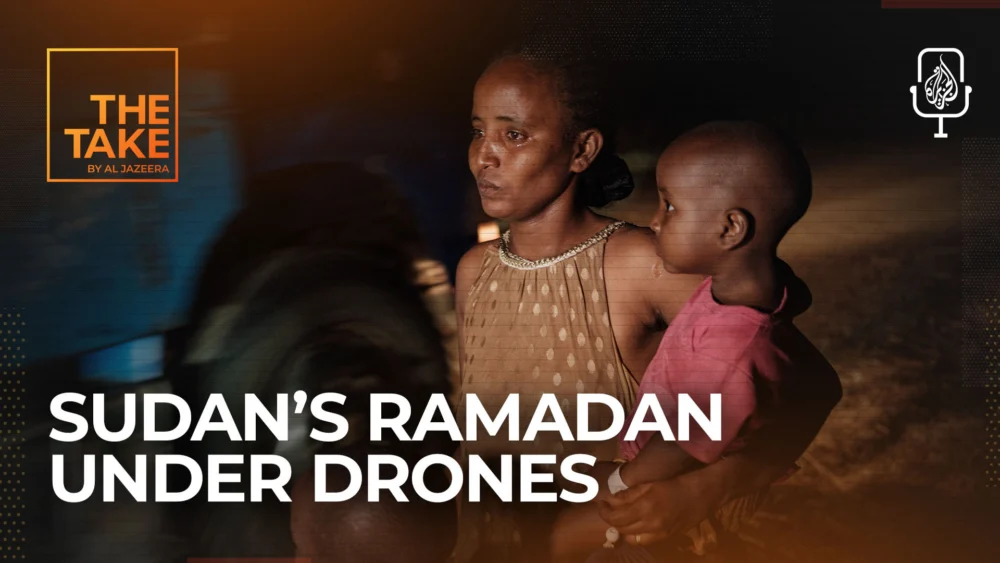
As Sudan observes the holy month of Ramadan under the shadow of a deepening civil war and escalating famine, a new, terrifying dimension has been added to the conflict: the pervasive use of killer drones. These unmanned aerial vehicles are not only blurring the lines between combatants and civilians but are actively striking markets and populated areas, fundamentally altering the nature of warfare in the nation and exacerbating an already catastrophic humanitarian crisis. The technology, once primarily associated with distant battlefields, is now a visceral and deadly reality for ordinary Sudanese citizens, transforming their daily lives into a constant state of vulnerability.
The conflict, which erupted in April 2023 between the Sudanese Armed Forces (SAF) and the paramilitary Rapid Support Forces (RSF), has devolved into a brutal, attritional struggle marked by widespread atrocities. While initial fighting was largely conventional, the recent surge in drone deployment, particularly by the RSF, signals a significant escalation and a shift in tactical approaches. These drones, ranging from commercially available models repurposed for military use to more sophisticated, purpose-built systems, are being employed for reconnaissance, targeted strikes, and psychological warfare, sowing widespread fear and disrupting essential services.
The Dawn of a Drone-Driven War
The integration of killer drones into the Sudanese conflict represents a troubling evolution in asymmetric warfare. Unlike traditional artillery or airstrikes, which can be geographically contained, drones offer a more precise, albeit indiscriminate when misused, method of attack. This precision, however, often comes at the cost of distinguishing between legitimate military targets and civilian infrastructure. Reports from various regions, including Khartoum and its surrounding areas, detail drone strikes hitting bustling marketplaces, residential neighborhoods, and even humanitarian aid convoys.
The psychological impact of these strikes is profound. The constant threat of an unseen, airborne attacker, often operating with a low audible signature, creates an environment of pervasive anxiety. For a population already grappling with food scarcity, displacement, and the breakdown of social order, the omnipresent threat of drone attacks adds another layer of existential dread. The ability of these weapons to strike with relative impunity, often without immediate accountability, further fuels the terror and desperation experienced by civilians.
Genesis of the Conflict and Early Stages
To understand the current trajectory of the conflict, it is crucial to recall its origins. The power struggle between SAF General Abdel Fattah al-Burhan and RSF General Mohamed Hamdan Dagalo, widely known as Hemedti, ignited after months of escalating tensions. Both factions sought to consolidate their power in the post-Bashir transitional government, ultimately leading to a violent confrontation that has plunged Sudan into chaos.
Initially, the fighting was characterized by urban warfare, with heavy reliance on small arms, artillery, and armored vehicles. The RSF, with its extensive network and paramilitary experience, quickly gained control of significant territories, particularly in Khartoum. The SAF, despite its official status, struggled to assert dominance, leading to a protracted and bloody stalemate in many urban centers. This protracted conflict created fertile ground for the adoption of new technologies that could offer a tactical advantage.
The Emergence of Unmanned Aerial Warfare
The introduction of killer drones has demonstrably altered the battlefield dynamics. The RSF, in particular, has been widely reported to be employing a diverse array of drones. These range from small, commercially available quadcopters equipped with explosives to more advanced, fixed-wing drones capable of longer-range reconnaissance and attack missions. The accessibility of drone technology, coupled with potential foreign support, has allowed non-state actors and paramilitary groups to acquire capabilities previously reserved for well-equipped national militaries.
These drones are not merely weapons of destruction; they are also instruments of surveillance and terror. Their ability to hover silently overhead, capture imagery, and deliver precise payloads has made them a terrifying tool for psychological warfare. Civilians live in constant fear of these airborne predators, their daily routines disrupted by the need to seek shelter at any moment. The impact on markets, a vital hub for food and commerce, is particularly devastating. Strikes on these locations not only cause immediate casualties but also disrupt supply chains, further exacerbating the famine.
Humanitarian Catastrophe Worsens Amidst Drone Attacks
The humanitarian situation in Sudan has been dire for months, with millions facing acute food insecurity and the specter of famine looming large. The ongoing conflict has decimated agricultural production, destroyed infrastructure, and hampered the delivery of essential aid. The increasing use of killer drones, however, has added a new and chilling impediment to relief efforts.
Humanitarian organizations have expressed grave concerns about the safety of their personnel and the unimpeded delivery of aid. Drone strikes on or near aid convoys, or on facilities where aid is stored or distributed, pose a direct threat to both those providing assistance and those desperately in need. The fear of being targeted by an aerial attack forces civilians to remain in their homes, limiting their access to food, water, and medical care. This further compounds the already dire conditions and pushes more people towards starvation.
International Scrutiny and Limited Response
The international community has largely condemned the violence in Sudan and called for a cessation of hostilities. However, the practical response has been fragmented and, thus far, insufficient to halt the bloodshed or mitigate the humanitarian crisis. The proliferation of advanced weaponry, including killer drones, by both sides of the conflict presents a complex challenge for diplomatic efforts.
The United Nations and various human rights organizations have documented numerous instances of alleged war crimes and violations of international humanitarian law. The use of drones to target civilian infrastructure, such as markets, is a clear violation of these principles. However, holding perpetrators accountable in a fractured and chaotic environment remains a significant hurdle. The continued flow of weapons and technology into the region further complicates any potential for de-escalation.
The Long-Term Implications of Drone Warfare
The integration of killer drones into the Sudanese conflict carries significant long-term implications for the future of warfare, particularly in regions experiencing internal strife. It demonstrates how readily available technology can empower non-state actors and exacerbate existing conflicts. This trend raises serious questions about the proliferation of autonomous weapons systems and the challenges of regulating their use.
Furthermore, the psychological scar left by a drone-driven conflict will likely endure for generations. The constant state of fear and the normalization of airborne threats can have profound and lasting impacts on mental health and societal well-being. The erosion of trust between communities and authorities, already high, is further deepened by the feeling of being perpetually under surveillance and at risk of unseen attack.
Repercussions for Civilian Life and Society
The impact on civilian life is multifaceted and devastating. Beyond the immediate casualties, the fear of drone strikes forces populations to live in a perpetual state of heightened alert. This constant anxiety disrupts education, economic activity, and social cohesion. Parents are hesitant to send their children to school, businesses struggle to operate, and communities find it difficult to gather for essential social and religious events, such as the observance of Ramadan.
The targeting of markets, a critical component of daily life and economic survival, has a cascading effect. Food prices soar, availability plummets, and the ability of families to sustain themselves is severely compromised. The drone attacks, therefore, are not just military tactics; they are direct assaults on the fabric of Sudanese society, further pushing a nation already on the brink into complete collapse. The psychological toll of living under constant aerial threat contributes to a deepening sense of despair and hopelessness.
The Future of Sudan: A Battlefield Redefined
As the conflict grinds on, the role of killer drones is likely to expand, further entrenching a new paradigm of warfare. The relative low cost and high impact of these weapons make them an attractive option for belligerents seeking to gain an advantage. This technological shift poses a significant challenge for international peacekeeping efforts and the protection of civilians.
The path forward for Sudan remains uncertain and fraught with peril. The continued reliance on advanced weaponry, particularly those with the capacity to inflict widespread civilian harm, suggests a protracted and devastating conflict. Without a concerted international effort to de-escalate, facilitate dialogue, and enforce accountability, the drone-driven war in Sudan risks becoming a protracted humanitarian catastrophe with far-reaching consequences for regional stability and the future of warfare itself. The innocent civilians caught in the crossfire continue to bear the brunt of this technological arms race, their lives irrevocably altered by the hum of engines overhead and the terror of falling payloads.