The 2026 BAFTA Film Awards were marred by controversy after a racial slur, uttered by a guest with Tourette’s Syndrome, was broadcast uncensored on the BBC, sparking widespread debate and an apology from the network. The incident at London’s Royal Festival Hall has ignited critical conversations about disability inclusion, media responsibility, and the profound impact of offensive language.
The core of the controversy revolved around John Davidson, a prominent Tourette’s campaigner and the inspiration for the critically acclaimed film I Swear. Davidson was a guest at the prestigious ceremony, where his involuntary verbal tics, characteristic of his neurological condition, led to an audible outburst of the N-word during a key presentation. This public incident and the subsequent broadcast decision created a significant Tourette’s fallout that reverberated through the entertainment industry and wider public discourse.
Understanding Tourette’s Syndrome and Coprolalia
Tourette’s Syndrome is a complex neurological disorder characterized by sudden, repetitive, involuntary movements or sounds called tics. These tics can manifest in various ways, from simple motor movements like blinking or head jerking, to complex vocalizations. While often stereotyped by involuntary swearing, known as coprolalia, it affects only a minority of individuals with Tourette’s, estimated to be between 10-15%.
Coprolalia is not a reflection of a person’s beliefs or intentions but rather a symptom of a neurological condition where the brain’s signals are misfiring. The words or phrases uttered are involuntary and often distressing for the individual experiencing them. This crucial distinction lies at the heart of the ensuing debate following the BAFTA incident.
The Significance of the BAFTA Awards
The British Academy Film Awards (BAFTAs) are among the most prestigious film awards globally, recognized for honoring excellence in cinematic achievement. The ceremony is a high-profile event, drawing international stars, filmmakers, and media attention, with its broadcast reaching millions of viewers worldwide. BAFTA has also made concerted efforts in recent years to promote diversity and inclusion within the film industry, making the nature of this incident particularly poignant.
John Davidson’s presence at the event was directly tied to the success of I Swear, a film that chronicles a man’s journey growing up with Tourette’s. The movie aimed to raise awareness and foster understanding of the condition, making the events of the evening a paradoxical moment for advocacy.
The Awards Night: A Detailed Timeline
Preparations for the ceremony included specific measures to accommodate Davidson. Prior to the show’s commencement, a floor manager reportedly informed attendees about Davidson’s condition. "John has Tourette’s Syndrome, so please be aware you might hear some involuntary noises or movements during the ceremony," guests were told as part of the housekeeping rules. This warning was also relayed to presenters just minutes before the live event kicked off.
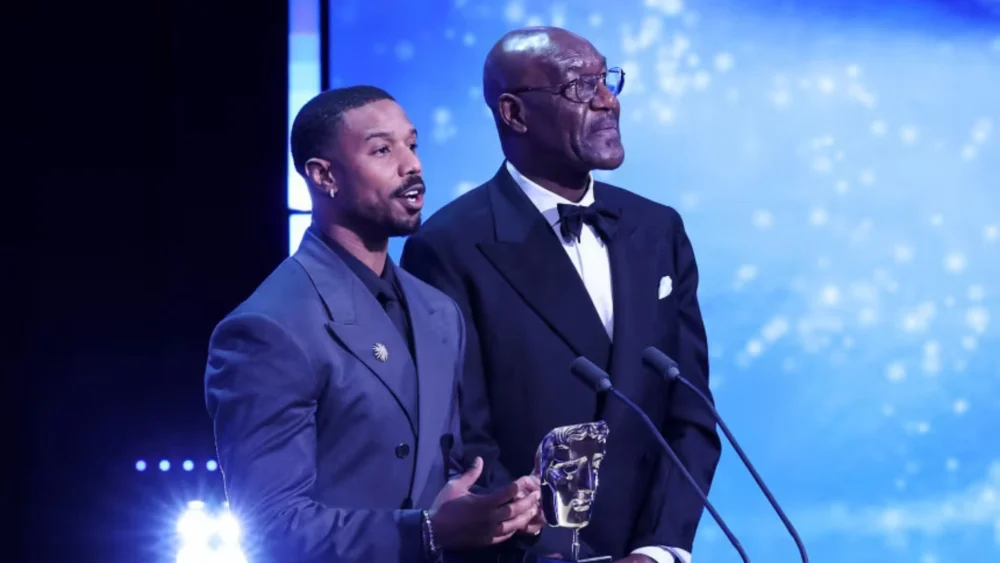
Despite these pre-show warnings, the atmosphere inside London’s Royal Festival Hall became palpably tense when the involuntary outburst occurred. As Sinners duo Michael B. Jordan and Delroy Lindo took the stage to present the award for Best Visual Effects to Avatar: Fire and Ash, Davidson’s voice was clearly heard shouting the N-word. Gasps rippled through the audience, and the moment created a "definitively uncomfortable atmosphere" that was immediately noticeable to those present.
Host Alan Cumming subsequently interrupted his monologues several times throughout the show to address the situation. His repeated statements served as on-air reminders: "Tourette’s syndrome is a disability and the tics you’ve heard tonight are involuntary, which means the person who has Tourette’s Syndrome has no control over their language. We apologize if you are offended tonight." These interventions aimed to educate the audience and mitigate offense, yet they also highlighted the ongoing disturbance.
Davidson, understanding the impact of his tics, left the venue approximately 25 minutes into the show. The Hollywood Reporter understood his departure was of his own accord, occurring shortly after the significant outburst during Jordan and Lindo’s presentation. His exit did not, however, prevent the incident from becoming a major talking point.
Broadcasting Decisions and Public Fallout
The most contentious aspect of the Tourette’s fallout centered on the BBC’s decision not to edit out the racial slur from its broadcast. The BAFTA Film Awards were aired on a two-hour delay, providing a window for editorial oversight. This delay, typically implemented to allow for content moderation and technical adjustments, led many to question the broadcaster’s judgment and commitment to its own standards.
Following the broadcast, the BBC issued an apology. A spokesperson stated, "Some viewers may have heard strong and offensive language during the BAFTA Film Awards 2026. This arose from involuntary verbal tics associated with Tourette’s Syndrome, and was not intentional. We apologize for any offence caused by the language heard." Critics, including Sinners production designer Hannah Beachler, found the apology to be a "throw-away" statement, particularly the phrase "if you are offended," which they felt minimized the gravity of the offense.
In a further move, by midday London time on Monday, the BAFTA Film Awards broadcast was removed from the BBC’s streaming service, iPlayer. This action indicated the network’s acknowledgment of the significant public backlash and the need to mitigate further exposure to the uncensored content. BAFTA itself remained largely silent in the immediate aftermath, prompting further scrutiny regarding its responsibility as the event’s host.
Divisive Reactions and Societal Implications
The incident sparked a heated and often polarized debate, exposing a divide in public understanding and tolerance. Many British attendees and commentators emphasized Tourette’s as a serious, misunderstood condition, advocating for empathy and education. They underscored that coprolalia, while offensive, is a symptom and not an expression of personal prejudice.
However, perspectives from "across the pond," particularly within the American film community, were reportedly less tolerant. The use of the N-word, regardless of its involuntary nature, carries immense historical weight and deeply rooted pain, particularly for Black individuals. Hannah Beachler articulated this complexity on social media, describing the situation as "almost impossible." She revealed that Davidson’s tics, including offensive language, had been directed at her personally after the show, stating, "I understand and deeply know why this is an impossible situation. I know we must handle this with grace and continue to push through. But what made the situation worse was the throw-away apology of ‘if you were offended.’"
The incident brought to the forefront crucial questions about ableism within the industry and the duty of care owed to all award show guests and the audience at home. Many argued that both the Black attendees at the BAFTA Film Awards and the Tourette’s community were ultimately failed by the handling of the situation, highlighting the need for a more nuanced approach to inclusion that respects all marginalized groups.
Social media, predictably, amplified the discourse. Some users defended Davidson, explaining the debilitating nature of Tourette’s and criticizing those who misunderstood the condition. One commenter wrote, "Tourette’s making you shout really offensive things seems to have surprised people who have no idea what Tourette’s actually is." Conversely, others expressed outrage, exemplified by Jamie Foxx’s comment on an Instagram post, where he stated Davidson’s outburst was "unacceptable" and that "he meant that shit." Foxx’s remarks drew criticism from those who argued it demonstrated a fundamental misunderstanding of Tourette’s Syndrome.
Advocacy Amidst Controversy
Despite the intense controversy, the Tourette’s fallout also provided a platform for advocacy. Aramayo, the actor who played John Davidson in I Swear, achieved a shock win for his performance, securing the EE BAFTA Rising Star Award over high-profile nominees like Timothee Chalamet. He leveraged his acceptance speech to bring further awareness to the condition.
"John Davidson is the most remarkable man I ever met," Aramayo told the crowd. "He’s so forthcoming with education and he believes there should be still so much more we need to learn about Tourette’s." The actor continued, "For people living with Tourette’s, it’s us around them who help them define what their experience is. So, to quote the film, they need support and understanding." His words underscored the film’s original mission and Davidson’s lifelong commitment to education.
Moving Forward: Lessons and Challenges
The events at the 2026 BAFTA Film Awards underscore the complex challenges inherent in fostering truly inclusive environments at high-profile events. The incident has prompted widespread calls for BAFTA and other major organizations to reassess their protocols for accommodating guests with disabilities, ensuring that such accommodations do not inadvertently compromise the safety and respect of other attendees. The BBC’s role in the broadcast of the racial slur also raised critical questions about editorial responsibility and the ethical considerations of live, or near-live, programming.
The incident serves as a stark reminder that while intentions for inclusion may be positive, their execution requires careful consideration of potential impacts on all communities. Moving forward, the industry faces the task of balancing the imperative of disability awareness with the unwavering commitment to combat racism and ensure that no individual is subjected to offensive language, whether intentional or not. The path to genuine inclusion remains complex, demanding ongoing dialogue, education, and a commitment to continuous improvement in event planning and media broadcasting standards.