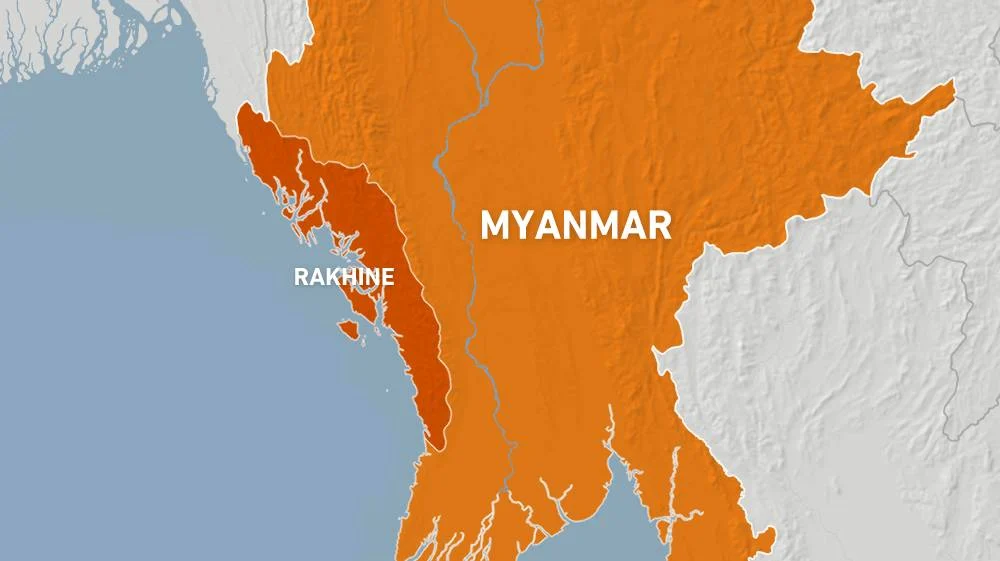
At least 17 civilians, including women and children, were killed and 14 others wounded in a devastating aerial bombardment by the Myanmar military on a bustling village market in Rakhine State on Tuesday. The attack on Yoengu village, located in Ponnagyun township, marks another grim escalation in the country’s protracted civil war, occurring just weeks after a disputed election that saw the military-backed ruling party claim a victory widely dismissed as fraudulent by international observers.
The Myanmar military’s continued offensive in Rakhine State has drawn widespread condemnation, with human rights groups highlighting the indiscriminate nature of the strikes. Yoengu village, situated approximately 33 kilometers (21 miles) northeast of the state capital Sittwe, had recently fallen under the control of the Arakan Army (AA), an ethnic Rakhine armed group engaged in a fierce conflict with the ruling junta. The AA has provided a list of the 17 deceased, identifying them as "innocent civilians," and stated that 15 individuals sustained injuries in the bombardment.
This latest atrocity underscores the deepening humanitarian crisis engulfing Myanmar since the military seized power in a coup in February 2021. The violent suppression of pro-democracy protests that followed has ignited a nationwide rebellion, pitting the well-equipped military against a broad coalition of resistance forces, including the AA and other ethnic minority factions. The United Nations estimates that thousands have been killed and approximately 3.6 million people have been displaced across the country, creating a severe internal refugee crisis.
A Village Market Turned Battlefield
Witnesses described scenes of utter devastation following the air strikes. Pyae Phyo Naing, chairman of the Ponnagyun Youths Association, recounted the horrific aftermath, stating that four to five buildings in the market area were reduced to rubble and flames. "Some people were crying, while many dead bodies were scattered over the area," Naing told Agence France-Presse, painting a chilling picture of the chaos that ensued. He further noted that fleeing villagers encountered ongoing fires as they attempted to escape the scene.
The attack on Yoengu village market highlights the vulnerability of civilian populations caught in the crossfire of Myanmar’s internal conflict. The deliberate targeting of a populated market area, even if occurring in territory contested by an armed group, raises serious questions about adherence to international humanitarian law. The civilian toll in Rakhine State has been particularly high, with the region experiencing a prolonged period of intense fighting and severe restrictions on essential services.
Rakhine State: A Region Under Siege
Rakhine State, historically known as Arakan, has become one of the epicenters of the escalating conflict. Largely under the control of the Arakan Army, the state has been subjected to a sustained military blockade and frequent air strikes. This dual pressure of ongoing conflict and restricted access has created a dire humanitarian situation, exacerbated by recent drastic cuts to international aid.
The World Food Programme issued a stark warning last year about a "dramatic rise in hunger and malnutrition" in Rakhine State, directly attributing the crisis to the military’s blockade and the disruption of humanitarian assistance. The air strikes, therefore, not only inflict immediate casualties but also compound the long-term suffering of a population already on the brink. The targeting of civilian infrastructure, such as markets, further cripples the ability of residents to access food, medicine, and other vital necessities.
The Broader Context of Myanmar’s Civil War
Myanmar has been embroiled in political turmoil and armed conflict since the military’s overthrow of the democratically elected government in 2021. The coup, which followed a landslide election victory for Aung San Suu Kyi’s National League for Democracy, was justified by the military with unsubstantiated claims of electoral fraud. However, international observers and the vast majority of the population viewed the election as legitimate, leading to widespread protests and the subsequent formation of the National Unity Government and its People’s Defence Forces.
The conflict has evolved into a complex multi-front war, with the military junta facing significant challenges from a unified front of ethnic armed organizations and newly formed People’s Defence Forces. The Arakan Army’s resurgence and territorial gains in Rakhine State represent a significant strategic challenge for the military, which has historically struggled to maintain control over the country’s diverse ethnic regions. The junta’s reliance on air power and artillery, often employed with little regard for civilian safety, has become a hallmark of its counter-insurgency strategy.
International Scrutiny and Calls for Accountability
The latest air strikes in Rakhine State are expected to intensify international pressure on the Myanmar military regime. Human rights organizations and governments worldwide have repeatedly called for an end to the violence and for accountability for alleged war crimes. The United Nations Security Council has been briefed on the deteriorating situation in Myanmar, but divisions among its permanent members have so far prevented decisive action.
The international community faces the difficult task of balancing the need to provide humanitarian assistance to the affected population with the imperative to hold the perpetrators of violence accountable. Sanctions imposed on the military regime have had limited impact on its ability to wage war, and the ongoing conflict continues to devastate civilian lives and livelihoods. The targeting of markets, a critical hub for economic and social activity, signifies a potential shift in tactics or an intensification of efforts to demoralize the civilian population supporting the resistance.
The Human Cost of Conflict
The impact of the military government’s air strikes on Yoengu village is a stark reminder of the immense human cost of Myanmar’s ongoing civil war. Families have been torn apart, communities devastated, and the fabric of daily life irrevocably damaged. The wounded face the daunting prospect of limited medical care in a region already struggling with resource scarcity.
The displacement of millions of people has also placed an enormous strain on neighboring countries and international aid organizations. The psychological toll on survivors, witnessing such brutality firsthand, is profound and will have long-lasting consequences. The targeting of civilians, particularly in public spaces like markets, aims to instill fear and undermine any semblance of normalcy, further exacerbating the humanitarian crisis.
Looking Ahead: A Cycle of Violence and Resistance
The bombing of Yoengu village market is likely to fuel further anger and resentment towards the military regime, potentially strengthening resolve among resistance groups. The Arakan Army has proven to be a formidable adversary, and its control over significant portions of Rakhine State poses a strategic challenge that the military may be attempting to counter through overwhelming force.
However, such brutal tactics have historically proven counterproductive, often galvanizing populations against oppressive regimes rather than quelling dissent. The international community’s response, while often limited in its immediate impact, remains crucial in documenting atrocities and advocating for justice. The path towards peace in Myanmar remains fraught with peril, with the current trajectory suggesting a continuation of the brutal cycle of violence and resistance that has gripped the nation for years. The tragic events in Rakhine State serve as a somber testament to the urgent need for a comprehensive political solution that addresses the root causes of conflict and ensures the protection of all civilians.