A cascade of retaliatory strikes between the United States, Israel, and Iran has sent shockwaves across the Middle East, forcing a significant shutdown of regional airspace and disrupting global air travel. At least eight nations, including Iran, Israel, Iraq, Jordan, and Qatar, were compelled to close their skies as the conflict escalated Saturday. This dramatic turn of events marks a severe intensification of regional tensions, with immediate and far-reaching consequences for international aviation and geopolitical stability.
Escalation Triggers Widespread Airspace Closures
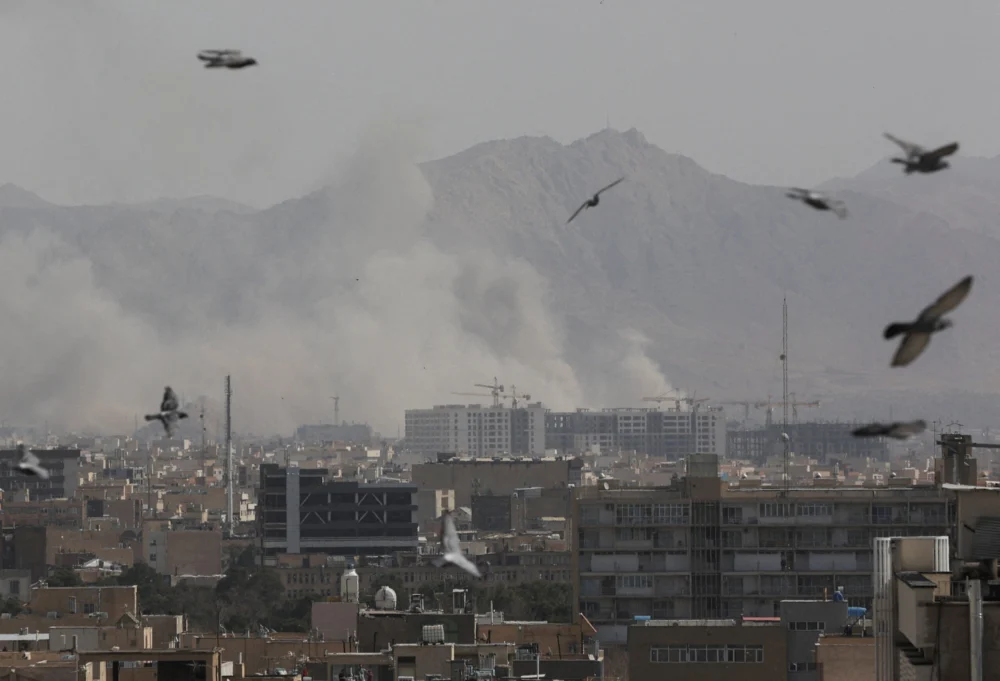
The immediate catalyst for the widespread airspace closures was a series of attacks attributed to the United States and Israel targeting Iran. These actions were reportedly met with swift and forceful retaliation from Tehran, which launched its own strikes. In response to the escalating hostilities and the potential for further aerial engagements, multiple countries in the strategically vital Middle East region took the decisive step of grounding air traffic within their borders.
The countries that declared their airspace closed include Iran, Israel, Iraq, Jordan, Qatar, Bahrain, Kuwait, and the United Arab Emirates. Syria also announced a partial closure of its southern airspace, bordering Israel, for a period of 12 hours, indicating a localized but significant security measure. These closures underscore the gravity of the situation and the immediate threat perceived by national authorities to civilian aviation safety.
Background of the Escalation
The recent exchange of hostilities emerged against a backdrop of prolonged regional tensions and complex diplomatic maneuvers. U.S. President Donald Trump had previously pledged that the attacks on Iran would target its missile industry and naval capabilities, signaling a determined effort to neutralize perceived threats. This aggressive stance came at a critical juncture, as Iran had been engaged in delicate negotiations with the U.S. concerning its nuclear program.
Iran, in turn, vowed a severe response to the attacks, signaling a dramatic shift in its posture. The retaliatory strikes were not confined to Israel but also extended to several Gulf Arab states that host significant U.S. military assets, including Qatar, Kuwait, the United Arab Emirates, and Bahrain. This expansion of targets indicated a broader strategy by Iran to project its response across the region and challenge U.S. influence.
A senior Iranian official, speaking to Al Jazeera, declared that "all American and Israeli assets and interests in the Middle East have become a legitimate target." The official further stated, "There are no red lines after this aggression, and everything is possible," underscoring a complete abandonment of previous constraints and a willingness to engage in open-ended confrontation. This rhetoric amplified concerns about a potential for widespread conflict.
Global Air Travel Disrupted
The repercussions of the regional conflict have extended far beyond the immediate theater of operations, significantly impacting global air travel. Major international airlines were forced to cancel or reroute flights to and from destinations across the Middle East. This region serves as a crucial transit hub for flights connecting Europe and Asia, exacerbating the disruption. The situation is compounded by existing flight restrictions in Russian and Ukrainian airspace due to the ongoing conflict in Eastern Europe, further limiting available routes.
Russian air carriers, following directives from the Ministry of Transport, suspended flights to both Iran and Israel. Air India announced a complete, albeit temporary, avoidance of the Middle East altogether, reflecting the widespread apprehension among global airlines. Other prominent carriers that reported suspensions of services to the region include Lufthansa, Air France, Iberia, Wizz Air, Turkish Airlines, Qatar Airways, Virgin Atlantic, KLM, British Airways, Aegean Airlines, IndiGo, Japan Airlines, and Scandinavian Airlines.
The scale of these cancellations highlights the interconnectedness of global aviation and the profound impact that regional instability can have on international connectivity. Passengers booked on flights transiting or destined for the Middle East faced uncertainty, cancellations, and the necessity of rebooking on longer, less direct routes, if available. The economic impact on airlines, airports, and associated tourism industries is expected to be substantial.
Two Parallel Conflicts Emerge
Reporting from Doha, Al Jazeera’s Ali Hashem observed that the combined U.S.-Israeli attack on Iran and Iran’s subsequent retaliation, which encompassed several Gulf states, have effectively created two "parallel" conflicts. This dynamic has the potential to significantly deepen regional instability and make the overall crisis far more intricate and unpredictable than previously witnessed.
The interweaving of these conflicts means that events in one theater can have immediate and unforeseen consequences in another. This complexity raises serious concerns about de-escalation and the potential for miscalculation, which could lead to an even wider and more devastating conflagration. The strategic implications are immense, as the lines between direct conflict and proxy engagements become increasingly blurred.
Geopolitical Ramifications and Public Impact
The intensification of hostilities between Iran and its adversaries, particularly the United States and Israel, carries profound geopolitical ramifications. It signals a breakdown in diplomatic efforts and a potential slide towards a more overt and widespread military confrontation. The involvement of multiple regional actors, including those hosting U.S. military bases, underscores the risk of a regional spillover effect.
For the public, the immediate impact is felt through travel disruptions, increased anxiety, and the potential for economic fallout. The closure of vital air corridors can lead to increased travel costs and longer journey times, affecting business and leisure travelers alike. Furthermore, heightened regional tensions often translate into increased uncertainty and a sense of insecurity for populations living within and around the affected areas.
The interconnectedness of the global economy means that such a significant disruption in a key strategic region can also have ripple effects on supply chains, energy markets, and international trade. The implications for global security are also considerable, as the conflict could draw in other international powers or exacerbate existing geopolitical fault lines.
A Region on Edge
The current situation paints a grim picture of a region teetering on the brink of a broader conflict. The swiftness of the escalations and the declaration of widespread airspace closures are stark indicators of the heightened state of alert and the perceived immediate threats. The interconnectedness of the modern world means that such regional conflagrations have far-reaching consequences, impacting not only the immediate combatants but also the global community.
The declaration of legitimate targets and the absence of "red lines" by Iranian officials suggest a volatile and unpredictable period ahead. The coming days and weeks will be critical in determining whether de-escalation efforts can be initiated or if the current trajectory leads to an even more dangerous and widespread confrontation. The international community watches with bated breath as the Middle East finds itself at a critical crossroads.