GAZA STRIP – The news of Iran’s military confrontation with Israel, and the subsequent closure of key crossings into Gaza and the West Bank, sent immediate waves of anxiety and urgency through the besieged Palestinian territory, triggering widespread panic buying and a sharp increase in the prices of essential goods. Residents, haunted by recent experiences of famine and severe shortages, scrambled to replenish dwindling supplies, fearing a repeat of past hardships.
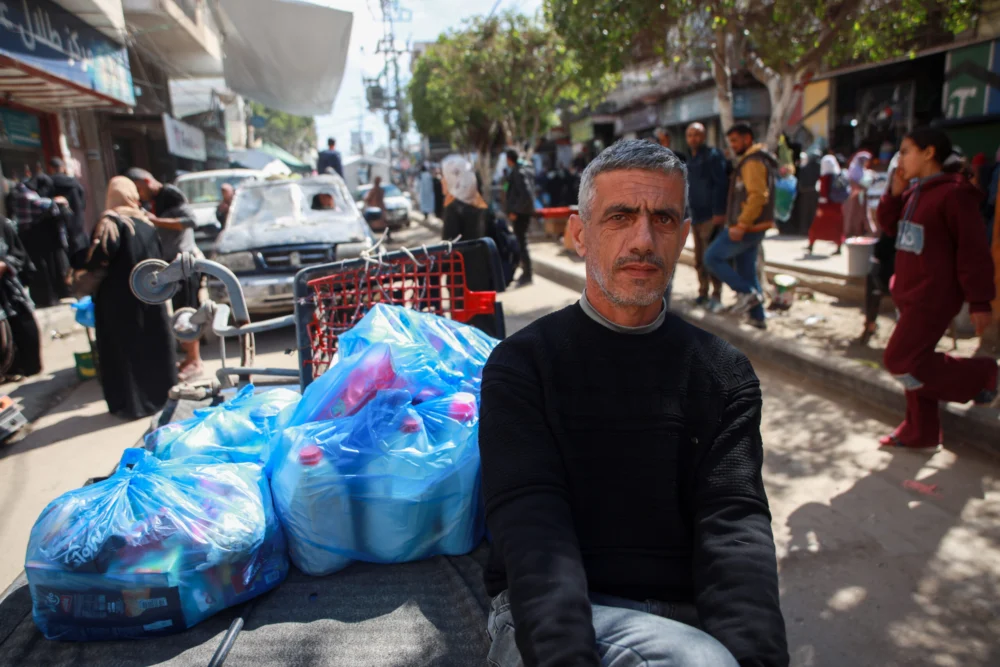
Hani Abu Issa, a 51-year-old father of five, initially headed to the Deir el-Balah market with a modest list for Ramadan iftar. However, the sight of surging crowds and emptying shelves quickly altered his plans. A passer-by’s explanation of Israel’s strikes on Iran and the ensuing war jolted him.
“People have become afraid of everything,” Abu Issa told Al Jazeera, standing amidst the bustling Deir el-Balah market. “Since the morning, everyone rushed to the markets to stockpile, and that led to shortages of many goods and rising prices.” He expressed a sentiment shared by many: while he believes the direct military conflict may not reach Gaza, the psychological impact and the potential for ensuing blockades are devastating.
The fear intensified significantly with an evening announcement from COGAT, the Israeli military body responsible for Palestinian civilian affairs. The agency declared that crossings into Gaza and the West Bank would be closed "until further notice" due to security developments related to the Iran war. This pronouncement fueled deep-seated anxieties, particularly for those who vividly recall the devastating consequences of similar closures.

Echoes of Famine and Fear
The memory of the past year’s Ramadan, when extended border closures and restricted aid flow plunged Gaza into a brutal phase of the ongoing conflict, remains deeply etched in the minds of its residents. During that period, markets were stripped bare, flour prices skyrocketed to unsustainable levels, and widespread malnutrition led to preventable deaths. This history of deliberate deprivation has fostered a profound and justifiable fear of any disruption to supply lines.
“Flour, sugar, cooking oil, and yeast… those were the first things to disappear from the market because of the heavy demand,” Abu Issa recounted, his voice tinged with desperation. He recalled a harrowing period when a single sack of flour cost over 1,000 shekels (approximately $319), a price he dreads facing again. The prospect of stockpiling, he lamented, is not a sustainable solution given the rapid depletion of goods and the challenging living conditions that could spoil stored food.
The uncertainty surrounding the duration of the crossing closures has amplified the panic. Reports from local sources suggested a potential link to the Jewish holiday of Purim, adding a layer of confusion and distrust to the official statements. “Israel’s word cannot be relied upon, and no specific duration was given,” Abu Issa stated, frustration evident. For him, the overwhelming desire is for reassurance that the blockades will not persist and that Gaza will be spared further suffering.
Justified Fear Amidst Scarcity
In the Nuseirat market, Omar Al-Ghazali, a 28-year-old grocer, witnessed firsthand the palpable fear driving the purchasing frenzy. He noted that the recent famine experience has left an indelible psychological scar on the population. "People’s fear is completely justified," Al-Ghazali explained. "They were shocked and frightened and want to secure themselves. They learned from the previous famine experience and from fears of trader hoarding."
He observed that the instinct to stockpile, even when the conflict is not directly on Gaza’s soil, is now more potent than any logical assessment of the regional situation. “We cannot tell people not to buy. What they went through was extremely difficult. We try to convince ourselves that things are fine and that no one will be affected, but fear is stronger,” he added.

The Burden of Scarcity: Not Everyone Can Stockpile
The ability to stockpile is a luxury not afforded to all residents of Gaza, where poverty and displacement are rampant. Asmaa Abu Al-Khair, a 38-year-old mother of eight, expressed her profound anxiety and confusion as she navigated the crowded Gaza City market. She lacks both the financial means and the physical space to store extra provisions.
“Where would we store it? And what would I even store? We need everything, and we can barely provide our daily food during Ramadan,” she told Al Jazeera, leaving the market empty-handed. The constant cycle of anxiety, fueled by news of regional conflict and border closures, weighs heavily on her. “I have young children,” she said sorrowfully, highlighting the vulnerability of her family.
Many displaced families living in makeshift tents face similar predicaments. They lack the funds to purchase surplus supplies and the space within their temporary shelters to store them. The arbitrary closure of crossings, especially during Ramadan, feels like a deliberate act of psychological warfare, exacerbating their already dire circumstances. “It felt like a stab in my heart. I went to sleep with deep frustration,” she bitterly recalled after hearing the news of the border closures.
Exhaustion and Resignation
For Mohammed Daher, a 46-year-old displaced resident from Jabalia now living in Deir el-Balah, the news of war with Iran shattered a brief period of Ramadan calm. Having endured two years of conflict, he had finally found a semblance of peace, only to be plunged back into uncertainty. Yet, despite the renewed anxiety, Daher has opted against stockpiling.
“We are exhausted. I reached a point where I have grown used to all scenarios,” he stated despairingly. Daher views Israel’s actions as a calculated attempt to further starve Gaza’s residents and deepen the humanitarian crisis. He recounted the torment of the previous famine, where essential food items were priced exorbitably, if available at all. The thought of enduring such hardship again is overwhelming, leading to a sense of resigned fatalism. “Let whatever happens, happen.”

Escalating Humanitarian Crisis and Calls for Intervention
The decision to close the crossings ignited widespread condemnation on social media platforms, with many Palestinians accusing Israel of using the regional conflict as a pretext to inflict further suffering and collective punishment. Doubts were raised whether Israel was exploiting global attention on the Iran war to intensify the humanitarian crisis in Gaza.
Ali al-Hayek, a member of the Palestinian Businessmen Association in Gaza, issued a stark warning about the immediate consequences. He highlighted that the border closures would cripple aid distribution efforts, halt the operations of charitable kitchens, and obstruct critical medical evacuations for the wounded, critically ill, and those with chronic diseases.
Gaza’s economy has already been decimated, with an estimated contraction of over 85 percent due to the ongoing war. The majority of the population now lives below the poverty line, with unemployment rates soaring to nearly 80 percent and over 97 percent of industrial facilities rendered inoperable.
Al-Hayek implored the international community to intervene decisively, pressuring Israel to reopen the crossings and restore normal movement for both individuals and goods. He also stressed the crucial need for traders to refrain from price gouging during this sensitive period, emphasizing the importance of solidarity and compassion during Ramadan.
The closures have not only disrupted daily life and exacerbated food insecurity but also underscore the fragile state of Gaza’s already devastated infrastructure and economy. The cycle of conflict, blockades, and humanitarian crises appears to be a relentless reality for the inhabitants of the Gaza Strip, leaving them perpetually bracing for the next wave of hardship.