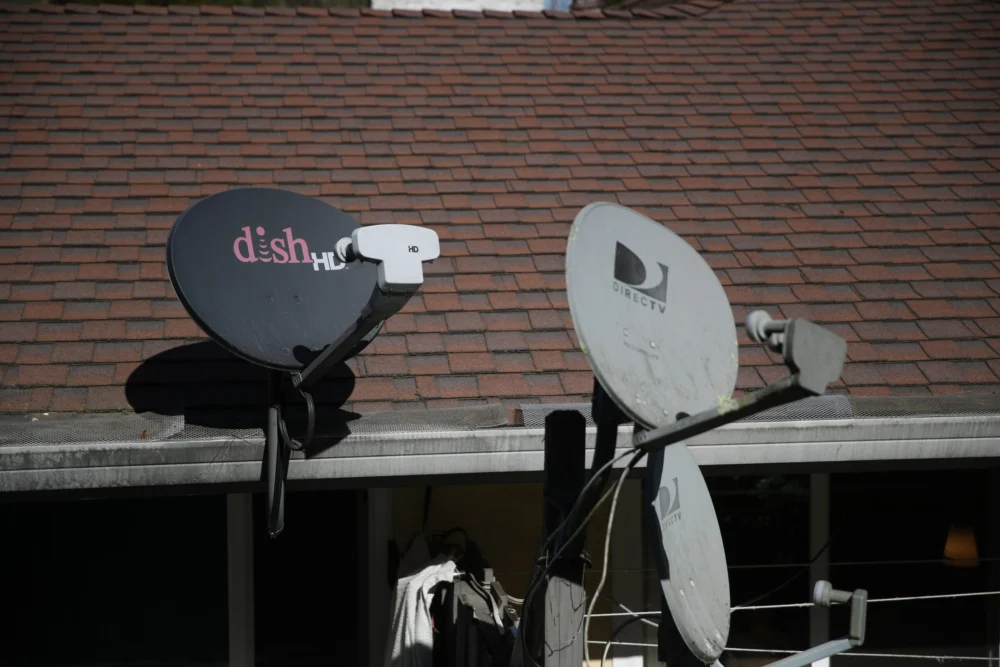
EchoStar, the parent company of satellite television giant Dish TV and streaming service Sling TV, reported a net loss of approximately 168,000 pay-TV subscribers during the fourth quarter of 2025, signaling continued challenges in the rapidly evolving telecommunications landscape. This subscriber attrition, while substantial, marked an improvement compared to the roughly 253,000 pay-TV subscriber decrease experienced in the corresponding period of 2024, yet it underscores the persistent headwinds facing traditional television providers. The company’s financial performance also reflected significant turbulence, swinging from a profit to a substantial loss amidst declining revenues and considerable non-cash impairments.
Background of EchoStar’s Strategic Crossroads
EchoStar’s journey is intricately tied to the vision of its chairman, Charlie Ergen, a pioneering figure in the satellite television industry. For decades, Dish Network, a subsidiary now merged under the EchoStar umbrella, served as a formidable competitor in the pay-TV market. However, the advent of high-speed internet and the proliferation of over-the-top (OTT) streaming services fundamentally reshaped consumer habits, initiating a widespread trend known as "cord-cutting." EchoStar, under Ergen’s leadership, has attempted to pivot by investing heavily in a nationwide 5G wireless network, known as Project Genesis, and by expanding its Sling TV streaming offering. This strategic shift aims to transform the company from a legacy satellite provider into a diversified telecommunications entity, but it comes with immense capital expenditure and significant operational risks. The recent merger of Dish Network and EchoStar in late 2023 was designed to consolidate assets and streamline operations, pooling resources to better tackle these ambitious goals and address the ongoing decline in its core video business.
Detailed Fourth Quarter 2025 Subscriber Performance
By the close of 2025, EchoStar’s total pay-TV subscriber base stood at 7.00 million. This figure comprises 5.02 million subscribers for its flagship Dish TV satellite service and 1.98 million subscribers for its Sling TV internet-delivered streaming offering. The sustained decline in both segments highlights the relentless pressure from a competitive market saturated with lower-cost streaming alternatives and increasingly robust internet-only content packages. While Sling TV was initially positioned as a cord-cutter-friendly option, it too faces intense competition from a growing array of direct-to-consumer streaming platforms and virtual multichannel video programming distributors (vMVPDs) that often offer more diverse content bundles or exclusive programming.
Beyond its video services, EchoStar also reported shifts in its other key subscriber segments. The retail wireless division experienced a decrease of approximately 9,000 subscribers in the fourth quarter of 2025. This contrasts sharply with an increase of 90,000 retail wireless subscribers recorded in the prior-year period, indicating a deceleration or reversal of growth momentum in this crucial expansion area. The company concluded 2025 with 7.51 million retail wireless subscribers. Concurrently, the broadband subscriber base also saw a contraction, dropping by roughly 44,000 in the fourth quarter. This decline was less severe than the 59,000 broadband subscriber loss observed in the fourth quarter of 2024. EchoStar finished the quarter with 739,000 broadband subscribers, primarily served through its satellite internet service, which often targets rural areas underserved by fiber or cable.
EchoStar’s Financial Headwinds and Full-Year Losses
The financial report for the fourth quarter of 2025 painted a challenging picture for EchoStar. The company recorded a net loss of $1.2 billion for the quarter, a stark reversal from the $335 million profit achieved in the year-ago period. This significant swing was accompanied by a decline in total revenue, which fell from $4.0 billion in the fourth quarter of 2024 to $3.8 billion in the latest quarter.
A critical operational metric, operating income before depreciation and amortization (OIBDA), also demonstrated a dramatic downturn. OIBDA, which provides insight into a company’s core operational profitability, swung from a positive $397 million in the fourth quarter of 2024 to a substantial $567 million loss in the fourth quarter of 2025. This negative OIBDA indicates that the company’s core operations were not generating enough cash to cover even its basic operating expenses before accounting for non-cash items like depreciation and amortization, underscoring fundamental challenges in its business model.
The full-year financial results for 2025 were even more striking, revealing a widened net loss of $14.50 billion, a massive escalation from the $119.55 million loss reported for 2024. EchoStar attributed this staggering increase primarily to "non-cash asset impairments and other expenses totaling approximately $17.63 billion." These impairments typically arise when the carrying value of assets on a company’s balance sheet exceeds their recoverable amount, often due to changes in market conditions, technology obsolescence, or a reassessment of future cash flows. For EchoStar, these impairments likely relate to its extensive satellite fleet, spectrum holdings, or other legacy infrastructure whose value may have been reassessed in light of the evolving market and strategic shifts. It is also worth noting that the net loss in 2024 had been positively impacted by a noncash gain of approximately $689 million, stemming from the firm’s debt exchange offer and subsequent debt extinguishment, which helped to partially offset other losses in that period.
Analysis of Broader Implications and Industry Trends
EchoStar’s results are symptomatic of the profound transformations sweeping through the telecommunications and media sectors. The decline in pay-TV subs is a well-established trend, driven by factors such as rising subscription costs for traditional bundles, the convenience and affordability of streaming services, and the growing availability of high-quality broadband infrastructure that enables cord-cutting. Consumers are increasingly curating their own content ecosystems, choosing specific streaming platforms rather than comprehensive linear television packages. This shift puts immense pressure on legacy providers like Dish TV to innovate or risk becoming obsolete.
The company’s foray into retail wireless and its ambitious 5G network buildout, Project Genesis, represents a high-stakes gamble. Ergen’s strategy is to leverage Dish’s extensive spectrum holdings to build a greenfield 5G network, aiming to become the fourth major wireless carrier in the United States. This undertaking requires massive capital investment and faces intense competition from established giants like Verizon, AT&T, and T-Mobile. The reported decline in retail wireless subscribers in Q4 2025 suggests that gaining traction in this fiercely contested market is proving difficult, despite the significant resources being poured into the network’s development and marketing. The non-cash asset impairments, while not directly tied to operational cash flow, could also reflect a reassessment of the value of some of the company’s assets, potentially including older spectrum holdings or infrastructure that may not be fully utilized in the new 5G paradigm or have faced valuation adjustments.
Impact on the Public and the Future of Connectivity
For the public, EchoStar’s struggles in the pay-TV subs market signify a continued shift in how content is consumed. As more households cut the cord, the traditional television model becomes increasingly fragmented, potentially leading to more personalized but also more complex viewing experiences. The future of linear television, once a cornerstone of American entertainment, appears increasingly niche.
The success or failure of EchoStar’s 5G ambitions also holds significant implications. A robust fourth wireless competitor could foster increased competition, potentially leading to lower prices, improved services, and more innovative offerings for consumers. However, if Project Genesis fails to gain significant market share or proves financially unsustainable, it could result in stranded assets and further consolidation within the wireless industry, potentially limiting consumer choice in the long run. The continued investment in broadband, particularly satellite broadband, remains critical for connecting rural and underserved communities, where traditional wired options are often unavailable or prohibitively expensive. The slight improvement in broadband subscriber losses, though still negative, suggests a continued, albeit challenging, role for EchoStar in bridging the digital divide.
Strategic Responses and Next Steps for EchoStar
EchoStar’s management faces a formidable challenge in balancing the management of its declining legacy pay-TV subs business with the monumental capital requirements and competitive pressures of its new 5G wireless venture. Chairman Charlie Ergen has consistently articulated a long-term vision for the company, emphasizing the strategic importance of building a cloud-native 5G network. However, the latest financial results highlight the immense costs and immediate financial strain associated with this pivot.
Future strategies for EchoStar may include further streamlining operations, exploring partnerships to accelerate 5G deployment or expand market reach, and potentially divesting non-core assets to fund its wireless ambitions. The company’s ability to attract and retain retail wireless customers will be paramount, requiring aggressive marketing, competitive pricing, and a demonstrably superior network experience. Investors will closely watch for signs of stabilization in subscriber trends and a clear path to profitability for its new ventures, particularly as the market continues to scrutinize the immense non-cash impairments and the negative operational cash flow reflected in the OIBDA figures. The coming quarters will be critical in determining whether EchoStar can successfully navigate its transformation and secure its position in the future of telecommunications.