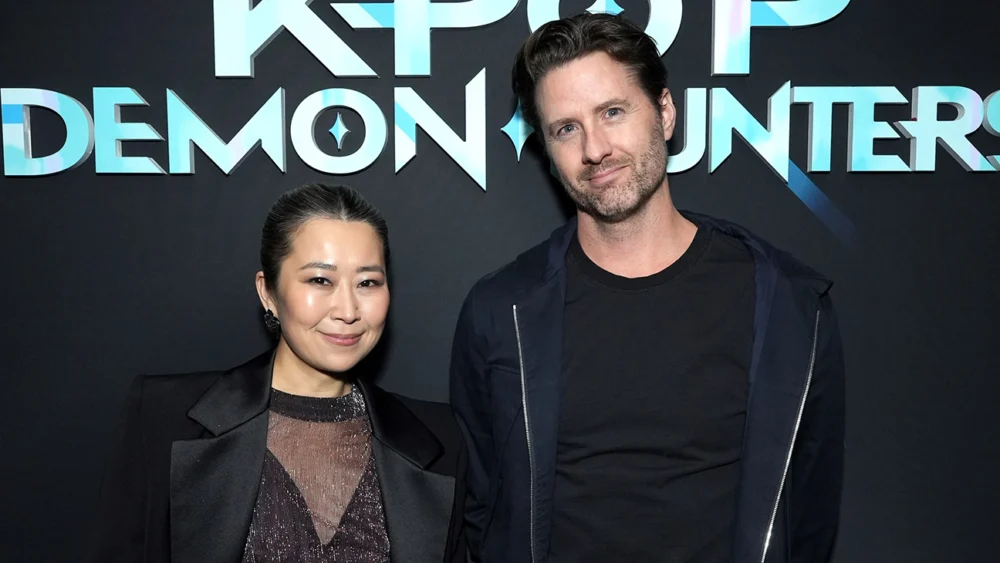
Los Angeles, CA — Directors Maggie Kang and Chris Appelhans, the creative forces behind the animated sensation KPop Demon Hunters, are extending an unprecedented invitation to the 2026 Academy Awards, ensuring their entire production crew shares in the celebration of the film’s two nominations. This move underscores the filmmakers’ deep appreciation for the collaborative effort that brought their vision to life, transforming an original concept into a global phenomenon and a serious contender for Best Animated Feature and Best Original Song.
From Streaming Sensation to Oscar Contender
Released on Netflix in June, KPop Demon Hunters rapidly defied expectations, quickly becoming the streaming giant’s most-watched title. What began as a quiet debut blossomed into a bona fide sleeper hit, captivating audiences worldwide and spawning an array of merchandise, including popular toy lines and food tie-ins. The film’s unexpected popularity even led to a unique theatrical run for a sing-along companion version, a testament to its fervent fanbase. Kang expressed profound astonishment at the film’s trajectory, telling The Hollywood Reporter, "It’s beyond anything I could have ever imagined this concept becoming." This organic growth from a streaming launch to mainstream cultural impact highlights a shifting paradigm in how successful films find and engage their audiences in the modern entertainment landscape.
The film’s infectious soundtrack, spearheaded by lead singing voice and songwriter EJAE, has also garnered significant attention, propelling her into the industry spotlight alongside the directors. The song’s nomination for Best Original Song at the upcoming Academy Awards further solidifies the film’s artistic merit and widespread appeal.
A Collaborative Triumph in Animation
Despite the individual recognition bestowed upon Kang, Appelhans, and EJAE, the directors are quick to redirect the focus to the vast team responsible for KPop Demon Hunters‘ success. They emphasize that animation is inherently a collaborative art form, requiring the coordinated efforts of hundreds of artists, technicians, and storytellers. "Animation is such a collaborative process," Kang stated, highlighting the intricate synergy required to produce a feature-length animated film.
The journey to the screen was a lengthy one, spanning a rigorous seven-year incubation period. This extensive timeline, typical for high-quality animation, involved countless hours of development, character design, storyboarding, and frame-by-frame execution. Appelhans acknowledged the intensity of this creative marathon, noting that the awards campaign has finally provided an opportunity for the team to collectively acknowledge their shared achievement. "We honestly haven’t had much time to be with them post-release and just hold hands, jump up and down and celebrate," Appelhans shared, reflecting on the delayed but much-deserved moments of joy. Kang, visibly moved by the dedication of her colleagues, admitted, "Every time I think about the crew, I just burst into tears. I’m so grateful to everybody. You make sacrifices in your life working on these things, no matter what your role is and how long you’re on it."
The Oscars: A Crew-First Celebration
In a gesture of profound appreciation, Kang and Appelhans have decided to dedicate their additional Academy Awards tickets exclusively to their crew members. This decision transforms the prestigious event into a collective celebration, ensuring that those who poured years of their lives into the project are present for its highest recognition. "We got extra tickets, so we’re only inviting our crew to it; just as a reward and also so that we could all be there to celebrate, no matter what happens," Kang explained. "They all deserve to be there." This unconventional approach to Oscar night attendance serves as a powerful statement, prioritizing the collective effort over individual accolades and reinforcing the directors’ belief that the film’s success belongs to everyone involved.
Industry Acclaim and Peer Recognition
Even amidst the film’s immense popularity and critical acclaim, Kang and Appelhans continue to find moments of genuine surprise. Appelhans noted that interacting with revered filmmakers who appreciate KPop Demon Hunters remains a particularly rewarding experience. He cited a recent American Cinematheque program moderated by Oscar-winning director Guillermo del Toro, where such exchanges occurred. "I am always wonderfully surprised when filmmakers that we really admire [appreciate the film]," Appelhans stated.
He further elaborated on the unique connection forged between artists, describing how fellow directors often perceive the depth and complexity beneath the film’s vibrant surface. "The sort of clarity that they see — through all the bedazzling in the movie — to the hard stuff. [They] have such interesting questions about it and notice the things that took the most work behind the scenes to pull off," Appelhans continued, concluding, "Artist to artist, you feel sort of appreciated."
Kang echoed this sentiment, finding particular satisfaction in conversations with industry figures who understand the broader significance of KPop Demon Hunters. She recounted a recent meeting with actor Daniel Dae Kim, praising his insights. "[He] just knows how much this means for our industry and for Korean creators because he’s somebody who really stands up for that," Kang added, highlighting the film’s cultural impact and its role in championing diverse voices in Hollywood.
The Shifting Landscape of Film Distribution
The unprecedented success of KPop Demon Hunters, particularly its journey from a streaming platform to a theatrical run, has sparked considerable industry conversation about evolving distribution models. Kang reflected on the challenging circumstances under which the film was greenlit, emphasizing that it was conceived during the height of the COVID-19 pandemic. "To get a green light in a time of super uncertainty. To be able to make an original IP in this climate, where we are just typically getting sequels and regurgitated ’80s films, I just saw it as an opportunity to get a movie made. That’s all you really can ask for, especially as a first-time filmmaker," she explained.
She acknowledged the ongoing fluidity of the theatrical market, stating, "The whole theater climate is strange. We just don’t know how people are consuming content these days. We’re still trying to figure it out." The film’s unique trajectory—rolling out on streaming, garnering fan love, and then transitioning to cinemas weeks later—serves as a compelling case study. "The fact that that’s possible for something is really interesting," Kang observed. "It just tells us that every film is different. How it’s consumed is different. How it’s enjoyed is different. Hopefully we see more, I guess, bespoke releases [or] approaches to each film."
Appelhans believes streaming platforms offer distinct advantages for certain types of films, particularly those with unconventional titles or complex narratives that are difficult to convey in traditional marketing campaigns. While KPop Demon Hunters succinctly describes its premise, its depth goes far beyond its title. "Streaming is great in our case," Appelhans commented. "It’s very hard to explain that to an audience in a marketing piece. The most convincing version of that is word of mouth, firsthand experience and people speaking up for the film." He posits that the "snowball effect" of organic discovery and peer recommendations is far more achievable on streaming platforms. "I wonder if there’s [a] certain type of movie that will always benefit from having that opportunity to create buy-in and build momentum versus trying to persuade everybody cold that they should show up to the theater on the first Saturday or whatever."
Looking Ahead: The Future of KPop Demon Hunters
Given its monumental success, a sequel to KPop Demon Hunters is officially in development. While initial reports hinted at a 2029 release, Sony Pictures Animation executives have recently suggested that the production timeline might extend beyond that, acknowledging the famously lengthy process of animation. The directors, who have been promoting the film almost continuously since its explosion in popularity in July 2025, remain understandably discreet about specific details.
However, Appelhans noted that audiences are increasingly savvy about the animation pipeline. "I’ve seen a lot of comments on YouTube interviews that have been voted right to the top that say something along the lines of, ‘If there’s going to be a sequel, let them cook. Don’t rush it. We can all wait,’" he revealed. "The audiences are so media savvy now. They don’t know the animation pipeline per se, but they have sort of spoken in the sense of if we make it great, they’ll be there."
Kang drew a parallel to another Sony Pictures Animation success story, the Spider-Verse franchise, which also involved significant wait times between installments. "The diehard Spider-Verse fans really know that. They understand that level of artistry takes a really long time," she explained. "Anytime you’re trying to do something new and different, it takes even longer. I think whatever we do next is going to be just pushing ourselves even more than what we did with this movie." This commitment to innovation and artistic excellence promises that the next chapter of KPop Demon Hunters will aim to exceed the high bar set by its groundbreaking predecessor.