Christian Bale, the acclaimed actor whose indelible portrayal of Patrick Bateman in the 2000 film American Psycho cemented the character in cinematic history, has offered his initial thoughts on the impending new adaptation of Bret Easton Ellis’s controversial novel, set to be helmed by director Luca Guadagnino. The news of a fresh cinematic take on the notorious investment banker-cum-serial killer has generated considerable discussion, prompting Bale to address the development publicly.
Bale’s Measured Endorsement for the New ‘American Psycho’
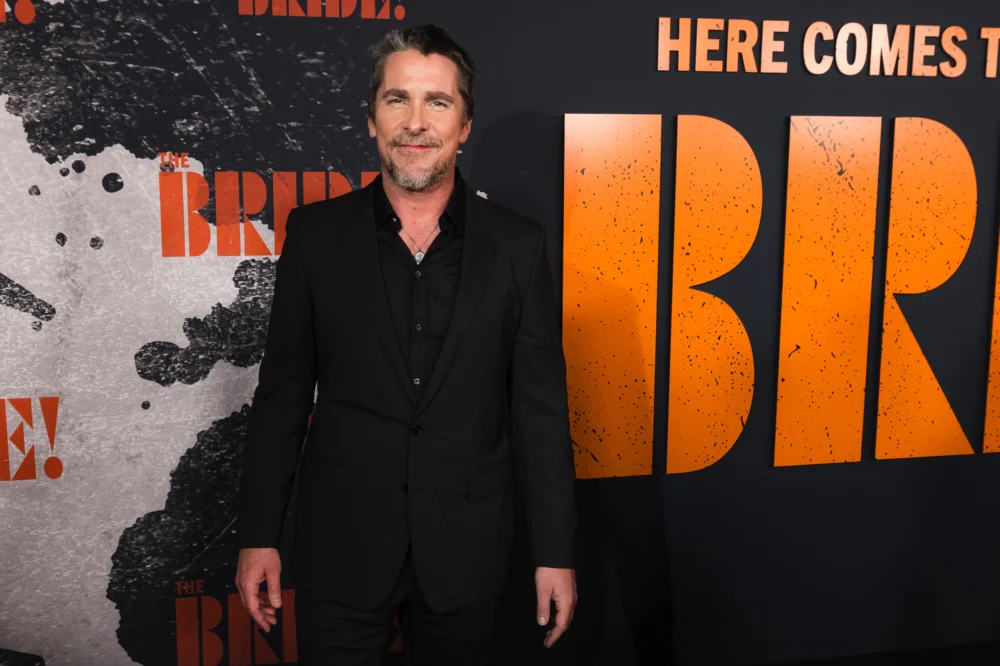
Speaking at the premiere of his new film, The Bride!, on Tuesday, Bale conveyed a spirit of encouragement for the creative team embarking on this ambitious project. When asked about potential young actors for the iconic role, Bale stated, "Whoever wants to give it a shot, give it a pop." He reflected fondly on his experience making the original film, adding, "I loved making it with [director] Mary Harron so many years back, fantastic memories of it all."
Bale characterized the endeavor as a "bold choice," acknowledging the challenge of revisiting such a distinctive property. "Bold choice of anyone to try to do a – I don’t know if they’re doing a remake or what, I don’t know anything else about it," he clarified, indicating he was not fully apprised of the project’s specifics. Despite this, his sentiment was unequivocally positive: "But all the best to ’em, I like brave people." His remarks underscore a respect for artistic courage in reinterpreting established works, particularly one as iconic and challenging as American Psycho.
The Legacy of Patrick Bateman and the 2000 Film
Bale’s performance as Patrick Bateman in the 2000 film, directed by Mary Harron, is widely regarded as one of his most iconic and defining roles. The film, a darkly satirical psychological thriller, plunged audiences into the superficial, materialistic world of 1980s Wall Street, where Bateman’s meticulously crafted facade of a successful investment banker concealed a horrific double life as a serial killer. Harron’s adaptation skillfully navigated the novel’s extreme violence and graphic content, opting for a more psychological and allegorical approach that emphasized the era’s consumerism, misogyny, and moral decay rather than explicit gore.
The production of the 2000 film itself was fraught with challenges, including casting controversies and directorial changes before Harron ultimately took the helm. Bale, then a rising star, fully immersed himself in the role, undergoing significant physical transformation and delving deep into Bateman’s complex psyche. His portrayal captured the character’s chilling blend of superficial charm, meticulous vanity, and psychotic brutality, earning him widespread critical acclaim and solidifying the film’s status as a cult classic. American Psycho (2000) not only propelled Bale’s career but also provided a potent cinematic commentary on the excesses of the Reagan era, resonating with audiences for its biting satire and unsettling exploration of identity and madness.
The Genesis of the New Adaptation
The upcoming American Psycho project is set to be directed by the acclaimed Italian filmmaker Luca Guadagnino, known for his distinct visual style and emotionally rich narratives. Guadagnino’s diverse filmography includes the romantic drama Call Me By Your Name, the suspenseful thriller A Bigger Splash, and the atmospheric horror remake Suspiria. His involvement signals a potentially art-house approach to the material, suggesting a departure from conventional horror or thriller tropes.
Lionsgate is backing the new adaptation, which, according to reports, is not intended as a remake of the 2000 film but rather a fresh interpretation of Bret Easton Ellis’s original 1991 novel. Guadagnino himself teased the upcoming movie at CinemaCon last year, expressing his deep personal connection to the source material. "We are really working hard to bring to the screen a new adaptation of Bret Easton Ellis’ American Psycho, a book that I deeply love that is something that influenced me so much," Guadagnino stated at the time. The screenplay is being penned by Scott Z. Burns, known for his work on films such as Contagion and The Bourne Ultimatum.
Distinguishing Adaptation from Remake
The distinction between a "new adaptation" and a "remake" is crucial, particularly for a property like American Psycho. A remake typically seeks to re-envision a specific film, often updating it for a new generation while retaining many of its core narrative and stylistic elements. An adaptation, conversely, returns directly to the original source material—in this case, Bret Easton Ellis’s novel—offering an entirely new cinematic interpretation that may diverge significantly from previous film versions. This approach grants Guadagnino greater creative freedom to explore facets of the novel that the 2000 film might have emphasized differently or omitted. It also allows the director to infuse the narrative with his unique artistic vision, potentially offering a more contemporary lens through which to examine Ellis’s themes of consumerism, identity, and violence.
Bret Easton Ellis’s Controversial Source Material
Bret Easton Ellis’s 1991 novel American Psycho remains one of the most polarizing and debated works of modern literature. Upon its initial publication, the book ignited a firestorm of controversy due to its graphic depictions of violence, particularly against women, and its explicit sexual content. Critics were divided, with some denouncing it as misogynistic and gratuitously violent, while others hailed it as a brilliant, albeit disturbing, satire of late-capitalist excess, male entitlement, and the vacuity of 1980s yuppie culture.
The novel is renowned for its unreliable narrator, Patrick Bateman, whose meticulously detailed descriptions of designer clothing, gourmet meals, and elaborate skincare routines are juxtaposed with increasingly disturbing accounts of torture, murder, and dismemberment. Ellis crafted a narrative that blurred the lines between reality and hallucination, leaving readers to question the veracity of Bateman’s confessions. This ambiguity, coupled with its unflinching portrayal of societal ills, has ensured the novel’s enduring, albeit contentious, place in literary discourse. Any new adaptation must grapple with the inherent challenges of translating such extreme and provocative material to the screen while maintaining its critical bite and avoiding mere sensationalism.
Industry Reactions Beyond Christian Bale
Christian Bale is not the only member of the original American Psycho team to weigh in on the news of a new adaptation. Other key figures involved in the 2000 film have also shared their perspectives, offering a nuanced view of revisiting such a potent story.
Matt Ross, who co-starred in the original movie, expressed a pragmatic yet cautious outlook. He noted that the project "feels like a business venture more than anything else," a common sentiment in Hollywood regarding the re-purposing of established intellectual property. However, Ross also acknowledged the potential for artistic merit, adding, "but being that it’s based on a book, there can be multiple interpretations, so why not?" His primary concern, and indeed a significant challenge for the new production, lies in the shadow cast by Bale’s performance: "I think they have their work cut out for them, for no other reason than Christian’s performance is exceptional." This highlights the high bar set by the original film and the difficulty in reimagining a character so strongly associated with a particular actor.
Producer Chris Hanley, who was instrumental in bringing the 2000 film to fruition, offered a more direct defense of the new project, particularly in light of what he described as negative industry chatter. "Everybody’s calling me, going like, ‘How stupid to make [American Psycho],’" Hanley recounted. However, he quickly dismissed such criticisms by championing the new director: "I’m not like that. Luca is a great director. He’s never made a bad movie." Hanley’s endorsement of Guadagnino speaks to the director’s strong artistic reputation and suggests a belief that the material is in capable hands, regardless of the daunting task of following the original.
Broader Implications for Modern Cinema
The decision to create a new American Psycho adaptation speaks to a broader trend in contemporary cinema: the re-examination and re-interpretation of established intellectual properties. In an era dominated by franchises and recognizable brands, studios often look to existing works to mitigate risk and attract built-in audiences. However, adapting a property as notorious and challenging as American Psycho carries unique implications, particularly in the current cultural climate.
Guadagnino’s interpretation will inevitably face scrutiny through a modern lens, especially concerning themes of misogyny, violence, and privilege. The original novel and film were products of their time, offering a critique of 1980s excess. A new adaptation in the 2020s could potentially re-contextualize these themes, perhaps exploring them through the lens of contemporary social issues, such as income inequality, toxic masculinity in the digital age, or the persistent allure of superficiality. Guadagnino’s distinctive visual storytelling and his previous experience with intense, character-driven narratives suggest he might delve deeper into the psychological underpinnings of Bateman’s madness or offer a fresh perspective on the societal forces that enable such behavior. The project also poses a significant test for the creative freedom afforded to directors when tackling controversial literary works in a more sensitive cultural environment.
The Enduring Appeal of ‘American Psycho’
Despite, or perhaps because of, its controversial nature, American Psycho has maintained an enduring grip on popular culture. The character of Patrick Bateman has become a shorthand for superficiality, corporate greed, and the dark underbelly of consumerist ambition. The novel and the 2000 film continue to be studied, debated, and referenced, testament to their potent social commentary and psychological depth.
The ongoing relevance of American Psycho‘s themes—the dehumanizing effects of materialism, the performance of identity, and the ease with which malevolence can hide in plain sight—suggests that a new adaptation could offer compelling insights for a contemporary audience. The task ahead for Luca Guadagnino and Scott Z. Burns is significant: to craft an interpretation that honors the chilling essence of Bret Easton Ellis’s novel while bringing a fresh, relevant perspective to its enduring questions about humanity, morality, and the thin veneer of civilization. The anticipation for this project reflects not just curiosity about a new film, but a continued fascination with the dark mirror American Psycho holds up to society.