The Spanish government issued an emphatic denial Thursday following assertions from the White House that Madrid had reversed its long-standing neutrality to support military operations against Tehran. The diplomatic friction ignited after White House Press Secretary Karoline Leavitt suggested to reporters that Spain was now prepared to allow the United States military to utilize strategic bases on Spanish soil for the ongoing conflict. Madrid officials characterized the American claims as a misrepresentation of their foreign policy, asserting that their "no to war" stance remains the official position of the administration led by Prime Minister Pedro Sánchez.
The dispute highlights a growing rift between the United States and its European allies as the conflict in the Middle East escalates into a broader regional war involving Israel and Iran. Spanish Foreign Minister José Manuel Albares addressed the controversy directly during a broadcast on Cadena Ser radio, stating that the nation’s refusal to participate in the military campaign is "clear and unequivocal." Albares noted that despite the high-level pressure coming from Washington, the Spanish executive branch has not authorized any change in the status of its military cooperation regarding the Iranian theater.
Madrid Stands Firm Against Military Escalation
The White House’s comments appeared to be an attempt to project a unified front among NATO allies following a series of public threats from President Donald Trump. On Wednesday, the U.S. President warned that he would "cut off all dealings with Spain" if the country did not align its military assets with the American-led coalition. Leavitt told a news briefing that the Spanish government had "heard the president’s message loud and clear" and claimed that Madrid had agreed to cooperate within the last several hours.
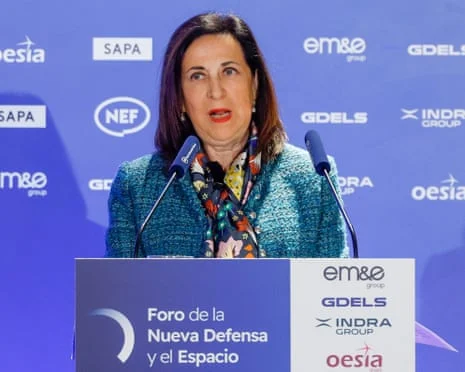
Spanish Defense Minister Margarita Robles joined Albares in dismissing these claims, describing the White House narrative as factually incorrect. Speaking from Madrid, Robles emphasized that Spain would not authorize the use of the Morón and Rota bases for strikes or logistical support related to the war on Iran. "They know it’s not true," Robles said, referring to the U.S. administration. "Words are just words. I’m not going to speculate; obviously, it could be a step backward they’re trying to take after President Trump’s inappropriate statements, but the facts are crystal clear."
The defense minister further elaborated on the ethical and legal foundations of Spain’s refusal. While acknowledging that the situation in Tehran involves significant human rights violations—specifically citing the treatment of women under the current Iranian regime—Robles argued that no single nation should act as an "international guardian" without a mandate from international law. She stressed that Spain only participates in military actions that fall under the "umbrella" of the United Nations, NATO, or the European Union.
The Strategic Significance of Rota and Morón Bases
The tension over Spain’s participation centers largely on the geographic and strategic importance of the Naval Station Rota and Morón Air Base. Located in southern Spain, these facilities are critical hubs for U.S. military reach into the Mediterranean, North Africa, and the Middle East. Rota serves as a permanent port for U.S. Navy destroyers equipped with the Aegis ballistic missile defense system, while Morón provides essential runway capacity for heavy transport and refueling aircraft.

Under the current bilateral Defense Cooperation Agreement, the United States requires explicit Spanish government authorization to use these bases for missions not previously agreed upon in the treaty’s scope. Historically, Spain has been cautious about allowing these bases to be used for unilateral U.S. military interventions that lack broad international support. The refusal to open these bases for the war on Iran represents a significant logistical hurdle for U.S. Central Command, forcing a reliance on more distant or politically sensitive alternatives in the region.
Military analysts suggest that the White House’s premature announcement of Spanish cooperation may have been a tactical move to force Madrid’s hand or to signal to other hesitant allies that the coalition was expanding. However, the move appears to have backfired, resulting in a public rebuff that underscores the isolation of the U.S. position among certain Western European partners who favor de-escalation and diplomatic intervention over sustained military strikes.
Economic Pressures and the Trump Trade Threat
The diplomatic spat is unfolding against a backdrop of severe economic threats. President Trump’s warning to "cut off all dealings" with Spain has sent shockwaves through the Spanish trade and tourism sectors. The United States is a primary market for Spanish agricultural exports, including olive oil, wine, and cheese, and a significant source of foreign direct investment. A total cessation of trade would likely trigger a recession in the eurozone’s fourth-largest economy.
Despite these stakes, the Sánchez administration has signaled that it will not be coerced into a military commitment that lacks domestic public support. Spain has a long history of anti-war sentiment, rooted in the massive public protests against the 2003 invasion of Iraq. Political observers in Madrid note that any move to support a unilateral U.S. strike on Iran would be "political suicide" for the current left-leaning coalition government, which relies on the support of parties that are staunchly anti-interventionist.
"Our position hasn’t changed at all," Albares told reporters, reinforcing the idea that Spain’s sovereignty over its military decisions is not for sale. The Spanish government is reportedly seeking support from other EU members to form a collective diplomatic shield against potential U.S. secondary sanctions or trade barriers resulting from their neutrality in the Iran conflict.
EU Coordination and Middle East Evacuations
While Spain rejects White House comments that it now backs US-Israel war on Iran, the broader European Union is grappling with the immediate humanitarian fallout of the conflict. EU foreign ministers held a virtual emergency meeting on Thursday to coordinate evacuation efforts for thousands of European citizens currently trapped in the region. Several countries, including France and Italy, have already deployed military transport planes to retrieve civilians from Lebanon and neighboring areas as the fighting intensifies.
The meeting also touched upon the reinforcement of EU ally Cyprus, which has become a primary staging ground for humanitarian aid and evacuation logistics. Germany is reportedly considering the deployment of additional military personnel and assets to Cyprus to bolster the island’s security as it becomes a frontline for the regional crisis. Unlike the direct military offensive against Iran, these efforts have broad support across the bloc, including from Madrid.

The European Union remains divided on the long-term strategy regarding Tehran. While most member states condemn Iran’s regional activities and nuclear ambitions, there is little appetite for a full-scale war. The Spanish refusal to grant base access is seen by some as a proxy for the wider European concern that a unilateral U.S.-Israeli campaign could lead to a total collapse of regional stability, a massive surge in energy prices, and a new refugee crisis on Europe’s southern shores.
Legal Frameworks and the ‘No to War’ Legacy
The legal argument presented by Minister Robles—that Spain only acts under international law—is a cornerstone of the country’s post-Franco foreign policy. By invoking the need for UN or NATO frameworks, Madrid is effectively setting a bar that the current U.S. administration is unlikely to meet, given the lack of a UN Security Council resolution authorizing force against Iran. Robles also pointed out that even within the United States, the constitutional requirement for congressional authorization is a point of contention, suggesting that the White House is overstepping its legal bounds both at home and abroad.
This legalistic approach allows Spain to maintain a principled stance while avoiding a direct ideological confrontation with Washington. However, the "clear and unequivocal" nature of the recent denials suggests that the time for diplomatic ambiguity has passed. The Spanish government is now actively campaigning within the EU to ensure that other member states do not succumb to similar bilateral pressure from the White House.
As the conflict progresses, the international community will be watching to see if the U.S. follows through on its trade threats or if the White House will attempt to repair the diplomatic damage. For now, the Spanish government remains firm in its refusal to be drawn into a conflict it views as legally questionable and strategically disastrous. The coming weeks will determine whether this "no to war" stance can survive the mounting economic and political pressure from a determined American administration.
The situation remains fluid as military operations continue in the Middle East. Spanish officials have indicated they will remain in close contact with their European counterparts to ensure a coordinated response to the evolving crisis, while maintaining that their domestic military assets will remain strictly under national control for the duration of the hostilities.