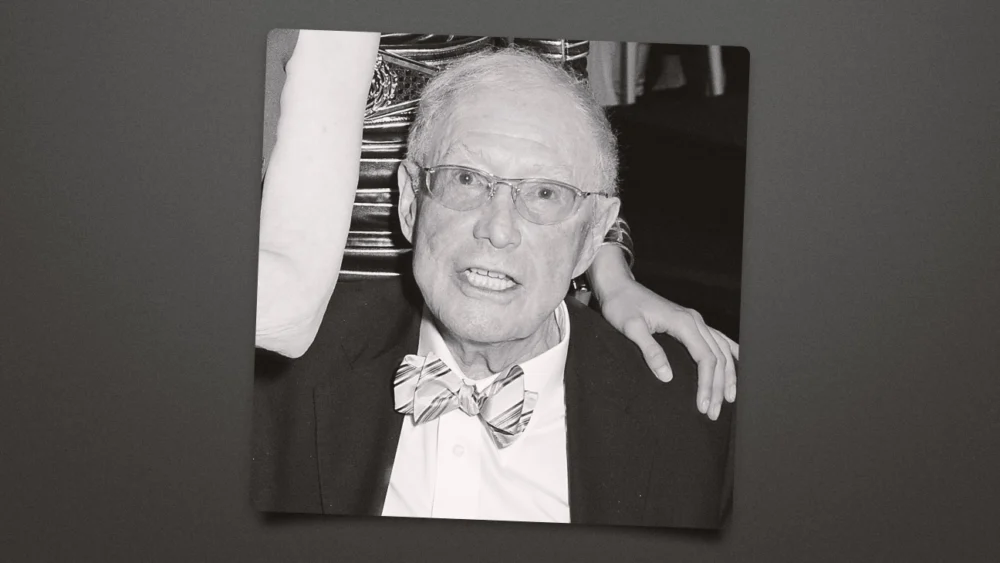
Alan Trustman, the acclaimed screenwriter responsible for crafting the scripts for two iconic 1968 films, The Thomas Crown Affair and Bullitt, both starring Steve McQueen in career-defining roles, has passed away at the age of 95. Trustman’s unique transition from a Harvard-trained corporate lawyer to a pivotal figure in late 1960s Hollywood underscored a distinctive talent for sophisticated crime narratives and high-octane action, leaving an indelible mark on cinematic history.
Trustman died on February 5 in a Miami nursing home, his son, John Trustman, confirmed to The New York Times. His death marks the end of an era for a writer whose contributions helped define the stylish and often anti-heroic sensibility that characterized a significant period in American filmmaking, particularly through his collaboration with one of Hollywood’s most enduring stars.
Early Life and Legal Beginnings
Born Alan Robert Trustman on December 16, 1930, in Brookline, Massachusetts, his early life was rooted in the esteemed institutions of New England. He attended the rigorous Boston Latin School and The Phillips Exeter Academy, demonstrating an early aptitude for academic and professional pursuits. His initial foray into the professional world began at a young age, securing a summer job at the First National Bank of Boston when he was just 15, an experience that would, decades later, surprisingly inform his breakthrough cinematic work.
Trustman continued his distinguished academic path at Harvard University, graduating in 1952, and subsequently earning his law degree from Harvard Law School in 1955. Following his legal education, he joined the prominent Boston law firm Nutter McClennen & Fish. This was no ordinary position; his father, Benjamin A. Trustman, was a partner at the firm, a testament to the family’s established legal lineage. Benjamin A. Trustman also notably served as a director of the John F. Kennedy Center for the Performing Arts in Washington, further highlighting the family’s civic and professional prominence.
During the summer of 1954, Trustman briefly worked at the law firm of Pillsbury, Madison & Sutro in San Francisco. This period proved unexpectedly formative, providing him with an intimate familiarity with the city’s unique topography and driving conditions—knowledge that would become crucial for one of his most celebrated screenplays.
From Corporate Law to Hollywood
The transition from the predictable world of corporate law to the unpredictable realm of Hollywood screenwriting was, for Trustman, sparked by an unusual catalyst: boredom. As he recounted to author John Spooner years later, his passion for NFL football and his favorite player, New York Giants quarterback Y.A. Tittle, had deeply colored his Sunday afternoons. When Tittle retired, Trustman found himself with an unexpected void. “Suddenly, I have nothing to do on Sunday afternoons,” he explained. This void, however, provided fertile ground for a long-held idea to blossom: “But I’ve had an idea for a long time about how to rob the First National Bank of Boston.”
Trustman recognized his strengths and limitations, stating, “I knew I could never write a book. But maybe I could write a movie.” His legal background, demanding precision and a structured approach, perhaps lent itself more naturally to the concise, plot-driven format of a screenplay than to the expansive narrative of a novel. Leveraging his extensive college connections, Trustman successfully found a New York literary agent to pitch his nascent story idea, a narrative that would soon captivate Hollywood.
Crafting ‘The Thomas Crown Affair’
That initial pitch evolved into The Thomas Crown Affair, a stylish caper that premiered in 1968 and instantly became a touchstone of the genre. The film, directed by the esteemed Norman Jewison and produced by the legendary Walter Mirisch, was primarily shot in Boston, a setting Trustman intimately knew. It starred Steve McQueen as Thomas Crown, a debonair millionaire who orchestrates elaborate bank heists purely for the thrill, and Faye Dunaway as Vicki Anderson, the shrewd insurance investigator tasked with catching him.
Trustman’s screenplay brilliantly balanced sophisticated plotting with an air of cool detachment, crafting a narrative where the lines between hero and villain blurred. The film’s iconic chess scene, fraught with sexual tension, and its overall aesthetic of wealth, glamour, and intellectual cat-and-mouse games, were hallmarks of Trustman’s writing. The innovative use of split screens and Michel Legrand’s Academy Award-winning score, featuring "The Windmills of Your Mind," further cemented The Thomas Crown Affair as a cinematic masterpiece that transcended the typical crime drama. Trustman even convinced Jewison of the bank robbery’s plausibility by taking him on a tour of the First National Bank of Boston, meticulously demonstrating how such a heist could be executed.
The Genesis of ‘Bullitt’
Just five months after The Thomas Crown Affair debuted, Trustman’s second major screenplay hit theaters: Bullitt. For this project, Trustman shared screenplay credit with Harry Kleiner, adapting a 1963 novel by Robert L. Fish. The film once again featured Steve McQueen, this time as the stoic San Francisco police detective Frank Bullitt, tasked with protecting a witness whose murder propels him into a web of corruption.
Trustman played a crucial role in shaping the film’s distinctive style and action. It was his suggestion that Englishman Peter Yates, whose work on a chase scene in the 1967 film Robbery Trustman admired, make his U.S. directing debut on Bullitt. This proved to be a stroke of genius, as Yates delivered one of cinema’s most legendary car chases, a 10-minute sequence through the undulating streets of San Francisco that revolutionized action filmmaking.
Trustman’s personal experience in San Francisco during his law school days directly informed this iconic scene. He recounted how he "originally wrote Bullitt for New York City." However, when producers Philip D’Antoni and Robert Relyea, along with McQueen, opted to shift the setting to San Francisco, Trustman was "ecstatic." He leveraged his familiarity with the city, recalling that "when you drove a light car like a Ford downhill in San Francisco, as we often did at 2 a.m., it would take off and fly through the air as you crossed some of the intersections." This observation led to his suggestion of using a Ford Mustang, a relatively new model in 1968, for McQueen’s character, a choice that thrilled the actor and contributed significantly to the car chase’s visceral impact and realism.
A Legacy Defined by McQueen
Trustman’s work with Steve McQueen on The Thomas Crown Affair and Bullitt solidified a specific cinematic persona for the actor: the cool, collected, and often rebellious anti-hero operating on his own moral code. These films cemented McQueen’s status as the “King of Cool” and are consistently cited among his most memorable performances. Trustman’s sharp dialogue and intricately plotted scenarios provided the perfect vehicle for McQueen’s understated intensity and charisma.
The success of these two films, released back-to-back, established Trustman as a sought-after screenwriter. His ability to blend intricate legal or criminal procedural details with engaging character studies made him a unique voice in an evolving Hollywood landscape. His screenplays for these films not only achieved commercial success but also garnered critical acclaim, influencing generations of filmmakers in the heist and police procedural genres.
Beyond the Iconic Films
Following the triumphs of his 1968 blockbusters, Trustman retired from his legal career, fully committing to screenwriting. He was handpicked by producer Walter Mirisch to pen the screenplay for They Call Me Mister Tibbs! (1970), the crime drama that served as a sequel to the Oscar best picture winner In the Heat of the Night (1967). Directed by Gordon Douglas, the film saw Sidney Poitier reprise his role as police detective Virgil Tibbs, further showcasing Trustman’s knack for character-driven suspense.
Trustman was also initially hired for the McQueen-starring film Le Mans (1971), a project deeply personal to the actor. However, creative differences and a significant disagreement with McQueen led to Trustman’s replacement by Harry Kleiner, his co-writer on Bullitt. This incident underscored the often-turbulent nature of Hollywood collaborations, even for a successful screenwriter.
His prolific output continued into the 1970s and beyond. He co-wrote the screenplays for Lady Ice (1973), starring Donald Sutherland and Jennifer O’Neill, and Hit! (1973), featuring Billy Dee Williams and Richard Pryor. He also contributed to two films in 1976, Crime and Passion and The Next Man. Later in his career, Trustman served as an executive producer on The Tracker (1988) and adapted a Raymond Chandler story for a 1995 episode of the Showtime anthology series Fallen Angels, demonstrating his enduring connection to the crime and mystery genres.
A Multifaceted Life and Enduring Influence
Alan Trustman’s creative pursuits extended beyond screenwriting. He also authored novels, bringing his narrative talents to the literary world. Furthermore, he shared his extensive knowledge and experience by teaching screenwriting at prestigious institutions such as Harvard, New York University (NYU), and the University of Miami, shaping the next generation of storytellers. In an interesting turn, he also delved into the world of currency trading, reflecting a sharp intellect and a continued fascination with complex systems and calculated risks, much like the characters he penned.
His impact on cinema, particularly through The Thomas Crown Affair and Bullitt, is undeniable. These films not only entertained millions but also pushed the boundaries of genre filmmaking, setting new standards for character development, plot complexity, and action sequences. The meticulous attention to detail, a hallmark of his legal training, was evident in the logical yet thrilling construction of his screenplays.
Personal Life and Final Years
Throughout his life, Alan Trustman was married multiple times. His third wife was Michelle Urry, the esteemed Playboy magazine cartoons editor, to whom he was married from 1989 until her death in 2006. In 2008, he married his fourth wife, Barbara, a psychiatrist, who survives him.
In addition to his wife, Barbara, Trustman is survived by his son, John Trustman, and his daughter, Laurie. He also leaves behind his sister, Patty, and a loving extended family that includes 11 grandchildren. Trustman’s long and varied life, marked by significant professional shifts and creative output, concluded quietly in Miami, but his contributions to American cinema continue to resonate, especially through the enduring popularity and critical appreciation of his most famous works. The sharp wit, intricate plotting, and cool style of The Thomas Crown Affair and Bullitt remain a testament to his unique vision as a screenwriter.