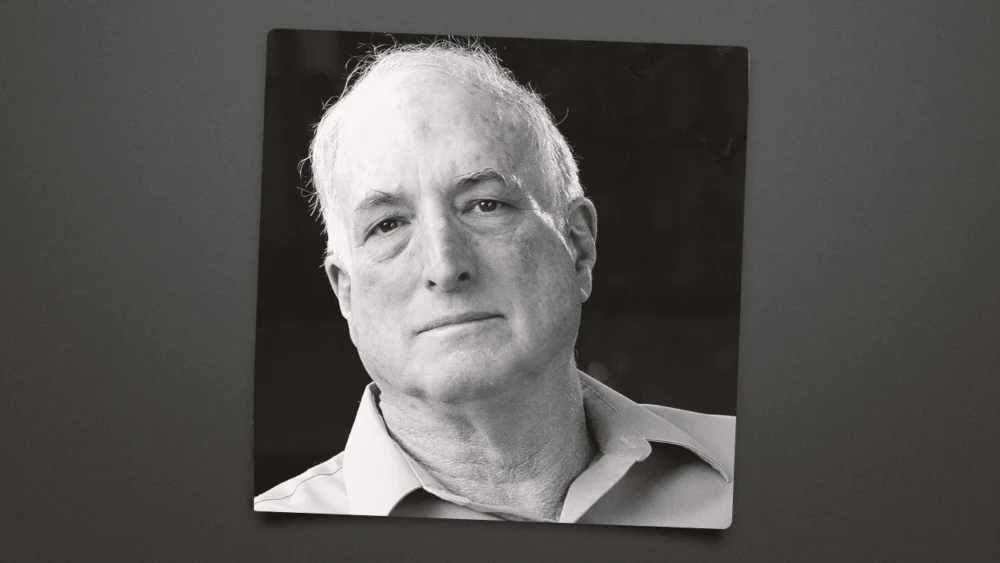
Jeremy Larner, the acclaimed Oscar-winning screenwriter whose firsthand experience as a speechwriter for Senator Eugene McCarthy’s 1968 presidential campaign provided the raw, insightful foundation for Robert Redford’s iconic political satire The Candidate, has died at the age of 88. Larner passed away on February 24 in a nursing facility located in Oakland, California, following a period of illness, his son Jesse Larner confirmed to The Hollywood Reporter. His death marks the passing of a writer who uniquely bridged the worlds of grassroots politics and Hollywood, capturing the disillusionment of an era with incisive wit.
Early Life and the Path to Journalism
Born Jeremy David Larner on March 20, 1937, in Indianapolis, Indiana, Larner’s early life showed promise both academically and athletically. He distinguished himself by winning the city’s high school tennis championship while attending Shortridge High. His father, Martin Larner, served as president of the Jewish Community Center Association, instilling a sense of community engagement. Larner continued his academic pursuits at Brandeis University, graduating in 1958, where he counted future activist Abbie Hoffman among his classmates. He then pursued graduate studies at the University of California, Berkeley, supported by a prestigious Woodrow Wilson fellowship.
By the age of 22, Larner had relocated to New York City, where he spent the 1960s forging a career as a prolific freelance journalist. His byline appeared in prominent publications such as Life, The New Republic, and Harper’s. His assignments ranged from covering significant cultural events, including the 1968 Mexico City Olympics for Life, to exploring complex social issues. During this dynamic period, Larner also authored several books, including two novels and three nonfiction works. His literary output reflected a keen interest in societal dynamics, encompassing titles like Poverty: Views From the Left, his 1964 novel Drive, He Said, The Addict in the Street, and the LSD-focused The Answer.
The Crucible of 1968: The McCarthy Campaign
The year 1968 proved to be a pivotal moment for both the United States and Jeremy Larner. Amidst growing national unrest over the Vietnam War, Larner joined the presidential campaign of Senator Eugene McCarthy of Minnesota in March of that year. McCarthy, running on an anti-war platform, sought to challenge the Democratic Party’s establishment and secure the presidential nomination. Larner immersed himself in the frenetic pace of the campaign trail, contributing as a speechwriter and experiencing firsthand the idealism, exhaustion, and inherent contradictions of American electoral politics.
The political landscape of 1968 was tumultuous. President Lyndon Johnson, facing dwindling support, announced he would not seek re-election. The assassination of Senator Robert F. Kennedy tragically altered the Democratic primary race. Despite McCarthy’s early momentum and the fervent support of anti-war activists, the nomination ultimately went to Vice President Hubert Humphrey, leaving many of McCarthy’s supporters, including Larner, deeply disillusioned by a political process they felt was rigged against genuine change. This profound experience of idealism colliding with political reality would become the wellspring for his most celebrated work.
From Campaign Trail to Oscar Stage: The Genesis of ‘The Candidate’
Following the 1968 campaign, Larner channeled his observations and frustrations into the book Nobody Knows: Reflections on the McCarthy Campaign of 1968. Published in 1969, the book gained significant traction when it was serialized in Harper’s magazine, cementing Larner’s reputation as an astute observer of the political scene. It was this publication that caught the attention of actor Robert Redford and director Michael Ritchie, who were seeking a screenwriter to capture the essence of modern American politics for a new film project.

Redford and Ritchie approached Larner, recognizing his unique qualification as one of the few writers who had direct experience penning speeches for a presidential campaign and also possessed a background in screenwriting. Larner recalled his initial meeting, where he candidly offered an unconventional comparison: "to me, a politician was like a movie star. He could lose himself in a character — it’s true of many stars, and was even truer then — who resembles himself, only larger than life, as a symbol of what’s beautiful and what’s true." He noted Redford himself embodied such a symbol. Despite believing his candor might cost him the job, he was called back, and the collaboration for The Candidate (1972) began.
Crafting a Political Masterpiece: Jeremy Larner’s Vision
The Candidate, produced by Warner Bros., starred Robert Redford as Bill McKay, an idealistic young poverty lawyer and son of a former wheeling-dealing governor (played by Melvyn Douglas). McKay is reluctantly groomed by a cynical political consultant (Peter Boyle) to run against an entrenched Republican incumbent, Crocker Jarman (Don Porter), for a California Senate seat. Initially believing he has no chance of winning, McKay speaks his mind, only to find himself unexpectedly gaining traction.
Larner’s real-world experience proved invaluable in shaping the film’s authenticity. He recounted instances where elements from the McCarthy campaign were directly woven into the script, such as the memorable scene where McKay is handed a Coke and a hot dog, occupying his hands, just before being slugged in the face – an incident that actually happened to McCarthy. For additional research, Larner spent a week shadowing Democratic Senator John V. Tunney, who had recently won a California Senate seat. A humorous line from Tunney, "I have a confession to make: I ate all the shrimp," also found its way into Larner’s screenplay.
The writing process for The Candidate was intense. Given a month to deliver the screenplay, Larner completed a 180-page draft in just two weeks, working tirelessly from noon to 3 a.m. daily. He then remained on set throughout the $1.1 million picture’s production, constantly rewriting and refining the script. Larner emphasized the film’s central theme: the gradual erosion of a candidate’s idealism as they conform to the demands of campaigning. He observed, "the better McKay gets at campaigning, the more he loses himself."
The film culminates in one of cinema’s most iconic and ambiguous endings, with McKay, having surprisingly won the election, turning to his consultant Marvin Lucas and asking, "What do we do now?" This question perfectly encapsulated the film’s exploration of political victory’s inherent emptiness and the loss of purpose once the battle is won. Larner admitted he was "a little surprised the ending worked out OK — more than OK," noting that "That line, ‘What do we do now?,’ is probably not something a real politician would say. They think they know what they’re doing as a rule, even when they don’t!"
On Oscar night in 1973, Jeremy Larner accepted the Academy Award for Best Original Screenplay. In his acceptance speech, he thanked "the political figures of our time who’ve given me terrific inspiration. I think as long as they continue to do the things they do and to use the words that they use, words like ‘honor,’ there’ll be better pictures and sharper pictures even than The Candidate." The film was lauded for its biting political satire and its prescient portrayal of media-driven politics, cementing its place as a classic.
Another Vision: Jack Nicholson’s Directorial Debut
While The Candidate brought Larner widespread recognition, it wasn’t his first foray into feature film screenwriting. He had previously adapted his 1964 novel, Drive, He Said, for the screen, marking the audacious feature directorial debut of Jack Nicholson. The novel revolved around two Ohio University roommates: one, an alienated basketball star (played by William Tepper in the film), and the other, a revolutionary (Michael Margotta). Its evocative title was drawn from a line in Robert Creeley’s poem "I Know a Man."
In 1968, Nicholson, on the cusp of his own stardom, called Larner directly, declaring, "Jer, I’m gonna be a star, and they’re gonna let me direct a picture. I want you to come out and write it." Larner left his position at Harvard, where he was working at the time, to collaborate with Nicholson in Los Angeles. Larner stated he wrote the initial draft, then rewrote Nicholson’s revisions. The project also notably involved uncredited contributions from screenwriting luminaries Terrence Malick and Robert Towne, highlighting the collaborative spirit and talent surrounding the production.

Drive, He Said, an R-rated film, depicted a generation grappling with disillusionment and radicalism, echoing the broader societal shifts of the late 1960s and early 1970s. However, its reception was mixed. The film was reportedly dismissed at the Cannes Film Festival and had a brief theatrical run before being pulled. By the time production wrapped, Nicholson had indeed achieved stardom with the success of Easy Rider (1969), while Larner returned to Harvard before the opportunity for The Candidate arose. Despite its initial struggles, Drive, He Said is recognized today as a significant, albeit challenging, work that showcased Nicholson’s early directorial vision and Larner’s ability to capture the anxieties of youth.
The Post-Oscar Landscape and Unproduced Screenplays
Despite winning an Academy Award, Jeremy Larner found the path to getting subsequent screenplays produced surprisingly difficult. He revealed that he wrote "about a dozen screenplays" after The Candidate, for which he was "much better paid" and believed some were "far better" than his Oscar-winning work, but he "could never get any of them made." This struggle highlighted the often-frustrating reality for even celebrated screenwriters in Hollywood, where clout is often elusive. Larner mused, "I thought I was the exception to the rule in terms of writers having clout, but writers don’t have any clout unless they get to be Paddy Chayefsky," referencing the legendary, powerful screenwriter.
Among his unproduced works were several drafts for the 1979 film North Dallas Forty and an adaptation of Joseph Conrad’s novel Victory for director Sydney Pollack. While his film credits remained limited to his two produced screenplays, Larner continued to write and engage with the political and cultural discourse. He penned environmental speeches for Robert Redford, lectured on college campuses, and published a collection of poetry, Chicken on Church & Other Poems, in 2006.
A Lasting Legacy of Insight
Jeremy Larner’s legacy is inextricably linked to The Candidate, a film that remains profoundly relevant in its examination of political image-making, the media’s role, and the personal cost of ambition. His ability to translate complex political experiences and personal disillusionment into a compelling and widely understood narrative was his unique gift as a screenwriter. He provided a voice to the anxieties of an era, offering a satirical yet poignant commentary on the American political machine.
In his 2016 interview with Brooklyn Magazine, Larner reflected on the collaborative, sometimes challenging, process of making The Candidate. He recalled "constantly explaining myself" to many working on the film who didn’t fully grasp his script. He added, "It made sense to Redford and Ritchie, I always thought, but then again I was always reminding them of where the scenes fit together, and it was a constant concern of theirs to make sure the scenes did." He also noted the core concept predated his script: "When Redford and Ritchie approached me, McKay would be the son of a former governor, trapped into an uncomfortable position, and surprised when he wins. Kind of like me winning the Oscar."
Larner is survived by his two sons, Jesse and Zachary, and his brother, Daniel. He was married to his Brandeis classmate Susan Berlin from 1960 until their divorce in 1968. Jeremy Larner’s contributions to American cinema and political commentary will endure, particularly through The Candidate, a film that continues to resonate with audiences seeking to understand the often-murky intersection of power, performance, and idealism in public life. His passing marks the end of an era for a writer who truly understood that sometimes, the most insightful stories are born from the most personal experiences.