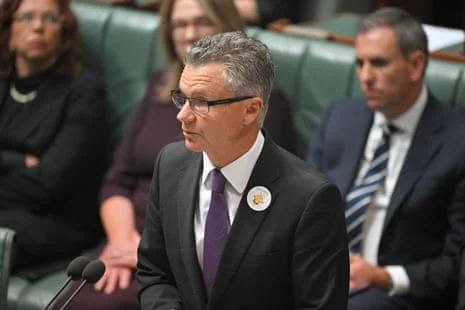
Foreign Minister Penny Wong confirmed Sunday that Australia is prepared to provide defensive military support to Middle Eastern nations targeted by Iranian aggression, though she explicitly ruled out participation in any "offensive action" or the deployment of ground troops. Speaking on the national broadcast program Insiders, Wong emphasized that while the Commonwealth remains committed to regional stability, its involvement will be strictly limited to protective measures and the defense of non-participant countries currently under fire.
The announcement comes as regional tensions escalate following a series of missile and drone strikes. Wong noted that several nations not directly involved in the core conflict have faced attacks from Iran, prompting requests for Australian aid. "You would anticipate as a consequence that we have been asked for assistance and we will work through that, carefully," Wong stated. When pressed on whether this assistance would specifically target the interception of Iranian drones and missiles, the Foreign Minister confirmed that such defensive roles are under active consideration.
Wong Flags Military Assistance in Middle East Amid Regional Tensions
The distinction between offensive and defensive operations has become a central point of debate within the Albanese administration. The government has faced scrutiny over the presence of Australian Defence Force (ADF) personnel on a United States submarine that recently torpedoed and sank an Iranian warship in the Indian Ocean. That incident resulted in the deaths of at least 87 people. Despite the lethal nature of that engagement, Prime Minister Anthony Albanese previously asserted that no Australian personnel participated in offensive actions, a sentiment Wong echoed on Sunday.
Wong described the presence of Australians on the U.S. vessel as a "third country deployment," a long-standing practice in military cooperation. She maintained that ADF members remain bound by Australian law and policy directives even when integrated into foreign units. However, she declined to specify if Australia had been consulted or had given explicit consent for its personnel to be present during the specific strike on the Iranian vessel.

The Foreign Minister also addressed the broader geopolitical landscape, including statements from former U.S. President Donald Trump regarding potential regime change in Tehran. Wong argued that the future of Iranian governance must be decided by the Iranian people themselves, citing historical precedents where external attempts at regime change failed to produce sustainable stability. "For there to be sustainable change… it has to be something that the people of that nation back and seek," she said.
Repatriation Efforts and Commercial Flight Challenges
As Wong flags military assistance in Middle East territories, the government is also managing a massive logistical effort to bring citizens home. As of early Sunday morning, 1,549 Australians have been successfully repatriated on nine direct flights. Two additional flights from the United Arab Emirates are expected to land in Sydney and Melbourne today, with a third flight scheduled for Perth.
The evacuation process has been hampered by volatile conditions. Dubai International Airport was forced to suspend operations briefly on Saturday evening as Iranian missiles and drones targeted locations across the Gulf. Although the airport has since reopened, the government remains wary of further airspace closures. In addition to air travel, ground evacuations are underway, with buses transporting 92 citizens and permanent residents from Qatar to Riyadh, Saudi Arabia.
Assistant Minister for Foreign Affairs Matt Thistlethwaite expressed frustration Sunday regarding the rising costs of commercial travel for those remaining in the region. He revealed that the government has formally communicated its "disappointment" to airlines over ticket price spikes. Despite these concerns, Thistlethwaite maintained that commercial flights remain the most viable option for the estimated 115,000 Australians still in the Middle East, as military-led evacuations are subject to the ad-hoc opening of restricted airspaces.
Defensive Posture: Australia Flags Military Assistance in Middle East Against Iranian Threats
The potential for Australian military assets to be used in a defensive capacity raises questions about the specific hardware and personnel that might be deployed. While Wong remained vague on the details, military analysts suggest that Australia could provide intelligence sharing, maritime surveillance, or anti-missile technology to allies in the Gulf. The primary objective, according to the Foreign Minister, is to ensure Iran does not acquire nuclear weapons and to reduce its capacity for regional destabilization.

This defensive posture is intended to balance Australia’s alliance obligations with a public desire to avoid being drawn into a protracted ground war. The commitment to transparency remains a key talking point for the Labor government. "If a decision is made, I’m sure that we will be transparent with the Australian people," Wong told reporters, seeking to reassure a public wary of foreign entanglements.
Domestic Emergencies: Record Flooding in the Northern Territory and Queensland
While the government’s eyes are on the Middle East, a domestic crisis is unfolding across Australia’s north. Severe weather and tropical lows have triggered life-threatening floods in the Northern Territory and Queensland. In the NT, the town of Katherine and the remote community of Daly River (Nauiyu) are facing historic water levels.
The Katherine River peaked at 19.2 meters on Saturday evening, marking its highest level since the catastrophic 1998 floods that claimed three lives. Although water levels have begun a marginal recession, meteorologists warn that isolated rainfall could cause renewed rises. Further west, the Daly River is expected to exceed 15.3 meters, surpassing a record set in 1957. Hundreds of residents have already been airlifted to safety as emergency services struggle to maintain access to isolated outposts.
In Queensland, the Bureau of Meteorology has issued severe weather warnings for the north-west and south-east regions. Rainfall totals are expected to reach up to 170mm in parts of the Sunshine Coast. The cumulative impact of a prolonged wet season has left the ground saturated, increasing the risk of flash flooding. Emergency crews in the Gladstone region recently rescued 34 people from a bus stranded in rising waters, highlighting the ongoing danger to motorists.
Melbourne Stabbing Sparks Debate Over Youth Crime Laws
The Australian social fabric is also being tested by a violent incident in Melbourne that has reignited a fierce political debate over criminal justice. A 22-year-old "good Samaritan" was killed Friday evening at Mernda train station while attempting to protect a 14-year-old boy from a group of attackers. Police described the incident as a "savage" assault involving physical violence and "edged weapons."

Four teenagers, ranging in age from 16 to 18, have been arrested in connection with the murder. The tragedy has prompted a swift response from Victorian Health and Ambulance Services Minister Mary-Anne Thomas, who noted that recently toughened youth crime laws mean violent offenders will now face "adult time."
However, the opposition has used the incident to criticize the Labor government’s handling of community safety. Opposition police spokesperson Brad Battin pointed to nearly 2,000 vacancies on police rosters and the closure of several stations as evidence of a systemic failure. The debate reflects a growing national concern over juvenile violence and the adequacy of existing legal frameworks to deter serious crime.
Conservation vs. Commerce in the Blue Mountains
In New South Wales, a different kind of conflict is brewing over the future of the state’s national parks. The proposed development of luxury "glamping" accommodations in the Gardens of Stone State Conservation Area has sparked outrage among environmentalists. Keith Muir, a prominent conservationist, described the unique pagoda landforms of the region as "symphonies in stone" that are being threatened by commercial interests.
The NSW National Parks and Wildlife Service (NPWS) has proposed a multi-day walking track and 18 twin cabins to be leased to a private operator. While the government frames the project as a way to promote eco-tourism and provide "bush camps" for hikers, critics argue the development is essentially a private resort on public land. The controversy highlights the ongoing tension between the need for economic development and the preservation of Australia’s world heritage-listed wilderness.
Infrastructure and Cultural Growth: Sydney’s Film Industry Expansion
Despite these challenges, the NSW government is moving forward with plans to solidify Sydney’s status as a global hub for the arts. The Minns Labor government has opened expressions of interest for a second major film studio in Sydney, backed by a $100 million capital investment. The project aims to meet the high demand from both Hollywood and the growing Indian "Bollywood" film industry.

Sites in Bungarribee, Eastern Creek, and Prospect are being considered for the facility. Arts Minister John Graham stated that the expansion is a "critical need" to address the shortage of studio space in Australia. Treasurer Daniel Mookhey added that the second studio would create thousands of jobs and attract international blockbusters, reinforcing the state’s economic resilience.
As Australia navigates these complex international and domestic issues, the government remains under pressure to balance its military commitments abroad with the urgent needs of its citizens at home. The coming days will be pivotal as the administration decides the exact nature of the assistance it will provide in the Middle East while managing the recovery from natural disasters and addressing rising concerns over public safety.