Prime Minister Anthony Albanese confirmed Tuesday that Australia will deploy a military surveillance aircraft to the Middle East as regional tensions escalate following a wave of attacks from Iran. The deployment of an E-7A Wedgetail comes alongside the dramatic announcement that five members of the Iranian women’s national football team have been granted humanitarian asylum in Australia after seeking protection during the Women’s Asian Cup. These twin developments signal a significant shift in Australia’s regional engagement, balancing a heightened military posture with a high-profile humanitarian intervention that has already drawn praise from international leaders.
The Australian government’s decision to provide military assets followed a formal request from the United Arab Emirates, which has reported intercepting more than 1,500 drones and rockets launched by Iranian-backed forces. Defense Minister Richard Marles stated that the E-7A Wedgetail, a sophisticated airborne early warning and control aircraft, will provide long-range reconnaissance to secure the airspace over the Gulf. The mission is scheduled for an initial four-week period and is described by the administration as a defensive measure intended to protect civilians and support partner nations under the right of collective self-defense.

In addition to the surveillance aircraft, Australia will supply advanced medium-range air-to-air missiles and launch ramps to the UAE. The Wedgetail is expected to depart Australia immediately and become operational in the region by the end of the week. Marles emphasized that the deployment is not intended for offensive operations but is a necessary response to the deteriorating security situation that has seen 12 countries in the region face direct or indirect attacks from Tehran.
Australia to Deploy Aircraft to Gulf to Protect Civilians and Stabilize the Region
The deployment of the E-7A Wedgetail represents one of the Australian Defense Force’s (ADF) most critical technical contributions to international security. The aircraft, based on a Boeing 737-700 airframe, is equipped with a powerful MESA (Multi-role Electronically Scanned Array) radar capable of tracking air and sea targets simultaneously. By providing a 360-degree surveillance bubble, the Wedgetail can direct fighter jets and surface-to-air missile batteries to intercept incoming threats, such as the drone swarms currently targeting Gulf infrastructure.
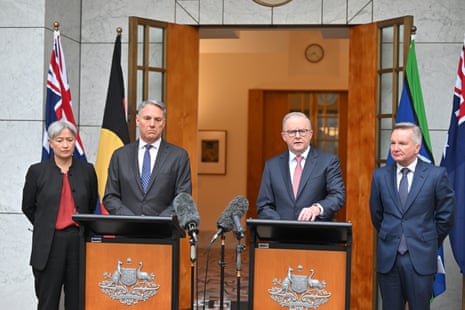
The Prime Minister’s announcement was made during a press conference in Canberra, where he was joined by senior members of the National Security Committee. Albanese told reporters that the decision to intervene was based on the need to maintain regional stability and protect Australian citizens living and working in the Middle East. He noted that the security environment has become increasingly volatile following recent military strikes ordered by the United States and Israel, which triggered a massive retaliatory response from Iran.
Opposition lawmakers have largely supported the move, though some have called for even greater military investment. Shadow Defense Minister James Patterson stated that while the bar for entering a Middle Eastern conflict should remain high, Australia must be prepared to assist friendly nations when asked. Patterson also used the moment to advocate for an increase in defense spending beyond the current 2% of GDP, citing pressure from Washington to reach as high as 3.5% to counter rising global threats.
Humanitarian Asylum for Iranian Athletes: PM Praises ‘Brave Women’
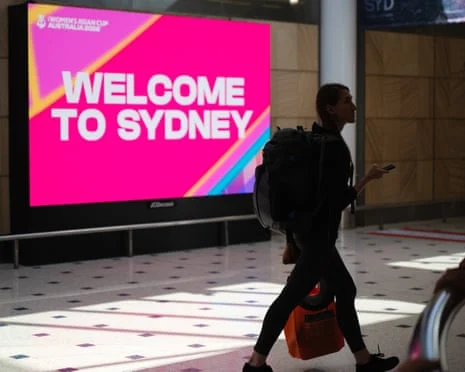
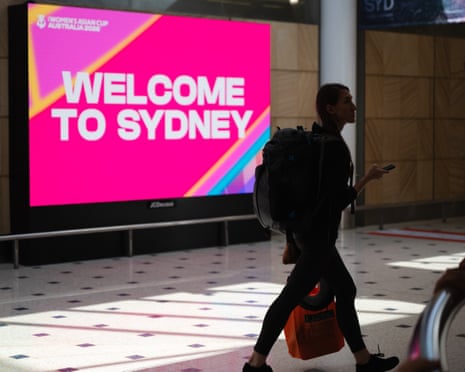
While military assets move toward the Gulf, a separate humanitarian crisis has unfolded on Australian soil. Five members of the Iranian women’s national football team, who were in the country for the Asian Cup, have been granted humanitarian visas. Home Affairs Minister Tony Burke confirmed that the women were moved to a safe location by the Australian Federal Police (AFP) after expressing fears for their safety should they return to Iran. The processing of their applications was reportedly completed at 1:30 a.m. Tuesday morning following days of quiet negotiations.
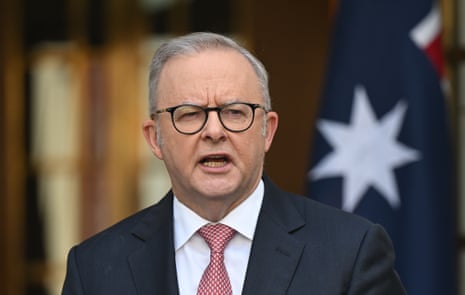
The Prime Minister revealed that he received a call from U.S. President Donald Trump at approximately 2:00 a.m. to discuss the welfare of the athletes. Albanese described the conversation as "raw" and "very positive," noting that Trump had expressed significant concern for the players’ safety. The Australian government had previously kept the asylum requests confidential to ensure the security of the team, but the news became public following comments from the U.S. President on social media.
Albanese praised the "brave women" for their courage in making such a difficult life decision. He indicated that the offer of asylum remains open to other members of the Iranian squad who may still be weighing their options. "They are safe here, and they should feel at home here," Albanese said, adding that the Australian public has taken the team to their hearts. The decision highlights the ongoing tension between Tehran and the international community regarding human rights and the treatment of female athletes and activists.
Economic Repercussions: Oil Surges and the Risk of Interest Rate Hikes
The escalating conflict in the Middle East has sent shockwaves through the global economy, with immediate consequences for Australian consumers. Crude oil prices surged to $115 a barrel on Monday, leading to a spike in petrol prices across major Australian cities. In Sydney and Melbourne, fuel costs have reached an average of 220 cents per litre, prompting fears of a sustained inflationary period. The Albanese government has urged the public to avoid panic-buying, though reports indicate that jerry cans have sold out at major retailers like Bunnings and Supercheap Auto.
Energy Minister Chris Bowen sought to reassure the public that Australia maintains 32 days of reserve petrol stocks. He emphasized that current supply chains remain intact and that all scheduled diesel deliveries have arrived on time. Despite these assurances, the sudden increase in demand for fuel containers suggests a high level of public anxiety regarding energy security. Farmers and logistics companies have expressed particular concern about the impact of rising fuel costs on the price of food and essential goods.
Economists are now warning that the inflationary pressure from energy prices could force the Reserve Bank of Australia (RBA) to raise interest rates sooner than expected. While many analysts previously anticipated a rate hold until May, the "live" nature of the RBA’s March meeting has put a potential hike back on the table. UBS economists noted that the combination of a hot domestic economy and surging global oil prices creates a "significant risk" of an earlier increase. RBA Governor Michele Bullock has stated that the bank is ready to act if inflation remains stubbornly high, a prospect that has already driven Australian three-year bond yields to a decade-high.
Global Defense Alliances: The EU and Indo-Pacific Interests
Against the backdrop of the Middle East crisis, Australia is also strengthening its ties with European partners. European Union foreign policy chief Kaja Kallas announced that the EU will sign new defense partnerships with Australia, Iceland, and Ghana in the coming days. This move reflects a broader shift by the EU toward what Commission President Ursula von der Leyen calls a "more realistic and interest-driven foreign policy." For Australia, the partnership offers a way to diversify its security dependencies beyond its traditional alliance with the United States.
The EU-Australia defense pact is expected to focus on maritime security, cybersecurity, and the protection of critical infrastructure. As the war in the Middle East threatens to disrupt global trade routes, the coordination between Canberra and Brussels is seen as vital for maintaining the flow of goods through the Indo-Pacific. Foreign Affairs Minister Penny Wong has been working "around the clock" to manage these diplomatic channels while also overseeing the evacuation of thousands of Australians from the conflict zone.
Since late February, more than 27,000 flights to and from the Middle East have been cancelled, leaving many Australians stranded. Consular officials are currently on the ground in the UAE and Qatar to assist citizens in finding alternative routes home. Wong reported that while some commercial flights have resumed out of Qatar, the security situation is expected to "get worse before it gets better." The government’s focus remains on providing evacuation options that do not rely on increasingly dangerous airspace.
Domestic Political Challenges and National Security
The convergence of military deployment, humanitarian asylum, and economic instability has created a complex political environment for the Labor government. While the granting of visas to the Iranian footballers has been met with bipartisan approval, the underlying economic strain is putting pressure on the administration’s approval ratings. The Greens have also played a role in recent legislative developments, agreeing to support a government bill to increase taxes on superannuation accounts exceeding $3 million, ending a long-standing stalemate in Parliament.
This legislative victory provides the government with a much-needed revenue boost as it faces calls for increased defense spending. However, the primary focus for the Australian public remains the cost of living. The potential for an interest rate hike next Tuesday, combined with record-high petrol prices, has made the Middle East conflict a domestic kitchen-table issue. The Prime Minister’s dual-track strategy—projecting strength abroad through military deployment while emphasizing compassion at home through humanitarian aid—is a high-stakes attempt to navigate these turbulent waters.
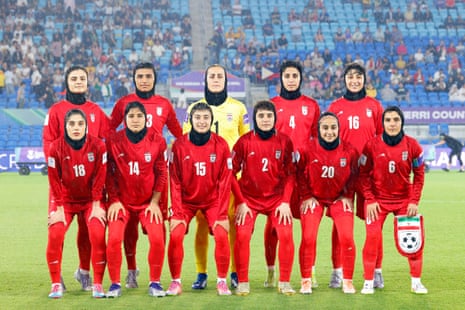
As the E-7A Wedgetail prepares for its mission in the Gulf, the eyes of the world remain on the Iranian women who have chosen a new life in Australia. Their story serves as a reminder of the human cost of geopolitical strife, even as nations move their most advanced weaponry into position. The coming weeks will determine whether Australia’s defensive contributions can help stabilize the region or if the conflict will continue to drive global markets and domestic policy toward further uncertainty.