President Donald Trump characterized the ongoing military offensive against Iran as a "short-term excursion" on Tuesday, asserting that the conflict would reach a conclusion "very soon" even as the Islamic Revolutionary Guard Corps (IRGC) countered that Tehran alone would dictate the war’s end. The escalating Middle East crisis entered a volatile new phase this week with U.S. airstrikes in northern Iraq killing four Iran-backed fighters and Israeli forces launching a second wave of heavy bombardments against "terror targets" and critical infrastructure in the heart of Tehran.
The conflicting narratives between Washington and Tehran have sent shockwaves through global markets and diplomatic circles, highlighting a fundamental disagreement over the trajectory of a war that has now entered its second week. While Trump suggested the mission was "ahead of schedule" and "pretty much" complete, Iranian Foreign Minister Abbas Araghchi ruled out any possibility of diplomatic negotiations, telling American broadcasters that Iran is prepared to sustain missile attacks for as long as necessary to repel what it calls "Operation Epic Mistake."
Trump Claims Iran War Will Be Over ‘Very Soon’ Amid Rising Tensions
During a press conference that global affairs analysts described as both vague and defiant, President Trump sought to reassure the American public that the U.S.-led assault on Iranian military capabilities would not devolve into a protracted conflict. "We’ve already won in many ways, but we haven’t won enough," Trump stated, declining to declare a "mission accomplished" moment while insisting that the Iranian government’s ability to project power in the region is being systematically dismantled.
The President’s timeline, however, appears to hinge on a total neutralization of Tehran’s weaponry, a goal that military experts suggest could take significantly longer than the "very soon" window Trump has projected. Trump emphasized that the operation would only conclude once the Islamic Republic no longer possessed the capacity to threaten the United States, Israel, or regional allies "for a long time."

The administration has also taken a dismissive stance toward Iran’s new leadership following the death of Ayatollah Ali Khamenei. Trump twice declined to confirm whether Mojtaba Khamenei, the late leader’s son and successor, is an active target for U.S. or Israeli strikes. Instead, the President labeled the selection of the younger Khamenei a "big mistake" and reiterated his desire to influence the eventual selection of a leader who would be more amenable to Western interests.
Tehran Says It Will Determine When the Conflict Concludes
In a sharp rebuttal to the White House’s optimism, the Islamic Revolutionary Guard Corps issued a formal statement asserting that the duration of the war would be decided by the "resistance," not by Washington. The IRGC warned that if U.S.-Israeli strikes continue to target Iranian soil, they would ensure that "not one litre of oil" is exported from the Middle East, a direct threat to the global energy supply passing through the vital Strait of Hormuz.
Foreign Minister Abbas Araghchi echoed this defiance during an interview with PBS News, confirming that the Iranian military has no intention of seeking a ceasefire under current conditions. Araghchi stated that negotiations with the Trump administration are "no longer on the agenda" and that Tehran’s missile and drone wings remain fully operational despite the intensity of the recent air campaign.
The rhetoric in Tehran has been matched by a show of public support for the new Supreme Leader. Large crowds gathered in the streets of the capital Tuesday, waving national flags and chanting slogans of resistance against what state media characterizes as "foreign aggression." This internal mobilization suggests that despite the physical damage to infrastructure, the Iranian government is doubling down on its ideological confrontation with the West.
Military Escalation in Iraq and the Syrian Border
The Middle East crisis expanded geographically on Tuesday as airstrikes blamed on U.S. forces targeted positions in northern Iraq. The Kataeb Imam Ali group, a prominent Iran-backed armed faction, announced that four of its fighters were killed in an "American aggression" in the Debs district of Kirkuk province. These strikes represent a concerted effort by the U.S. military to sever the logistics and support lines that connect Tehran to its regional proxies.

Simultaneously, a new and unexpected friction point emerged on the Syrian-Lebanese border. The Syrian Arab Army accused Hezbollah of firing artillery shells into Syrian territory overnight, specifically targeting areas near the town of Serghaya, west of Damascus. Syrian officials stated they would "not tolerate any aggression," marking a rare public rift between Damascus and the Lebanese militant group, both of which have historically been aligned with Iranian interests.
Hezbollah’s involvement in the wider war has become increasingly complicated. While the group continues to clash with Israeli forces in eastern Lebanon and launch retaliatory strikes against northern Israel, it faces mounting pressure at home. Lebanese President Joseph Aoun has accused Hezbollah of driving the Lebanese state toward a total "collapse," even as the group’s parliamentary leaders insist they have "no other option than the option of resistance."
Oil Market Volatility and Global Economic Impact
The threat of a total blockade in the Strait of Hormuz briefly sent global energy markets into a tailspin. Oil prices surged by 20% to a four-year high earlier this week, with Brent crude threatening to breach the $100-a-barrel mark before retreating. Prices eventually stabilized below $90 a barrel following Trump’s claims that the war would be over "very soon," though analysts warn that any actual disruption to oil tankers in the Gulf could lead to an unprecedented global economic shock.
Economic experts at major financial institutions are closely monitoring the "Operation Epic Mistake" branding used by Tehran to mock the U.S. campaign. The Iranian strategy appears to involve using economic leverage—specifically the threat to global energy security—to force a de-escalation from Western powers. The Trump administration has responded with its own threats, promising to hit the Islamic Republic "far harder" if the flow of oil is interrupted.
The Humanitarian Crisis and the Flight of the Footballers
Beyond the military and economic dimensions of the Middle East crisis, a poignant human drama has unfolded in Australia. The Australian government confirmed Tuesday that it has granted humanitarian visas to five members of the Iranian women’s football team, who were in the country for the Asian Cup. The decision followed a direct appeal from President Trump to Australian Prime Minister Anthony Albanese.
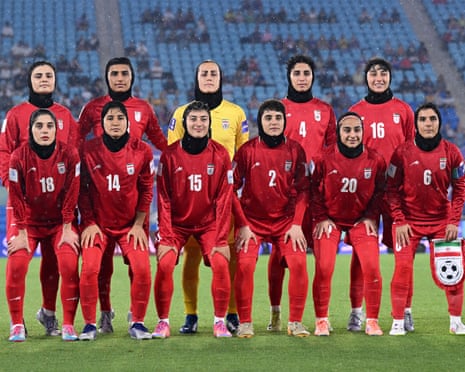
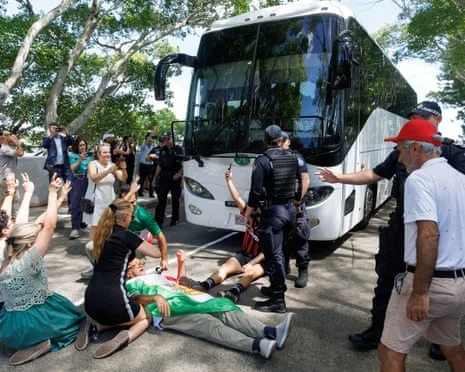
The situation turned chaotic on Australia’s Gold Coast as protesters attempted to block a bus carrying the remaining members of the team to the airport. Demonstrators, chanting "save our girls," sat in front of the vehicle in a desperate attempt to prevent the players from being returned to Iran, where they face significant safety risks. One player was reportedly seen in tears through the bus window, and witnesses claimed at least one athlete was forcibly escorted onto the vehicle by a minder.
Amnesty International Australia has raised "urgent concerns" for the safety of the departing athletes, calling on Australian authorities to ensure all players are aware of their right to seek asylum. The plight of the footballers has become a symbol of the broader human rights concerns associated with the Iranian regime, particularly as the war intensifies internal crackdowns on dissent.
Regional Interceptions and the Role of NATO
The conflict has tested the missile defense capabilities of several regional and international actors. The United Kingdom’s Ministry of Defence confirmed that British Typhoon jets intercepted several drones heading toward Jordan and Bahrain. Meanwhile, Turkey reported that NATO defenses successfully shot down a ballistic missile in its airspace—the second such interception in a week—highlighting the risk of the conflict spilling over into the territory of a NATO member state.
The United Arab Emirates also reported the successful interception of a missile and drone attack launched from Iran, further illustrating the wide reach of Tehran’s retaliatory strikes. These developments have forced a heightened state of alert across the Gulf, with U.S. bases in the region remaining under constant threat of drone swarms and short-range ballistic missiles.
Prospects for a Short-Term Resolution
As the U.S. and Israel press their offensive, the central question remains whether Trump’s "very soon" timeline is a realistic military assessment or a political maneuver. Israeli forces have shifted their focus to "critical energy and fuel infrastructure" in Tehran, a move designed to cripple the Iranian economy and force a domestic crisis that might topple the current government.
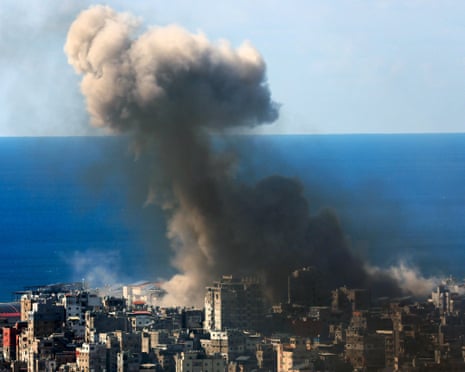
However, the death toll continues to mount, particularly in Lebanon, where state health officials report that 486 people, including 83 children, have been killed since the beginning of March. With at least 600,000 people displaced in Lebanon alone, the humanitarian cost of the war is rapidly outpacing the international community’s ability to provide aid.
The Middle East crisis remains in a state of high-stakes flux. While the White House projects confidence in a swift conclusion, the reality on the ground—marked by multi-front engagements, economic threats, and a defiant Iranian leadership—suggests that the road to peace may be far more complex than a "short-term excursion." For now, the world remains on edge as Tehran and Washington continue to battle not just for territory, but for the right to define how and when this war will end.