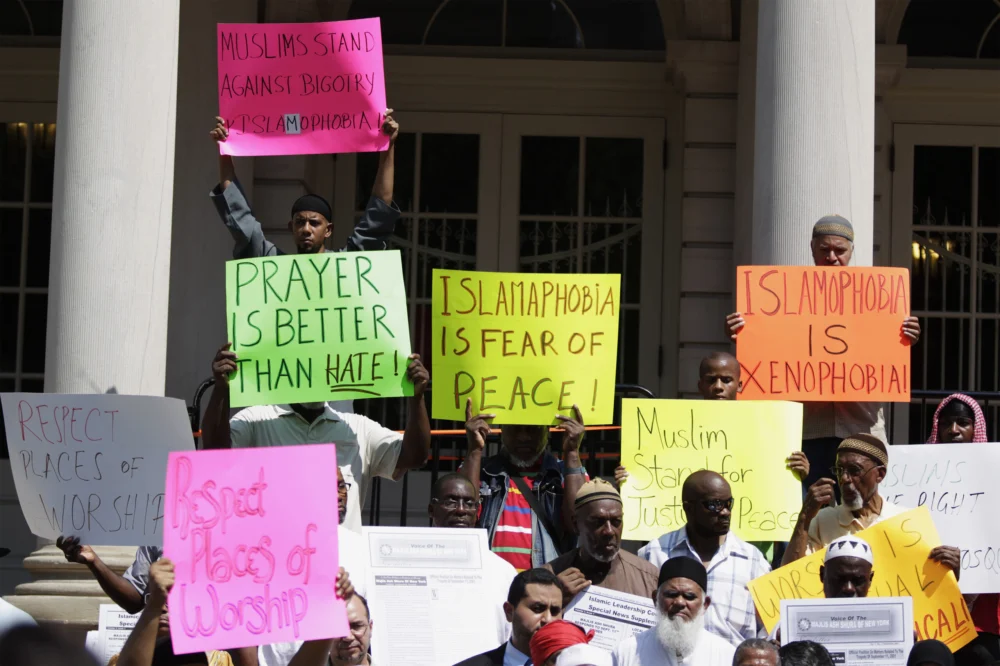
A significant escalation in Islamophobic content targeting American Muslims has been observed on social media platforms, directly linked to the ongoing military actions involving the United States and Iran, according to a new study. The research highlights a disturbing trend of hate speech that has intensified since the commencement of hostilities, raising alarms about its potential real-world consequences.
Study Reveals Alarming Rise in Online Islamophobia
A comprehensive study by the U.S. Center for the Study of Organized Hate (CSOH) has documented a dramatic surge in Islamophobic posts circulating on X, formerly known as Twitter. The analysis, which tracked content from February 28 – the reported start date of the conflict – through Thursday, identified over 25,300 Islamophobic remarks posted by users on the platform. This figure represents a stark increase in hostile rhetoric directed at Muslims.
The CSOH’s investigation delved into original posts, quote tweets, and replies containing Islamophobic material, examining a dataset that spanned from January 1 to the present. While Islamophobic sentiment was present on social media prior to the war, the report emphasizes that its reach expanded "significantly once reposts are included," encompassing more than 279,000 mentions of such content. The most pronounced spike in this harmful discourse directly correlated with the onset of military operations.
Dehumanizing Language and Historical Parallels
The study meticulously documented the nature of the inflammatory content, noting a pervasive use of "dehumanizing language." Users frequently resorted to terms such as "pests," "rats," "vermin," "parasites," and described Muslims as an "infestation." Researchers at CSOH underscored the grave historical significance of such rhetoric.
"Such language has historically preceded and enabled the most extreme forms of violence against targeted communities," the report stated, drawing a clear parallel between contemporary online discourse and the precursors to historical atrocities. This type of dehumanization serves to strip individuals of their humanity, making them appear as less than human and therefore more susceptible to violence and discrimination.
Of the 30 posts flagged by the study for their egregious nature, only 11 were subsequently removed by the platform. A concerning 19 remained publicly accessible as of Monday, indicating a persistent challenge in content moderation and enforcement of platform policies against hate speech.
Military Commanders and Religious Framing of Conflict
Compounding the issue, reports have emerged of U.S. military commanders framing the war with Iran in religious terms, allegedly telling service members that the conflict is "all part of God’s divine plan." These accounts, reportedly received by the Military Religious Freedom Foundation (MRFF), a U.S. watchdog group, since February 28, have garnered over 200 complaints from service members across multiple military installations.
This religious framing of a geopolitical conflict risks further alienating and marginalizing Muslim service members and their communities. It blurs the lines between military objectives and religious doctrine, potentially creating a hostile environment within the armed forces and reinforcing existing biases.
Political Rhetoric Fueling Online Hate
Adding fuel to the fire, comments from officials, including those associated with the Trump administration, have been cited as contributing to the rise in Islamophobic sentiment. On March 2, U.S. Defense Secretary Pete Hegseth delivered remarks that were widely criticized as Islamophobic.
Hegseth’s speech emphasized a long-held stance on Iran, stating, "Crazy regimes like Iran, hell-bent on prophetic Islamist delusions, cannot have nuclear weapons. It’s common sense. Many have said it, but it takes guts to actually enforce it, and our president has guts." Such pronouncements, emanating from high-ranking officials, can legitimize and amplify prejudiced views among the general public and within the military.
Escalation to Explicit Incitement to Violence
Beyond dehumanizing language, the CSOH’s analysis revealed that a portion of the online content crosses the threshold from mere hatred into explicit incitement to violence. These posts directly call for the "extermination of Muslims," a chilling escalation that moves beyond expressions of animosity to direct calls for physical harm.
The report details how some of these posts attempt to legitimize genocidal rhetoric by framing the elimination of Muslims as an act of "self-defense" or "civilizational survival." This tactic, the CSOH noted, lends "a veneer of patriotic duty to the genocidal rhetoric," attempting to mask the barbarity of the calls for violence under a guise of national security or cultural preservation.
The Broader Implications of Online Hate Speech
The implications of such pervasive and escalating hate speech are profound. The CSOH warned that this online content functions as a potent "call to action directed at a community that is already experiencing rising rates of bias, harassment, discrimination, and hate-fueled violence." This creates a dangerous feedback loop where online rhetoric can translate into real-world harm.
The study’s findings underscore the critical need for robust content moderation policies on social media platforms and a broader societal effort to combat Islamophobia. The normalization of hate speech, particularly when amplified by political figures and linked to international conflicts, poses a significant threat to the safety and well-being of Muslim communities in the United States and beyond.
Historical Context of Islamophobia and U.S. Foreign Policy
The current surge in Islamophobia is not an isolated phenomenon but rather part of a longer historical arc in U.S. discourse surrounding the Middle East and Muslim-majority nations. Following the September 11th attacks, anti-Muslim sentiment saw a significant increase, often fueled by conflation of terrorism with the entire Muslim population.
This historical context is crucial for understanding the present situation. When U.S. foreign policy involves military engagement with countries like Iran, particularly when framed through narratives of ideological conflict, it can inadvertently provide fertile ground for pre-existing biases to flourish and intensify online. The CSOH report suggests that the current war has acted as a catalyst, accelerating and amplifying these latent prejudices.
The use of terms like "crazy regimes" and "prophetic Islamist delusions," as employed by figures like Defense Secretary Hegseth, echoes a pattern of Orientalist rhetoric that has long characterized Western perceptions of the Middle East. Such language essentializes complex geopolitical situations into simplistic narratives of good versus evil, often demonizing entire populations based on their perceived religious or political affiliations.
The Role of Social Media Platforms
The study’s focus on X highlights the pivotal role that social media platforms play in the dissemination of both information and misinformation, as well as hate speech. While platforms have policies against hate speech, the sheer volume of content and the sophisticated methods used by bad actors often outpace moderation efforts.
The fact that a significant portion of the flagged content remained online suggests systemic challenges in enforcement. This raises questions about the adequacy of AI-driven moderation systems, the effectiveness of human review processes, and the willingness of platforms to prioritize the removal of harmful content, especially when it garners high engagement. The financial incentives for platforms often lie in maximizing user engagement, which can inadvertently favor sensational or inflammatory content.
Impact on American Muslim Communities
The consequences of this escalating Islamophobia are deeply felt by American Muslim communities. Beyond the psychological toll of constant exposure to hate speech, there is a tangible fear of increased discrimination, harassment, and even physical violence. Muslim individuals and organizations have reported a rise in incidents of prejudice and hostility in recent years, and this online surge is likely to exacerbate those trends.
The dehumanizing language documented in the report can contribute to a climate of fear, leading to self-censorship, social withdrawal, and a sense of vulnerability. For Muslim students, workers, and families, this can translate into a daily struggle to navigate a society where they are increasingly perceived as an "other" or a threat.
Broader Societal Ramifications
The proliferation of Islamophobia online has broader societal ramifications. It can polarize public discourse, erode social cohesion, and undermine democratic values by marginalizing and silencing minority groups. When hate speech is normalized, it can create an environment where discrimination and prejudice are tacitly accepted, making it harder to achieve equality and justice for all.
The study’s findings serve as a stark reminder of the interconnectedness of geopolitical events, online communication, and real-world social dynamics. The digital sphere, while offering avenues for connection and information sharing, also presents significant challenges in controlling the spread of harmful ideologies.
Calls for Action and Future Considerations
The CSOH’s report implicitly calls for a multi-pronged approach to address the issue. This includes more effective content moderation by social media companies, increased media literacy among the public to critically evaluate online information, and stronger public condemnation of Islamophobic rhetoric by political leaders and influential figures.
Furthermore, the findings suggest the need for ongoing research and monitoring of online hate speech, particularly during periods of geopolitical tension. Understanding the evolving tactics and language used by purveyors of hate is crucial for developing effective counter-strategies. The long-term impact of this online surge on intergroup relations and the civil liberties of Muslim Americans remains a critical concern that requires sustained attention and proactive intervention. The trend identified by the CSOH underscores the urgent need for greater vigilance and concerted efforts to foster a more inclusive and respectful digital and physical public square.