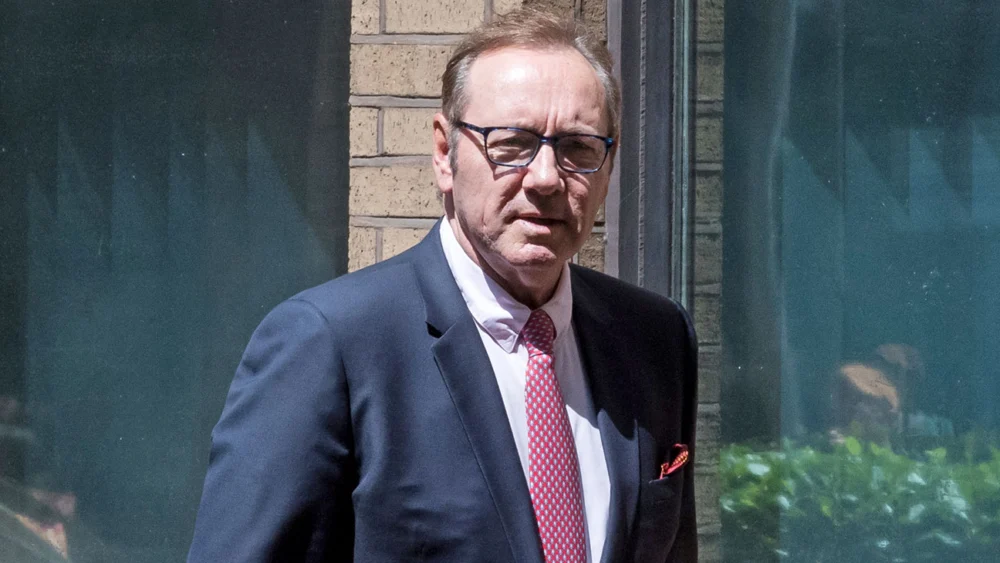
Kevin Spacey delivered assertive testimony in a Santa Monica courthouse, challenging allegations of sexual impropriety and a sexual compulsion diagnosis that he claims unfairly led to his ouster from the final season of Netflix’s House of Cards. The actor, known for his role as Frank Underwood, contended that he was fully prepared and willing to complete filming for the sixth season, asserting that his termination was a calculated move by the show’s producers, Media Rights Capital (MRC), to facilitate a substantial insurance claim. His appearance marked a pivotal moment in a complex legal dispute over the financial fallout of the series’ abrupt end.
The Core of the Legal Battle
Spacey’s testimony on Tuesday unfolded in a subdued annex of the Santa Monica courthouse, where he navigated a labyrinth of shifting loyalties and contested narratives. He painted a picture of behind-the-scenes machinations, suggesting a "mishmash of half-truths" orchestrated by individuals within his orbit, all aiming to recover significant funds following the production’s implosion. His demeanor was described as articulate and quick-witted, maintaining an unrepentant and resolute stance as he directly confronted the long-standing allegations that have largely derailed his career.
The current proceedings pit MRC, the production company behind the critically acclaimed political drama, against its insurer, Fireman’s Fund. This intricate legal battle centers on MRC’s efforts to secure a massive insurance payout, reportedly upwards of $100 million, to cover losses incurred when House of Cards was forced to rewrite and retool its final season without its lead star. Spacey’s testimony is a crucial component, as he aims to dismantle the narrative that his departure was due to an incapacitating illness, thereby undermining MRC’s insurance claim strategy.
Unraveling the ‘House of Cards’ Implosion
The sudden halt and eventual reorientation of House of Cards‘ final season in late 2017 sent shockwaves through Hollywood. The decision followed a cascade of sexual misconduct allegations against Spacey, which emerged during the height of the #MeToo movement. These accusations rapidly transformed Spacey from one of Hollywood’s most respected actors into a pariah, leading to a swift industry response that severed ties with the star across multiple projects.
A Career in Freefall: The Initial Allegations
Spacey’s downfall began with initial public accusations of sexual harassment and assault, which quickly proliferated. Netflix, the streaming giant that had built its original content empire partly on the success of House of Cards, reacted decisively. Production on the sixth season was immediately suspended, and eventually, the company announced that Spacey would not be involved in any future seasons. This unprecedented move forced MRC to salvage the show by focusing on Robin Wright’s character, Claire Underwood, a significant pivot for a series that had always centered on Spacey’s formidable portrayal of Frank Underwood. Beyond House of Cards, Netflix also scrapped the Spacey-starring film Gore, a biopic of writer Gore Vidal, despite prior assurances to the actor.
Contractual Obligations and Insurance Claims
The financial implications of Spacey’s dismissal were immense. The production of a major network series like House of Cards involves intricate contracts, performance clauses, and comprehensive insurance policies designed to protect against unforeseen disruptions, including a lead actor’s inability to perform their duties. MRC had previously secured a $31 million arbitration award against Spacey for breach of contract, finding that he had violated anti-harassment policies.
In an unusual arrangement, Spacey had agreed to reduce this arbitration award in exchange for turning over his medical records. MRC intended to use these records as an "essential piece" of their case to convince the jury that Spacey had a "legitimate illness" that prevented him from filming, thereby strengthening their claim against the insurer. However, Spacey’s recent testimony revealed a lingering animosity and an unwillingness to align with MRC’s version of events, despite their previous deal.
Contested Narratives: Spacey’s Defense vs. Medical Records
A central pillar of Spacey’s defense in the ongoing trial is his challenge to the findings within his medical records from The Meadows, a high-end Arizona rehabilitation facility he attended after the allegations surfaced. Spacey explicitly disputed the notion that he had a condition requiring treatment, stating, "Throughout the medical records, there are comments attributed to me that I never said." He even pointed to apparent inaccuracies, quipping, "They’re under the impression I have a British accent and have a wife." This direct contradiction undermines MRC’s strategy to frame his departure as medically necessitated.
Conversely, Michael Genovese, a psychiatrist and expert witness testifying on behalf of MRC, presented a starkly different picture. Genovese asserted that Spacey had contemplated suicide, recounting harrowing details such as Spacey considering "to hang himself the night before he went into The Meadows" and another instance of contemplating stepping in front of a vehicle during his stay at the facility. Genovese concluded unequivocally that Spacey was "unable to fulfill his duties on the set of House of Cards in 2017 as a result of this disease. There was no way."
Allegations of Misconduct and Accountability
The question of accountability for the sexual misconduct allegations loomed large throughout the cross-examination. Adam Ziffer, a lawyer representing MRC, pressed Spacey on his refusal to acknowledge any wrongdoing, a line of questioning likely aimed at discrediting Spacey’s later claims that he was not ill and was prepared to film the sixth season of House of Cards.
Spacey vehemently denied the accusations detailed in a 2017 CNN report, which accused him of sexually harassing crew members, as well as other "stories revolving around allegations of sexual impropriety." He remarked, "It’d be nice if she corrected her story," referring to the reporter of the CNN piece. When confronted with allegations from several anonymous accusers, Spacey again denied inappropriate touching, dismissing one specific allegation from a prior deposition as an "entirely made up story."
Ziffer then highlighted the findings of the prior arbitration between MRC and Spacey, which resulted in the $31 million judgment. The arbitrator in that case had found each of the complaining witnesses credible and concluded that Spacey had violated anti-harassment policies in his contract. Ziffer underscored this by stating, "The conclusion is that for all of these reasons, it’s more likely than not that these incidents occurred." Spacey quickly countered that this standard was a "very low bar." Ziffer’s sharp retort captured the essence of the contentious exchange: "In your view, none of this occurred because you don’t misbehave on sets. I think we got a good look at how your accountability works."
The Role of the Insurer: Fireman’s Fund’s Perspective
The insurer, Fireman’s Fund, presented a distinct line of questioning, seeking to establish that Spacey’s removal from House of Cards was a direct consequence of the overwhelming media fallout from the sexual assault allegations, rather than any underlying medical condition. This distinction is crucial for the insurer, as it could impact their liability for MRC’s claim.
When questioned about a diagnosis for sexual compulsive disorder, Spacey testified that a medical professional at The Meadows initially informed him he did not qualify as a sex addict. However, he later discovered he had, in fact, been diagnosed as "sexually compulsive." While he stated he "can’t professionally dispute that," he added, "but I can personally dispute it." He further claimed that the founder of the rehab facility subsequently asked him to become a spokesperson for sex addiction, leading Spacey to believe, "It was very much obvious they wanted me to be a sex addict." This testimony directly challenges the narrative of a medically necessary absence, aligning more with the insurer’s argument.
Conflicting Accounts from Spacey’s Inner Circle
The trial also exposed conflicting narratives from Spacey’s own representatives regarding his condition and availability. On November 4, Spacey’s lawyer, Todd Rubenstein, informed MRC that the actor was "available, willing and able to provide all of the services" required under his contract. This statement starkly contrasted with an earlier assertion made by Spacey’s agent, Matt DelPiano, to MRC CEO Scott Tenley, just days prior, that Spacey was "sick" and would be "going away for a very long time." These contradictory messages further complicate the timeline and the motivations behind Spacey’s departure.
Spacey also recounted a conversation his manager had with Netflix CEO Ted Sarandos before his check-in at The Meadows. According to Spacey, Sarandos offered reassurances, stating that Spacey was "family" and a "partner," and that the allegations "wouldn’t affect House of Cards." Spacey testified that Sarandos indicated they would go on hiatus, and "nothing would happen until Thanksgiving," adding that Netflix "loved me and supported me and were supportive of my going away to take care of myself." However, Spacey learned over Thanksgiving that Netflix had publicly distanced itself from him, alongside shelving the Gore project, directly contradicting Sarandos’s earlier statements.
Broader Workplace Conduct on ‘House of Cards’ Set
During the hearing, Spacey also brought up other workplace complaints from the House of Cards set, involving co-stars Robin Wright and Michael Kelly. While the specifics of the complaint against Wright were not detailed, Spacey was questioned about sexual jokes in the context of her involvement. More explicitly, Spacey referred to an incident involving Kelly, stating, "There had been an incident where he pulled a woman who was a member of the crew onto a bed." Spacey added that this incident "became something that people talked about," suggesting a broader environment of concern on set. This testimony, while not directly related to his own alleged misconduct, could be interpreted as an attempt to introduce a wider context of workplace issues.
The Financial Stakes and Future Outlook
The trial, which commenced with opening statements earlier this month, is anticipated to continue for several more weeks. At its core, MRC is seeking a substantial recovery of over $100 million from its insurer, making the outcome critical for all parties involved. The proceedings underscore the profound financial and reputational consequences for production companies, actors, and networks when allegations of misconduct disrupt major projects. The legal battle over House of Cards‘ final season highlights the intricate interplay of contractual obligations, personal conduct clauses, and the evolving standards of workplace behavior in the entertainment industry. The resolution of this case could set significant precedents for how Hollywood navigates future crises involving high-profile talent and the financial safeguards in place for such ventures.