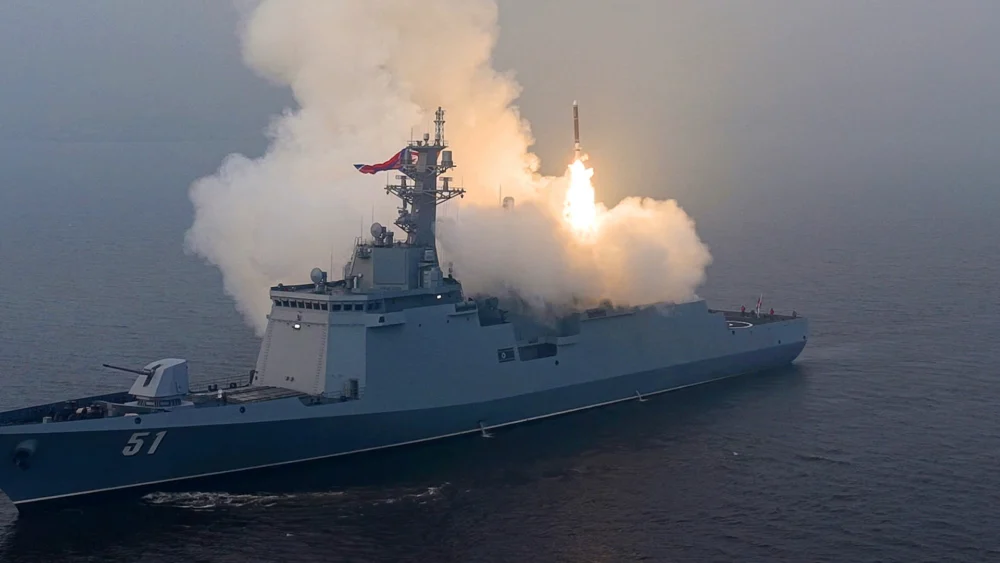
North Korea has successfully conducted a live-fire test of cruise missiles from a newly commissioned naval destroyer, an event reportedly overseen by leader Kim Jong Un. The demonstration, aimed at evaluating the warship’s combat readiness and offensive capabilities, signals a significant step in Pyongyang’s ongoing efforts to modernize its naval forces and bolster its strategic deterrence. The missile launch, captured in imagery released by state media, underscores the nation’s persistent development of advanced weaponry amidst international sanctions and diplomatic isolation.
Escalating Naval Power: A New Era for the North Korean Navy
The recent test marks a critical juncture for North Korea’s maritime ambitions. The deployment of a new naval destroyer, equipped with sophisticated missile systems, represents a substantial upgrade to the country’s naval arsenal. This development is particularly noteworthy as North Korea has historically focused its military development on its land-based ballistic missile programs and nuclear capabilities. The emphasis on naval power suggests a strategic shift, potentially aimed at projecting power beyond its immediate coastlines and enhancing its ability to counter perceived threats from regional adversaries.
The Significance of Cruise Missiles in Modern Warfare
Cruise missiles offer distinct advantages in modern military operations. Unlike ballistic missiles, which follow a predictable trajectory, cruise missiles fly at lower altitudes and can maneuver, making them more difficult to detect and intercept. Their precision targeting capabilities allow for greater accuracy in striking specific objectives, while their conventional warheads can be employed against a variety of targets, including naval vessels, infrastructure, and troop concentrations. For North Korea, integrating such advanced missile technology into its naval fleet provides a potent new tool for both defense and potential offensive operations.
Kim Jong Un’s Personal Involvement and Strategic Vision
The reported presence of Kim Jong Un at the cruise missile test underscores the paramount importance the North Korean leadership places on military modernization. His personal observation of such exercises is a common practice, serving to boost morale among military personnel and to project an image of strong, decisive leadership. This involvement suggests that the development and deployment of advanced naval assets are a key component of Kim Jong Un’s broader strategic vision for North Korea, which includes enhancing the nation’s self-defense capabilities and deterring any potential aggression.
A Modern Destroyer Takes Center Stage
Details surrounding the new naval destroyer remain somewhat limited, but its role in this high-profile test highlights its intended operational significance. Naval destroyers are versatile warships capable of a wide range of missions, including anti-air warfare, anti-submarine warfare, and surface warfare. Equipping such a vessel with advanced cruise missile capabilities transforms it into a formidable offensive platform. This integration allows North Korea to potentially threaten enemy naval forces at greater distances and to conduct strikes against land targets with increased accuracy and survivability.
International Repercussions and Regional Security Concerns
North Korea’s continued pursuit of advanced weaponry, particularly its naval advancements, invariably raises concerns among its neighbors and the international community. The development of a more capable naval force, especially one armed with sophisticated cruise missiles, could alter the regional military balance. South Korea, Japan, and the United States, all of whom have significant naval presences in the region, will undoubtedly be closely monitoring these developments. Increased military posturing and potential arms races are often byproducts of such escalations in military capability.
The Shadow of Sanctions and Denuclearization Efforts
This latest military demonstration occurs against the backdrop of persistent international sanctions aimed at curbing North Korea’s nuclear and ballistic missile programs. While the current test involves cruise missiles, which may not be explicitly covered by all sanctions regimes in the same way as ballistic missiles, it still represents an advancement in Pyongyang’s military technology. The international community’s response will likely hinge on whether these developments are perceived as a violation of existing UN Security Council resolutions or as a further provocation that undermines ongoing denuclearization efforts.
Historical Context: A Long Road of Military Development
North Korea’s military development has been a consistent feature since the end of the Korean War. Over decades, the nation has prioritized its armed forces, investing heavily in research and development despite severe economic constraints. Early military buildup focused on conventional ground forces and artillery. However, in recent years, the regime has increasingly shifted its focus towards developing more sophisticated and asymmetric capabilities, including nuclear weapons, intercontinental ballistic missiles, and now, advanced naval weaponry. This strategic evolution reflects a determination to achieve a level of military strength that deters external intervention and ensures regime survival.
Previous Naval Exercises and Demonstrations
While this specific test involves a new destroyer, North Korea has a history of conducting naval exercises and showcasing its maritime capabilities. These have often included the testing of anti-ship missiles and other naval ordnance. However, the integration of cruise missile technology onto a dedicated naval platform of this caliber represents a qualitative leap forward. Such demonstrations serve not only to hone the skills of the naval forces but also to signal to the world the increasing sophistication of North Korea’s military hardware.
The Strategic Implications of Naval Modernization
A modernized North Korean navy equipped with effective cruise missiles has several strategic implications. Firstly, it enhances North Korea’s ability to defend its territorial waters and maritime interests. Secondly, it provides a potential deterrent against naval blockades or amphibious assaults. Thirdly, and perhaps most concerning to regional powers, it could expand the range and effectiveness of North Korea’s power projection capabilities, potentially influencing naval operations in contested waters. The ability to launch cruise missiles from a moving naval platform adds a layer of unpredictability and complexity to regional security calculations.
Economic Strain and Military Spending
The sustained investment in advanced military technology, including naval modernization, places a significant strain on North Korea’s already struggling economy. Decades of sanctions and a centrally planned economy have limited resources. However, the regime consistently prioritizes military spending, often at the expense of civilian needs. This dedication to military advancement, even in the face of widespread economic hardship, underscores the central role of national security and military strength in the North Korean leadership’s political ideology.
Public Impact and Propaganda Value
For the citizens of North Korea, such military achievements are often presented as triumphs of national strength and self-reliance. State media plays a crucial role in disseminating these narratives, portraying the leadership as strong protectors of the nation and its people. The successful test of advanced weaponry can serve as a powerful propaganda tool, bolstering national pride and reinforcing the government’s legitimacy. However, the economic cost of these military endeavors can also have a direct impact on the daily lives of ordinary North Koreans, who may face shortages or economic hardship as a result of resource allocation priorities.
The Global Arms Race and Technological Advancement
North Korea’s pursuit of advanced missile technology, including cruise missiles, is part of a broader global trend of military technological advancement. While North Korea operates in a unique geopolitical context, its progress in areas like precision-guided munitions and naval integration reflects the ongoing global competition in military innovation. The development and proliferation of such technologies raise questions about arms control, international security, and the potential for future conflicts.
Future Trajectory and Unanswered Questions
The successful test of cruise missiles from a new destroyer opens several avenues for future development and raises important questions. Will North Korea continue to expand its fleet of modern naval vessels? What other advanced weapon systems are in development? How will regional powers and the international community respond to these escalating capabilities? The answers to these questions will shape the future security landscape of Northeast Asia and beyond. The focus will undoubtedly remain on North Korea’s military trajectory and its implications for global stability.
The Evolving Nature of Deterrence
North Korea’s military modernization, particularly its foray into advanced naval platforms and cruise missile technology, represents an evolving approach to deterrence. By diversifying its strike capabilities and enhancing its naval power, Pyongyang seeks to create a more robust and multi-faceted deterrent. This strategy aims to dissuade potential adversaries by demonstrating a credible ability to inflict significant damage, thereby raising the potential costs of any aggressive action against the regime. The effectiveness and implications of this evolving deterrence posture will continue to be a critical subject of analysis for international security experts.