A man rammed his vehicle into a synagogue in the Detroit metropolitan area on Thursday, subsequently engaging in a shootout with law enforcement before being found dead in his car. On the same day, authorities announced the death of one individual following a gunman’s assault at Old Dominion University in Virginia, an incident being investigated as an act of terror. These events unfolded as the United States remained on high alert for domestic attacks, a concern amplified by the ongoing war in Iran, which commenced on February 28 and has now entered its 14th day.
Attack on Michigan Synagogue Under Investigation as Targeted Act of Violence
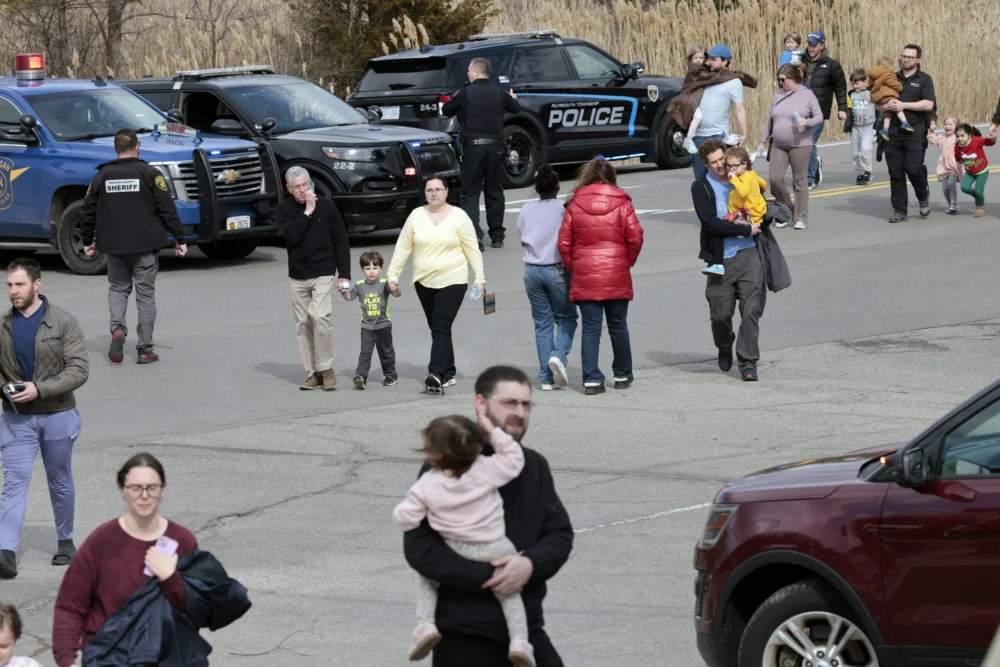
The Michigan incident occurred Thursday morning when an assailant drove a vehicle into Temple Israel synagogue in West Bloomfield, a Detroit suburb with a significant Jewish population. Following the vehicle ramming, the individual exited the car and opened fire on security personnel stationed at the site. FBI personnel were immediately dispatched to the scene, responding to what was initially described as an active shooter situation.
Oakland County Sheriff Mike Bouchard confirmed that security personnel engaged the gunman, leading to a fatal exchange of gunfire. The assailant was later discovered deceased inside his vehicle, which had caught fire. The origin of the fire remains undetermined, and the exact cause of death was not immediately clear, though authorities later stated the individual was fatally shot by security.
Remarkably, no worshippers, staff, teachers, or the 140 children present in the synagogue’s early learning center sustained injuries. However, approximately 30 law enforcement officers required hospitalization due to smoke inhalation from the vehicle fire. One security official was struck by the vehicle and knocked unconscious but was otherwise unharmed.
Details of the Michigan Synagogue Incident
The targeted synagogue, Temple Israel, is a prominent Reform congregation founded in 1941, serving an estimated 12,000 members. West Bloomfield, where the attack took place, is a township known for its picturesque lakes and as a residential area for many within the greater Detroit metropolitan area’s large Jewish community. The swift response from security and law enforcement is credited with preventing a larger tragedy.
Identity and Motive in the Michigan Attack
Authorities have identified the assailant in the Michigan synagogue attack as 41-year-old Ayman Mohamad Ghazali, a naturalized U.S. citizen born in Lebanon. According to the Department of Homeland Security, Ghazali entered the United States in 2011 on a relative visa as the spouse of a U.S. citizen and obtained his citizenship in 2016.
Jennifer Runyan, Special Agent in Charge of the FBI Detroit Field Office, stated during a press conference that the FBI is leading the investigation, characterizing the incident as a "targeted act of violence against the Jewish community." The classification of the attack as specifically targeting the Jewish community underscores concerns about rising antisemitism.
Gunman Opens Fire at Old Dominion University, Investigated as Terrorism
In Virginia, a separate and deeply concerning incident occurred at Old Dominion University (ODU) in Norfolk. A gunman unleashed a barrage of gunfire within Constant Hall, the academic building housing the university’s college of business. The attack, which took place shortly before 10:49 a.m. local time, resulted in the death of one individual.
The FBI has identified the shooter as Mohamed Bailor Jalloh, a former member of the Army National Guard. Jalloh had previously pleaded guilty in 2016 to charges related to attempting to provide material support for ISIL (ISIS). This prior connection has significantly influenced the investigation’s direction.
Student Intervention and Law Enforcement Response
Crucially, the situation at ODU was brought under control due to the heroic actions of several students who intervened and subdued the gunman. FBI Director Kash Patel acknowledged these students’ bravery in a post on X, stating their actions "undoubtedly saved lives along with the quick response of law enforcement." The gunman was found deceased at the scene, though the precise circumstances of his death are still under review.
While the motive behind the ODU shooting and the specific targets remain under active investigation, authorities are treating the incident as an "act of terror." The confluence of Jalloh’s past legal entanglements with extremist groups and the nature of the attack has fueled this classification.
Escalating Incidents and Rise in Hate Crimes
These twin attacks occur against a backdrop of heightened global tensions and a documented rise in hate crimes targeting both Jewish and Muslim communities worldwide. The ongoing conflict in Gaza, which began in October 2023, has been cited as a significant catalyst for this surge in religiously and ethnically motivated violence.
Statistics on Anti-Semitic Incidents
The Anti-Defamation League (ADL) has reported a stark increase in anti-Semitic incidents across the United States. In 2024, the organization tallied 9,354 anti-Semitic incidents, marking a 5% rise from 2023 and setting a new record high since the ADL began tracking such data in 1979. This figure represents a substantial escalation, with a 344% increase over the past five years and an 893% surge over the last decade.
Recent events underscore this alarming trend. In late January, a vehicle crashed into the entrance of a Jewish religious order’s headquarters in New York City, an incident being investigated as a hate crime. In May 2025, two Israeli diplomats were fatally shot outside an event hosted by the American Jewish Committee in Washington, D.C. The gunman, who cited the Israel-Gaza conflict as his motivation, reportedly shouted "I did it for Palestine, I did it for Gaza" and "Free Palestine" after his arrest.
Further compounding the concern, a hate crime investigation was launched in Florida in February 2025 after a man fired upon two individuals he mistakenly believed were Palestinians, only to discover they were Israeli visitors. Both victims survived their injuries. Beyond U.S. borders, a synagogue in Rotterdam, Netherlands, was the subject of an arson attack early Friday morning, prompting a police investigation. In December 2025, a mass shooting at a Hanukkah celebration in Sydney, Australia, claimed 15 lives. The perpetrator, an Indian national, was killed by police, and his son faces terrorism and murder charges.
Rise in Anti-Muslim Incidents
Conversely, hate crimes against Muslims have also seen an increase globally since the commencement of the Israel-Gaza war. The Council on American-Islamic Relations (CAIR) released its annual report in March 2026, detailing a growing hostility towards Muslims in the United States. CAIR documented 8,683 complaints of anti-Muslim discrimination nationwide in 2025, a slight increase from the previous year and the highest volume of complaints since the organization began publishing its civil rights report in 1996.
In the United Kingdom, the Manchester Central Mosque reported an incident in February 2026 where a man armed with an axe entered the mosque during Ramadan prayers. A man in his 20s was arrested on suspicion of conspiracy to commit assault. In October 2025, UK police investigated a suspected arson attack on a mosque in Peacehaven, East Sussex, as a hate crime.
More tragically, in October 2023, a six-year-old Palestinian American boy, Wadea al-Fayoume, was fatally stabbed in Illinois, and his mother was critically injured. The assailant, Joseph Czuba, died in custody in June 2025. In November 2023, three young Palestinian men were shot and injured near a university campus in Vermont. Police reported that the victims were speaking Arabic and two were wearing keffiyehs when attacked. The suspect, Jason J Eaton, was arrested later that month.
Broader Implications and Public Impact
The simultaneous occurrence of these attacks, one targeting a Jewish place of worship and the other a university campus with a perpetrator linked to extremist ideologies, underscores the volatile nature of the current domestic security landscape. The incidents serve as stark reminders of the persistent threat posed by individuals motivated by hate, extremism, and geopolitical conflicts.
The classification of the Virginia shooting as an "act of terror" and the deliberate targeting of the Michigan synagogue highlight the evolving strategies and motivations of extremist actors. The involvement of former military personnel and individuals with prior links to terrorist organizations in such attacks raises serious questions about vetting processes and the radicalization of individuals within society.
The psychological impact on communities, particularly those directly targeted, is profound. For Jewish communities, the attack on Temple Israel evokes deep-seated fears and anxieties, amplified by the rising tide of antisemitism. Similarly, the ODU shooting, especially given the perpetrator’s background, creates an atmosphere of unease and vulnerability within educational institutions.
The broader societal consequence is an intensification of the national conversation surrounding domestic terrorism, hate speech, and the influence of international conflicts on domestic radicalization. Law enforcement agencies are likely to face increased pressure to enhance security measures, intelligence gathering, and community outreach efforts to prevent future atrocities. The events also renew debates about gun control, mental health support, and the role of social media in the dissemination of extremist propaganda. The interconnectedness of global events and their ripple effects on domestic tranquility have rarely been more evident.