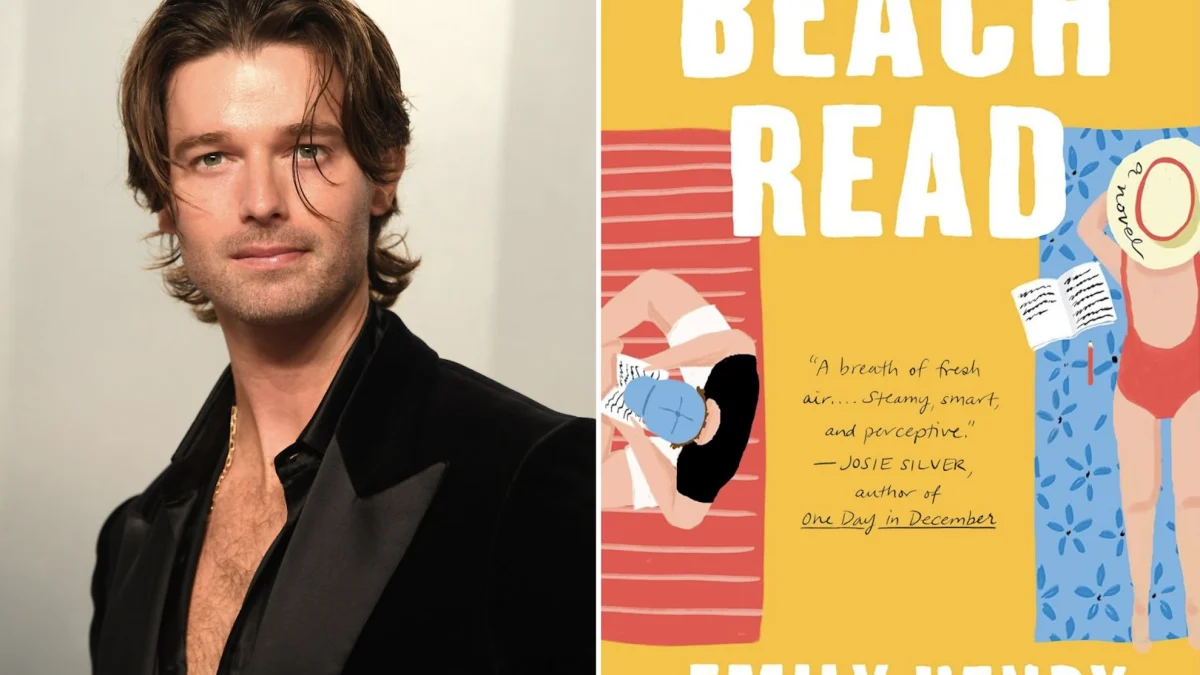
The casting of Patrick Schwarzenegger as Gus Everett in the upcoming film adaptation of Emily Henry’s best-selling novel Beach Read has ignited a significant backlash across social media platforms, particularly within the influential literary community known as BookTok. Following the announcement that Schwarzenegger would star opposite Phoebe Dynevor, who is set to play the female lead January Andrews, readers immediately took to TikTok and X to express a range of emotions from skepticism to outright disapproval. The online movement, often organized under the hashtag #NotMyGus, highlights a growing tension between Hollywood casting decisions and the established expectations of digital fan bases.
For many readers, the casting represents a fundamental misunderstanding of the source material’s protagonist. In Henry’s 2020 novel, Gus Everett is portrayed as a brooding, literary novelist characterized by a specific "sad boy" aesthetic that includes dark hair, olive skin, and a weathered, rumpled energy. This archetype has become a cornerstone of modern romance literature, and the deviation from this physical description has become the primary reason why BookTok is not happy about Patrick Schwarzenegger’s ‘Beach Read’ casting.
The Origins of Why BookTok Is Not Happy About Patrick Schwarzenegger’s ‘Beach Read’ Casting
The controversy began almost immediately after trade publications confirmed that Schwarzenegger had secured the coveted role of Gus. While the actor has recently garnered critical acclaim for his performance in the upcoming season of The White Lotus, many fans of the book argue that his public persona and physical appearance do not align with the character they have envisioned for years. The dissent is not necessarily a critique of Schwarzenegger’s acting ability, but rather a commentary on "vibes" and character aura.
Gus Everett is described in the novel as a man who feels worn down by life’s tragedies, possessing a cynical exterior that masks a deeply sensitive interior. Readers have long associated the character with actors who project a certain type of melancholy, such as Paul Mescal, Logan Lerman, or Dev Patel. In contrast, Schwarzenegger is often perceived through the lens of his high-profile background and "conventionally polished" appearance. Critics on social media have noted that he projects the image of a "country club athlete" rather than a "tortured academic."
This disconnect has led to a viral wave of content where users compare the book’s descriptions of Gus directly with photos of Schwarzenegger. The consensus among the most vocal segments of the BookTok community is that the casting prioritizes Hollywood "star power" over the authentic representation of the character’s soul. This sentiment has transformed the casting news from a standard industry announcement into a polarized cultural debate regarding the ownership of literary characters.
Dissecting the Disconnect Between Character Description and Casting
The physical traits of Gus Everett are more than just cosmetic details to the Beach Read fandom; they are integral to his characterization as an outsider in the literary world. Emily Henry’s writing often emphasizes the contrast between January’s bright, optimistic world and Gus’s darker, more grounded reality. By casting an actor who many perceive as the quintessential "Golden Boy," the production risks flattening the dynamic that made the novel a New York Times bestseller.
Furthermore, the "nepo baby" discourse has inevitably entered the conversation. As the son of Arnold Schwarzenegger and Maria Shriver, Patrick Schwarzenegger carries a level of celebrity baggage that some readers find difficult to separate from the role. The argument suggests that a "literary sad boy" should feel like someone who has struggled in obscurity, a trait that fans find hard to project onto a member of one of America’s most famous families.
Industry analysts suggest that this reaction is part of a broader trend where readers feel a sense of stewardship over the books they promote. BookTok has been credited with reviving the publishing industry, turning older titles into hits and launching new authors to superstardom. Because the community feels responsible for the book’s success, they often feel they should have a seat at the table when it comes to visual adaptations.
Director Yulin Kuang Defends the Selection Process
In response to the mounting criticism, director Yulin Kuang has publicly addressed the casting decision. Kuang, who is also an accomplished author and screenwriter, emphasized that the search for Gus Everett was an exhaustive process that lasted over six months. According to the director, the final decision was based on the undeniable screen chemistry between Schwarzenegger and Dynevor during their chemistry reads.
Kuang described Schwarzenegger’s performance as a "slow burn," suggesting that he brings a nuance to the role that may not be immediately apparent from his previous work or public image. She argued that while physical resemblance is important, the "electric" connection between the two leads is what will ultimately make the film successful. The director’s defense highlights a common conflict in filmmaking: the choice between a "book-accurate" look and the intangible quality of romantic tension that carries a film.
Despite these assurances, the skepticism remains high. Some fans have pointed out that styling—such as darkening Schwarzenegger’s hair or dressing him in the character’s signature rumpled sweaters—could bridge the gap. However, the core of the complaint remains focused on the "aura" of the actor, a quality that is much harder to alter with a costume department.
The Role of Fancasting and Digital Expectations in Modern Cinema
The phenomenon of why BookTok is not happy about Patrick Schwarzenegger’s ‘Beach Read’ casting is deeply rooted in the culture of "fancasting." For years, readers have utilized platforms like Pinterest and TikTok to create visual mood boards for their favorite books. These digital collages often feature the same handful of actors who have become the unofficial faces of the "romance hero" genre.
When a studio announces a cast that deviates from these community-sanctioned choices, the reaction is often swift and coordinated. This occurred previously with the casting of the Fifty Shades of Grey films and more recently with the adaptation of Colleen Hoover’s It Ends With Us. In the latter case, fans were initially outraged by the casting of Blake Lively and Justin Baldoni, though the film eventually went on to achieve significant box office success.
This suggests a growing divide between digital sentiment and commercial reality. While BookTok is a powerful marketing tool, studios often look for actors with broader name recognition or specific "it-factor" qualities that appeal to a general audience beyond the core readership. The challenge for the Beach Read production will be to convince the skeptical fans that their version of Gus is just as valid as the one in the readers’ heads.
Broader Implications for the Emily Henry Cinematic Universe
The stakes for Beach Read are particularly high because it is the first of several Emily Henry novels slated for film and television adaptations. Projects based on People We Meet on Vacation and Book Lovers are also in various stages of development. The reception of Schwarzenegger as Gus could set the tone for how these future adaptations are perceived by the author’s massive fan base.
Emily Henry herself has maintained a supportive stance toward the production. As an author who has seen her books become the "gold standard" for modern romance, she has often spoken about the necessity of allowing filmmakers to have their own creative vision. However, the author’s blessing is not always enough to quiet a disappointed fandom.
The situation also reflects the shifting landscape of the romance genre in Hollywood. After years of being relegated to cable television movies, romance is seeing a prestige revival on the big screen and major streaming platforms. With higher budgets and A-list talent involved, the scrutiny regarding casting and "book faithfulness" has intensified.
Industry Trends and the Path Forward for ‘Beach Read’
As production on Beach Read moves forward, the focus will likely shift from casting complaints to the first glimpses of the actors in character. Official "first look" photos and trailers often serve as the turning point for fan sentiment. If Schwarzenegger can successfully embody the brooding, intellectual energy of Gus Everett in promotional materials, the "Not My Gus" movement may lose its momentum.
History shows that many controversial casting choices eventually win over audiences. Heath Ledger as the Joker and Robert Pattinson as Batman were both met with intense online backlash before their respective films were released to critical acclaim. In the romance genre, the goal is often to create a "new" version of the character that exists alongside the book version rather than replacing it.
For now, the discussion remains a cautionary tale for studios regarding the power of niche digital communities. The fact that BookTok is not happy about Patrick Schwarzenegger’s ‘Beach Read’ casting serves as a reminder that in the age of social media, the audience is no longer a passive consumer. They are active participants in the life of a story, and their expectations are a force that Hollywood can no longer afford to ignore.
The film’s success will ultimately depend on whether the "electric" chemistry promised by director Yulin Kuang translates to the screen. If Schwarzenegger and Dynevor can capture the emotional core of January and Gus’s rivalry and subsequent romance, the initial casting controversy may become a mere footnote in the film’s history. Until then, the readers of BookTok will continue to hold the production to the high standards set by the pages of the novel.