The landscape of modern warfare is undergoing a profound transformation, with recent conflicts in Ukraine, the Middle East involving Gaza, and confrontations between India and Pakistan, alongside escalating tensions involving Iran and U.S.-Israeli actions, underscoring a critical reliance on advanced drone, missile, and air defense technologies. Amidst this global recalibration, Turkiye is strategically positioning itself as a pivotal player in the international defense market, with its state-owned Roketsan emerging as a key driver of this ambition. The company, founded in 1988 to equip the Turkish Armed Forces, has evolved into the nation’s foremost manufacturer of sophisticated missile and rocket systems, now setting its sights on breaking into the top ten global defense exporters.
Roketsan’s ascent is not merely a product of market opportunity but also a testament to Turkiye’s strategic response to international pressures. Historically, Ankara has faced restrictions on acquiring critical defense components and technologies from Western nations. A significant turning point occurred in 2020 when the United States imposed sanctions under the Countering America’s Adversaries Through Sanctions Act (CAATSA) on Turkiye’s defense procurement agency and its leadership, following Ankara’s controversial acquisition of Russia’s S-400 missile defense system. This move, perceived by NATO as a security risk, also led to Turkiye’s expulsion from the F-35 stealth fighter program.
The European Union also considered sanctions and arms export restrictions, particularly in response to energy exploration disputes in the Eastern Mediterranean. These external pressures, rather than stifling Turkiye’s defense ambitions, catalyzed the development of a robust, indigenous defense ecosystem. Today, the Turkish defense industry relies on an expansive network of nearly 4,000 small and medium-sized enterprises (SMEs), fostering a domestic production rate that now exceeds 90 percent. This self-sufficiency has not only insulated Turkiye from external embargoes but has also created a powerful engine for export growth.
Roketsan’s Ambitious Global Export Trajectory
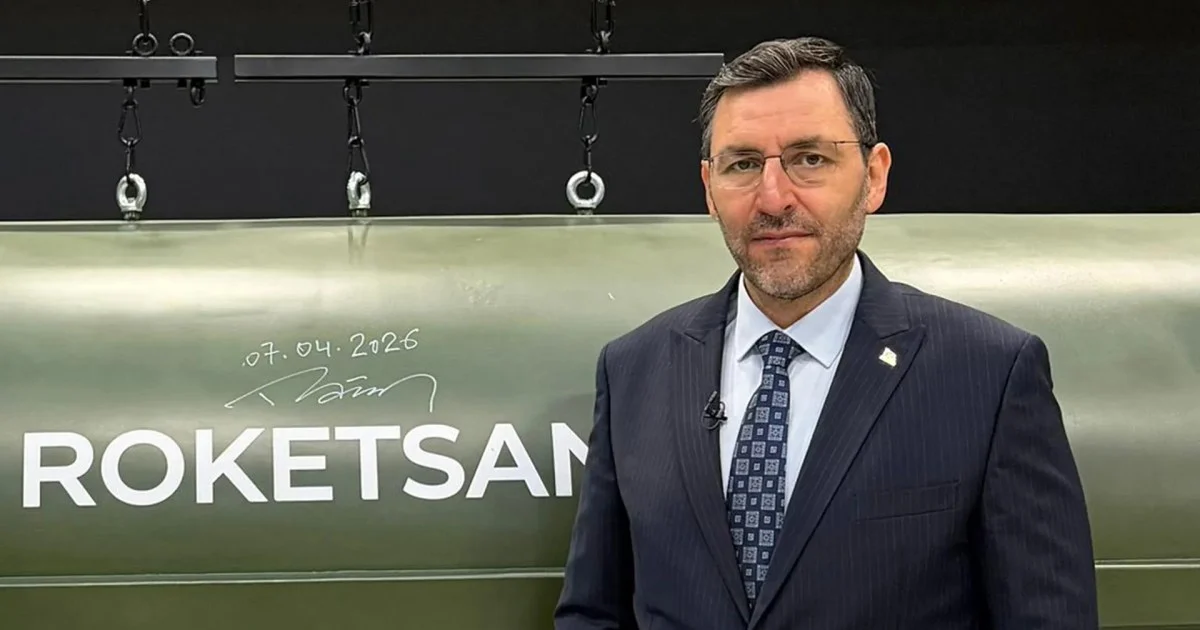
Roketsan, currently exporting to approximately 50 countries, is recognized as one of the fastest-growing defense companies globally. The firm’s General Manager, Murat Ikinci, has articulated clear ambitions for the company, stating its current ranking at 71st among global defense firms with a strategic goal to ascend into the top 50, then the top 20, and ultimately the top 10. This ambitious push is being supported by significant investments in production infrastructure. In a recent demonstration of this commitment, Turkish President Recep Tayyip Erdogan inaugurated several large-scale facilities, representing a $1 billion investment. Roketsan plans to further inject an additional $2 billion to bolster its mass production capabilities, signaling a serious intent to meet escalating global demand.

The financial implications of this strategy are already evident. In 2025, Turkiye’s defense industry reported $10 billion in exports, a figure expected to grow substantially as Roketsan expands its global footprint. This expansion is not just about increasing sales volume but also about solidifying Turkiye’s position as a reliable and capable supplier in a volatile global security environment. The company’s ability to leverage its domestic supply chain allows for agility and responsiveness, crucial factors in the fast-paced defense market.
The Tayfun Missile and Adaptations to Modern Warfare
Roketsan’s research and development strategy is deeply intertwined with the evolving dynamics of contemporary conflicts. Employing 3,200 engineers, making it the third-largest R&D institution in Turkiye, the company actively analyzes data from ongoing global hotspots to inform its product development. General Manager Ikinci pointed to the war in Ukraine as a significant learning experience, highlighting the disruptive impact of inexpensive, artificial intelligence-supported first-person view (FPV) and kamikaze drones. In response, Roketsan has developed advanced air defense systems such as ALKA and BURC, alongside the CIRIT laser-guided missile, designed to counter these threats effectively.
The regional security landscape has been further complicated by events such as the recent conflict involving Iran. The proliferation of Iranian-designed Shahed drones, reportedly upgraded by Russia with advanced anti-jamming modules, has demonstrated their capability to overwhelm sophisticated defenses, even impacting allied bases. During March 2026, NATO air defenses were reportedly forced to intercept Iranian ballistic missiles that entered Turkish airspace, a stark reminder of the region’s heightened security challenges.
The conflict between Israel and Iran further illuminated the complexity of modern warfare, showcasing combined attacks utilizing ballistic missiles and swarms of kamikaze drones. This environment underscores the critical importance of hypersonic technology, a field where Roketsan is making significant strides with its Tayfun (Typhoon) project. The Tayfun family of long-range ballistic missiles is under development, with the Tayfun Block 4 iteration specifically engineered as a hypersonic missile designed to penetrate advanced air defense systems by achieving extreme velocities. When pressed for specifics on the Tayfun’s operational range, Ikinci maintained a strategic ambiguity, stating, "We avoid mentioning its range; we just say its range is sufficient," a remark that hints at its formidable capabilities.
A Strategic Export Model Built on Partnership
Turkiye’s approach to defense exports diverges from traditional transactional sales. Instead, Ankara is marketing its defense industry as a pathway to strategic partnerships. "Our offer to our partners… is as follows: Let’s produce together, let’s develop technology together," Ikinci articulated. This philosophy is manifest in the establishment of joint facilities and R&D centers in allied nations across the Middle East, the Far East, and Europe. The aim is to cultivate enduring geopolitical alliances rather than fleeting commercial engagements. Qatar is frequently cited as a prime example of this partnership model, serving as a benchmark for comprehensive technological, military, and security cooperation in the region.

This strategic partnership model is designed to foster mutual benefit and deeper integration, ensuring long-term relationships and shared technological advancement. By co-developing and co-producing defense systems, Turkiye aims to enhance the capabilities of its partners while simultaneously expanding its own industrial base and market reach. This approach also allows for greater customization of defense solutions to meet the specific operational requirements of allied nations.
Filling the Global Stockpile Gap and Future Outlook
The current global security environment, characterized by protracted conflicts, has led to a significant depletion of advanced weapon system stockpiles worldwide. This depletion creates a crucial opening for nations capable of independent and rapid production of sophisticated defense technologies. During recent regional conflicts, major powers have relied heavily on expensive air defense systems to intercept less costly drone threats, raising concerns about the sustainability of their interceptor supplies.
This growing demand, coupled with the lengthy lead times and immense infrastructure required for major powers to replenish their inventories, presents a lucrative opportunity for Turkiye’s defense industry. Having localized its supply chain, Turkiye asserts its capacity to manufacture and export complex systems independently and at scale. Roketsan’s aggressive reinvestment of its revenues into production infrastructure is a direct response to this market dynamic, aiming to expand its global footprint and solidify its position as a premier supplier of advanced defense solutions.
Roketsan’s strategic priorities reflect the contemporary challenges of warfare, focusing on key areas such as:
- Advanced Missile Systems: Development of short, medium, and long-range ballistic and cruise missiles, including hypersonic capabilities.
- Air Defense Solutions: Integrated systems designed to counter a wide spectrum of aerial threats, from drones to ballistic missiles.
- Unmanned Aerial Vehicles (UAVs): A growing portfolio of reconnaissance, combat, and kamikaze drones, often integrated with AI and advanced targeting systems.
- Naval Systems: Missiles and defense systems tailored for maritime security and power projection.
- Rocket and Artillery Systems: Precision-guided munitions and advanced artillery solutions for land warfare.
As global demand for air defense and ballistic technologies continues to surge, Roketsan is strategically positioned to capitalize on this trend. The company’s commitment to innovation, coupled with its adaptive manufacturing capabilities and its partnership-driven export model, suggests a trajectory that could indeed see it ascend to the ranks of the world’s top defense exporters, reshaping the global arms market in the process.