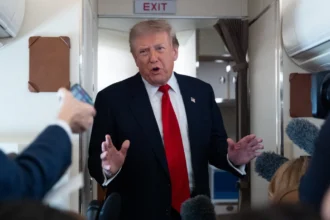
United States Secretary of Defense Pete Hegseth asserted Friday that Mojtaba Khamenei, Iran’s recently appointed Supreme Leader, has sustained injuries in what the Pentagon chief described as "US-Israeli attacks" on the Islamic Republic. The claim, made during a press conference at the Pentagon, comes as the conflict between Iran and the US-led coalition intensifies, with significant casualties reported on both sides. Hegseth’s assessment suggested that Khamenei is "wounded and likely disfigured," a stark assertion that has yet to be corroborated by Iranian officials or independent sources.
Pentagon Alleges Injury to New Iranian Leader
During his briefing, Hegseth pointed to the nature of Khamenei’s first public statement since assuming leadership as evidence supporting his claim. "He put our statement yesterday – a weak one actually – but there was no voice, and there was no video. It was a written statement," Hegseth stated, implying that the absence of visual or auditory confirmation of Khamenei’s well-being was a direct consequence of his alleged injuries.
The Pentagon chief did not offer specific evidence to substantiate his assessment of Khamenei’s condition. Iran has remained largely silent on the matter, providing no details regarding the new leader’s health. Similarly, other Iranian officials have not immediately responded to Hegseth’s assertions. This information vacuum has fueled speculation and uncertainty surrounding the leadership dynamics in Tehran amidst the ongoing hostilities.
Mojtaba Khamenei’s First Statement Amidst Escalating Conflict
Mojtaba Khamenei issued his inaugural public statement as Supreme Leader on Thursday, just over a month after assuming the mantle of leadership following the assassination of his father, Ayatollah Ali Khamenei, on February 28. The assassination occurred on the very first day of the coordinated military operations launched by the United States and Israel against Iran.
In his written remarks, which were broadcast on Iranian state television, the new Supreme Leader issued a stern warning, vowing to retaliate against all U.S. bases in the region unless they were immediately dismantled. He also reaffirmed Iran’s commitment to maintaining the closure of the Strait of Hormuz, a critical chokepoint for global oil shipments. Khamenei acknowledged the efforts of Iranian forces during this period of intense pressure and attack.
"I would like to thank the brave fighters who are doing a great job at a time when our country is under pressure and under attack," Khamenei stated, underscoring the defiant stance of the Iranian regime. He has not been seen publicly since the commencement of the war, a fact that has contributed to ongoing scrutiny of his status.
Background of Escalation: Assassination and Retaliation
The current conflict traces its roots to the assassination of Ayatollah Ali Khamenei, a pivotal moment that dramatically shifted the geopolitical landscape in the Middle East. The swift U.S. and Israeli military response, initiated on February 28, targeted key Iranian infrastructure and leadership. This aggressive posture was met with strong condemnation from Iran, which has vowed to resist the foreign intervention.
Earlier in the week, U.S. President Donald Trump had expressed his disapproval of Mojtaba Khamenei’s appointment as Supreme Leader, hinting at potential future actions against him. "I’m not happy with the appointment of Mojtaba Khamenei as Iran’s new supreme leader," Trump had stated, suggesting that the new leader could face a similar fate to his father. "I don’t know if it’s going to last. I think they made a mistake," the President had remarked, signaling a clear intent to destabilize the Iranian leadership.
Humanitarian Toll and Strategic Objectives
The ongoing military engagements have resulted in a significant human cost. According to Iran’s Ministry of Health, at least 1,444 people have been killed and 18,551 injured as a direct result of U.S.-Israeli attacks since the war began late last month. While the U.S. and Israel maintain that their operations are aimed at Iranian leaders, military assets, and nuclear infrastructure, Iran asserts that civilian sites, including schools and hospitals, have been disproportionately targeted.
During his press conference, Secretary Hegseth claimed that U.S. and Israeli forces had struck over 15,000 Iranian targets since February 28. He detailed the strategic objectives of the ongoing campaign, stating, "We’re shooting down and destroying what missiles they still have in stock, but more importantly, ensuring that they have no ability to make more." Hegseth further elaborated on the success of these operations, asserting that "Their production lines, their military plants, their defense innovation centers – defeated. Iran’s leadership is in no better shape. Desperate and hiding, they have gone underground, cowering. That is what rats do." This rhetoric underscores the aggressive posture of the U.S. administration in its pursuit of dismantling Iran’s military capabilities.
Visible Iranian Leadership Amidst Claims of Disarray
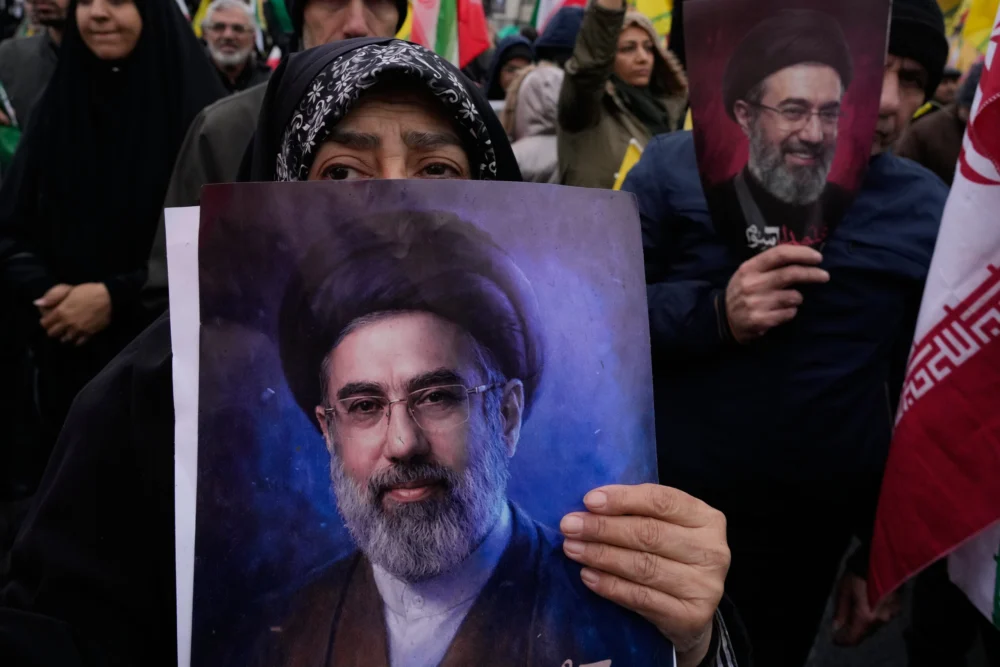
Despite claims of Iran’s leadership being in disarray and hiding, prominent Iranian figures were observed participating in public events. Earlier on Friday, Iranian President Masoud Pezeshkian and top Iranian security official Ali Larijani were seen attending a large Al-Quds Day demonstration in the capital, Tehran. The presence of these high-ranking officials at a public rally suggests a degree of operational continuity and a deliberate effort by the Iranian government to project an image of resilience and control.
The timing of these observations, juxtaposed with Hegseth’s claims, highlights the information warfare component of the ongoing conflict. Both sides are engaged in narrative battles to shape public perception and garner international support. The visual presence of President Pezeshkian and Ali Larijani at the demonstration could be interpreted as a direct refutation of assertions about the Iranian leadership being incapacitated or in hiding.
Analysis: Psychological Warfare and Domestic Audience
Experts suggest that Hegseth’s public statements may be strategically aimed at a domestic U.S. audience, seeking to bolster public confidence in the administration’s handling of the war. Mohamad Elmasry, a professor at the Doha Institute for Graduate Studies, commented on the Pentagon chief’s remarks, noting that "Hegseth is clearly trying to project… confidence and success, trying to reassure the American citizenry."
Elmasry pointed to recent opinion polls indicating significant opposition to the war within the United States. "The war is very unpopular. People are seeing gas prices rise. Now Americans [U.S. soldiers] are being killed… and so Hegseth and Trump are trying to project confidence," he explained. This perspective suggests that the Pentagon’s pronouncements are part of a broader effort to manage public opinion and counter growing dissent against the prolonged military engagement in Iran. The administration’s focus on projecting strength and success, even through unverified claims, serves to address concerns about the escalating costs and potential quagmire of the conflict.
Broader Geopolitical Implications and Public Impact
The heightened tensions and ongoing military actions have profound implications for regional stability and global energy markets. The closure of the Strait of Hormuz, a threat reiterated by Mojtaba Khamenei, could lead to severe disruptions in oil supply, driving up prices and impacting economies worldwide. The human cost, with thousands of casualties on both sides, underscores the devastating consequences of this escalation.
The war’s unpopularity within the United States, as noted by Professor Elmasry, reflects a growing public weariness with protracted military interventions and their associated human and economic tolls. Rising gas prices, coupled with reports of American casualties, are significant factors influencing public sentiment. The political ramifications for President Trump and his administration are substantial, as they navigate domestic dissent while engaging in a high-stakes international conflict. The administration’s strategy appears to be focused on demonstrating decisive action and military superiority, even as the long-term consequences of these actions remain uncertain.
The Path Forward: Uncertainty and Continued Hostilities
The conflicting narratives and the lack of verifiable information regarding Mojtaba Khamenei’s condition leave the situation highly ambiguous. The Pentagon’s claims, if true, could signal a significant blow to Iran’s command structure, potentially leading to further internal instability or a more desperate response. Conversely, if the claims are exaggerated or unfounded, they could serve to undermine U.S. credibility and embolden Iran’s resolve.
As the conflict progresses, the international community will be closely watching for further developments, seeking clarity amidst the fog of war. The human toll continues to mount, and the specter of wider regional conflict looms large. The coming days and weeks will likely reveal more about the true state of Iran’s leadership and the trajectory of this critical geopolitical confrontation. The effectiveness of the U.S. strategy in degrading Iran’s military capabilities, as claimed by Secretary Hegseth, will be tested by Iran’s ability to adapt and retaliate in the face of sustained pressure.