A drone strike on a bustling market in western Sudan on Thursday claimed the lives of at least 11 civilians, including children, and left dozens more wounded, amplifying concerns over the escalating aerial warfare that has devastated the nation. The attack on Adikong market, situated near Sudan’s volatile border with Chad, triggered a blaze that engulfed the area as fuel reserves ignited. This incident occurs as the United Nations issues a stark warning: the country’s rapidly intensifying air war has resulted in over 200 civilian deaths in just over a week.
The immediate aftermath of the Adikong market strike saw emergency services struggling to cope with the influx of casualties. Doctors Without Borders (MSF), an international humanitarian organization, reported on Friday that its medical teams treated more than 20 injured individuals at a hospital it supports across the border in Adre, Chad. Seven of these casualties were identified as children, underscoring the indiscriminate nature of the violence. This marks the second fatal drone attack on the same vicinity in less than a month, highlighting a disturbing pattern of repeated assaults on civilian infrastructure and populations.
Drones have emerged as a critical and devastating weapon in the protracted conflict between the Sudanese Armed Forces (SAF) and the paramilitary Rapid Support Forces (RSF), a war that erupted in April 2023. These unmanned aerial vehicles, capable of precision strikes and widespread terror, have become a hallmark of the ongoing hostilities. Their increasing deployment in populated areas has drawn severe criticism from international bodies and human rights advocates, who decry the disregard for civilian lives.
The grim toll of this aerial onslaught was further illuminated by UN Human Rights Chief Volker Turk. On Thursday, Turk expressed profound dismay at the escalating number of aerial assaults targeting civilians. He revealed that since March 4 alone, more than 200 people have been killed by drones across the Kordofan region and White Nile state. This statistic represents a sharp and alarming increase in the frequency and lethality of drone attacks.
“It is deeply troubling that despite multiple reminders, warnings and appeals, parties to the conflict continue to use increasingly powerful drones to deploy explosive weapons in populated areas,” Turk stated, emphasizing the continued defiance of international humanitarian law by the warring factions. His words underscore a persistent pattern of attacks that show little regard for the safety of non-combatants, turning everyday spaces into potential killing grounds.
The Kordofan region has borne a significant brunt of these aerial attacks. In West Kordofan, at least 152 civilians have been killed in strikes attributed to the SAF. Among these were approximately 50 individuals who perished when both a market and a hospital were simultaneously struck in al-Muglad on March 4. This single event exemplifies the catastrophic consequences of targeting civilian hubs, where markets serve as vital centers for commerce and social interaction, and hospitals are meant to be sanctuaries of healing.
The violence continued unabated in the ensuing days. Just three days after the al-Muglad incident, attacks on markets in Abu Zabad and Wad Banda resulted in the deaths of at least 40 more civilians. The devastation then escalated on March 10, when a truck ferrying civilians was hit in al-Sunut, claiming the lives of at least 50 people, including women and children. These attacks, often occurring in crowded market settings, suggest a deliberate targeting of civilian gatherings, exacerbating the humanitarian crisis.
The day before the Adikong market strike, drones operated by the RSF inflicted further tragedy. They targeted a secondary school and a health center in the White Nile state village of Shukeiri, resulting in the deaths of at least 17 people. According to the Sudanese Doctors Network, the victims included female students, teachers, and a health worker, painting a harrowing picture of the impact on educational and healthcare facilities, which are crucial for community well-being.
The proliferation and increasing sophistication of drone warfare in Sudan have not gone unnoticed by experts. Mukesh Kapila, a professor of global health and humanitarian affairs at the University of Manchester, commented on the significant acceleration in the rate of drone attacks. He noted that drones only began to appear in Sudan in the last couple of years, but their use has now become “accelerating” and appears to be a “preferred weapon of war, particularly on the RSF side.”
Kapila elaborated on the strategic appeal of drones, describing their advantage as “brutally simple: it is cheap, it is easily launched from anywhere, and the main effect is that it is a weapon of mass terror.” This assessment highlights the psychological impact of drone warfare, which instills fear and disrupts normal life, contributing to displacement and humanitarian distress. The ability to project power from a distance without direct risk to the operators makes drones a particularly insidious weapon.
Further analysis of the targeting patterns reveals a deliberate strategy to sow terror and undermine civilian morale. Kapila pointed to the consistent targeting of hospitals, water points, markets, and displacement camps as evidence that the intent is “to spread terror.” These strikes are increasingly employed to project power and influence far beyond active front lines, creating a pervasive sense of insecurity across vast swathes of the country.
The acquisition of advanced drone technology by both warring factions is a critical factor fueling the conflict. The SAF has reportedly received Iranian-made drones, with Mohajer-6 combat UAVs documented as arriving as recently as 2024. This support is complemented by Turkish and Russian military assistance, bolstering the SAF’s aerial capabilities. The acquisition of such weaponry allows for sustained and potentially more destructive aerial campaigns.
The RSF, which lacks a formal air force, has reportedly equipped itself through a clandestine network of supply routes. These routes are said to run through Chad and other transit states, with intelligence pointing to the United Arab Emirates as a significant enabler of these arms transfers. While Abu Dhabi has denied these allegations, the consistent reports suggest a complex web of international involvement in supplying the warring parties.
The sheer volume of drone activity is staggering. According to the Armed Conflict Location and Event Data project (ACLED), the war has generated over 1,000 documented drone attacks since April 2023. In the first two months of 2026 alone, ACLED recorded 198 strikes by both sides. Alarmingly, at least 52 of these strikes resulted in civilian casualties, killing a total of 478 people in that short period. This data underscores the escalating intensity and lethality of the conflict.
Sudan’s share of drone attacks is disproportionately high within the African continent. Data from the Africa Center for Strategic Studies indicates that Sudan accounted for more than half of all drone attacks recorded across Africa in 2024. This dominance of aerial warfare highlights the country’s status as a major theater for drone conflict. By March of the previous year, the SAF claimed to have shot down over 100 drones in a mere 10 days, illustrating the intense aerial engagements taking place.
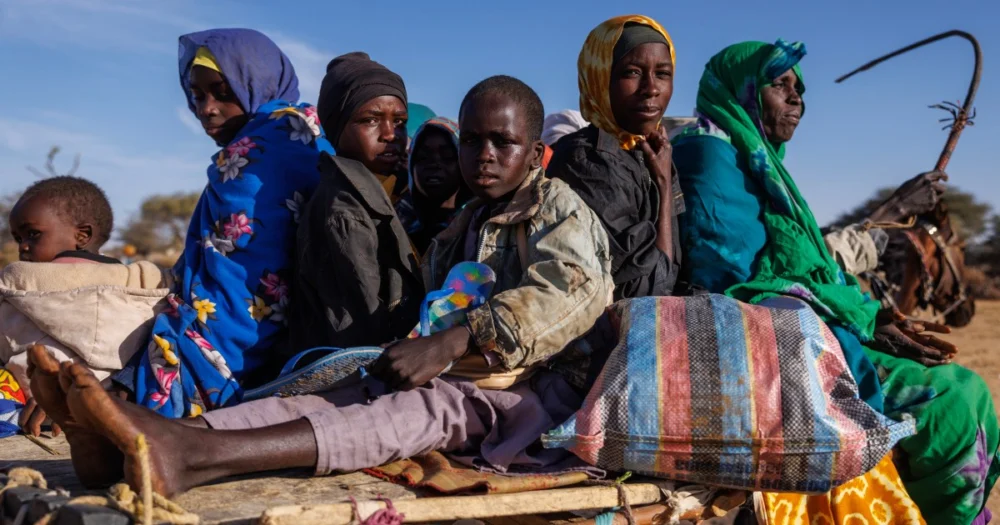
The human cost of nearly three years of relentless warfare has created what is widely described as the world’s largest humanitarian emergency. The scale of displacement and suffering is unprecedented, overwhelming the capacity of aid organizations to respond. The constant threat of aerial attacks, coupled with ground fighting and widespread insecurity, has made life untenable for millions.
According to the United Nations, approximately 33.7 million people, the largest such population globally, now require humanitarian assistance. This figure represents a staggering proportion of the country’s population, highlighting the depth of the crisis. Furthermore, more than 12 million people have been forced to flee their homes, becoming internally displaced or seeking refuge in neighboring countries. This mass displacement disrupts communities, strains resources in host countries, and leaves millions vulnerable to further harm and exploitation. The continued use of drones on civilian targets like markets and schools only exacerbates this dire humanitarian situation, making recovery and stability increasingly distant prospects for the Sudanese people.