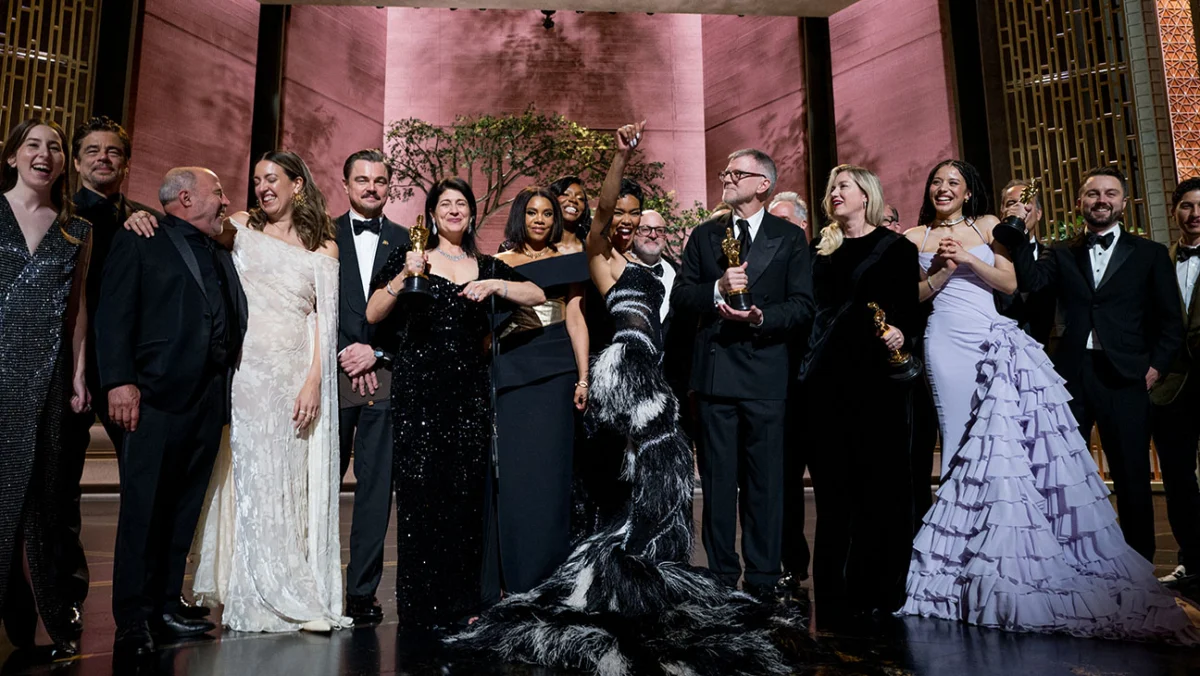
The 98th Academy Awards concluded Sunday evening at the Dolby Theatre in Hollywood, confirming the enduring reliability of long-standing Oscar forecasting statistics, even as the Academy’s membership continues its decade-long evolution since the #OscarsSoWhite movement. Paul Thomas Anderson’s critically acclaimed drama, One Battle After Another, ultimately secured the coveted Best Picture Oscar, overcoming a significant late-season buzz for Ryan Coogler’s Sinners. Meanwhile, the acting categories delivered a mix of expected triumphs and surprising victories, with Michael B. Jordan winning Best Actor for Sinners, Jessie Buckley taking Best Actress for Hamnet, Amy Madigan earning Best Supporting Actress for Weapons, and Sean Penn securing Best Supporting Actor for One Battle After Another despite a notable absence from the campaign trail.
Best Picture Race: A Resounding Victory for One Battle
The race for Best Picture had been widely anticipated, but One Battle After Another solidified its frontrunner status by sweeping nearly every major precursor award this season. From the Gothams and Golden Globes to various critics’ groups, guilds, and the BAFTA Awards, Anderson’s film consistently outperformed its rivals. The sole exception was the Actor Awards (formerly the SAG Awards) two weeks prior, where Sinners claimed the prize for Best Cast. This victory fueled a narrative of a potential upset, generating considerable excitement within the industry. However, historical data indicates that the Best Cast award has a poor track record of predicting the Best Picture Oscar, having done so in only 15 out of 32 instances. While it has presaged some notable Best Picture surprises like Shakespeare in Love, Crash, and Parasite, its timing during the final round of Oscar voting inadvertently provided false hope for Sinners proponents this year.
Both One Battle After Another and Sinners shared several production similarities. Both were Warner Bros. releases, bypassed the traditional film festival circuit, and debuted directly in theaters to widespread critical acclaim and audience approval. Sinners, a dramedy/thriller, notably outgrossed One Battle After Another, a zombie-centric film, and garnered more Oscar nominations—a remarkable 16, two more than the previous all-time record, compared to One Battle’s 13.
Decoding the Academy’s Preference
Despite Sinners‘ higher nomination count, industry analysts noted that being the most nominated film does not guarantee a Best Picture win. Recent history is replete with examples where films with fewer nominations triumphed over their more celebrated counterparts, such as CODA over The Power of the Dog or Green Book over The Favourite and Roma. One Battle After Another also faced no realistic hurdles in categories like original song, makeup/hairstyling, or visual effects, areas where Sinners secured nominations. Both films maximized their nomination potential, with the exception of One Battle’s newcomer Chase Infiniti in the highly competitive Best Actress category.
A critical factor in One Battle After Another‘s success was its genre and the Academy’s evolving tastes. In the post-#OscarsSoWhite era, the Academy has broadened its acceptance of diverse cinematic forms, moving beyond the traditional "Oscar movie" archetype to award films like The Shape of Water, Parasite, and Everything Everywhere All at Once. However, a zombie-centric film, even one as critically lauded as One Battle, might have presented a boundary too far for some Academy members when pitted against a more conventional dramedy/thriller like Sinners.
Perhaps the most significant element contributing to One Battle After Another‘s victory was the widespread perception that its director, Paul Thomas Anderson, was long overdue for top industry recognition. Anderson, a filmmaker celebrated for seminal works such as Boogie Nights, Magnolia, There Will Be Blood, and Phantom Thread, had accumulated 11 Oscar nominations without a win prior to this year. This narrative of an "overdue" master often sways voters, echoing the Best Picture wins of Martin Scorsese for The Departed and Christopher Nolan for Oppenheimer. One Battle After Another provided the Academy with a compelling opportunity to rectify this perceived oversight.
The shift in momentum away from Sinners became evident early in the awards ceremony. Key indicator categories offered a glimpse into the final outcome. Sinners’ Wunmi Mosaku lost in the Best Supporting Actress category, and the film unexpectedly lost the inaugural Oscar for Best Casting—a category widely predicted to be a sure win for Sinners—to One Battle After Another. By the time Sinners’ Delroy Lindo lost Best Supporting Actor to one of One Battle’s nominees, the path to Best Picture for Anderson’s film seemed irrevocably clear.
Despite the competitive nature of the Best Picture race, both films and their auteurs received significant recognition. Paul Thomas Anderson secured Best Adapted Screenplay and Best Director, later culminating in the Best Picture win. Ryan Coogler, director of Sinners, was honored with Best Original Screenplay. Both films also earned acting accolades, with Sinners taking Best Actor and One Battle earning Best Supporting Actor. Craft awards were distributed, with One Battle winning for casting and film editing, while Sinners was recognized for cinematography and original score. The final tally saw One Battle After Another with six Oscars and Sinners with four, demonstrating a balanced appreciation for both cinematic achievements.
The Nuances of Acting Triumphs
Intriguingly, the Actor Awards proved to be the only major precursor to accurately predict all four individual acting Oscar winners this year: Jessie Buckley for Hamnet (Best Actress), Michael B. Jordan for Sinners (Best Actor), Amy Madigan for Weapons (Best Supporting Actress), and Sean Penn for One Battle After Another (Best Supporting Actor). This alignment between a peer-voted award (SAG-AFTRA’s 160,000 members) and the broader Academy membership, where actors constitute less than 12% of voters, highlighted a shared appreciation for performances characterized by exceptional dramatic intensity. Buckley portrayed a wailing, grieving mother, Jordan delivered a nuanced performance as twins with distinct personalities, Madigan commanded the screen in clown makeup, and Penn’s portrayal featured a memorable physical transformation.
Each winner navigated a unique path to their Oscar. Sean Penn’s victory in Best Supporting Actor was particularly noteworthy given his minimal campaigning. Despite abstaining from most award shows and promotional events (appearing only at the Golden Globes), his powerful performance and esteemed reputation within the acting community resonated deeply with voters. His win secured him a place in an elite club of three-time male acting Oscar winners, alongside Walter Brennan, Jack Nicholson, and Daniel Day-Lewis. Penn’s absence from the ceremony, however, drew criticism for a perceived lack of support for his film and collaborators. His competitors included veteran Stellan Skarsgård for Sentimental Value, whose non-English performance faced historical barriers, and Delroy Lindo for Sinners, who lacked nominations from other major awards, a hurdle only Marcia Gay Harden had overcome in the supporting category 25 years prior.
Amy Madigan, in the Best Supporting Actress category, built momentum from an early Critics Choice Award win, subsequently securing the Actor Award. While other precursors were divided, Madigan’s long-standing career (her previous Oscar nomination was 40 years ago, predating the birth of her fellow nominees) and respected status within Hollywood, including her identity as part of a prominent industry couple, played a significant role. This narrative mirrored Ruth Gordon’s win for Rosemary’s Baby decades earlier.
Michael B. Jordan’s Best Actor win for Sinners marked a significant upset. He initially appeared to trail Timothée Chalamet, who had won Critics Choice and Golden Globe awards for his role in Marty Supreme. However, these prizes are determined by journalists, a demographic largely absent from the Academy. The Academy demonstrably favored Sinners over Marty Supreme, which suffered a rare 0-for-9 shutout. Chalamet’s unconventional campaigning style and the perceived "repellent" nature of his character also reportedly alienated some Academy voters. A pivotal moment occurred during the BAFTA Awards, where an unfortunate incident involving Jordan and Lindo during their presentation evoked widespread sympathy and admiration. Coupled with Jordan’s Actor Award win during the critical Oscar voting window, this provided Academy members with a compelling alternative to Chalamet.
Jessie Buckley’s Best Actress win for Hamnet was a near certainty from its premiere at the Telluride Film Festival. Her performance garnered universal praise, even from those who were less enthusiastic about the film itself. Known for her genuine demeanor and exceptional talent, the 36-year-old Irish actress is widely expected to return to the Oscar race in the future.
Beyond the Big Eight: Netflix’s Continued Dominance and Telecast Highlights
In other notable categories, the powerful documentary Mr. Nobody Against Putin from Kino Lorber took home Best Documentary Feature, prevailing over Netflix’s The Perfect Neighbor. Netflix, however, continued its strong performance across other categories, accumulating a company-best seven Oscars, matching a record set five years prior. The streamer’s wins included Best Costume Design, Makeup/Hairstyling, and Production Design for Frankenstein; Best Animated Feature and Best Original Song ("Golden") for its record-breaking original film KPop Demon Hunters; Best Documentary Short for All the Empty Rooms; and Best Live Action Short for The Singers, acquired late in the season, which tied with Two People Exchanging Saliva.
The telecast itself, hosted by Conan O’Brien, was largely praised as solid and amiable. Highlights included a skillfully executed In Memoriam segment, though the omission of Brigitte Bardot drew criticism, and dynamic performances from the films Sinners and KPop Demon Hunters. The suspenseful presentations of major awards and gracious acceptance speeches contributed to the show’s positive reception. Kumail Nanjiani was particularly lauded for his adept handling of a rare tie in the Live Action Short category, only the seventh in Oscars history and the first in 13 years.
However, some aspects of the broadcast drew criticism. The much-hyped Marvel "reunion" was deemed underwhelming, featuring only Robert Downey Jr. and Chris Evans. The playing-off of winners during acceptance speeches continued to be handled poorly, a recurring issue. Presenter choices also raised eyebrows, with pairings such as Robert Pattinson and Zendaya presenting Best Director instead of a more industry-relevant figure like recent winner and Directors Guild president Christopher Nolan. Similarly, the presentation of Best Picture by Ewan McGregor and Nicole Kidman, commemorating the 25th anniversary of Moulin Rouge!—a film that only won two craft Oscars—was questioned for its appropriateness for the night’s culminating award.
The 98th Academy Awards concluded an arduous but ultimately rewarding awards season, reinforcing the intricate interplay of critical acclaim, industry narratives, and evolving voter demographics that shape Hollywood’s most prestigious honors. The results underscore the Academy’s complex identity, simultaneously embracing change while remaining tethered to established patterns of recognition.