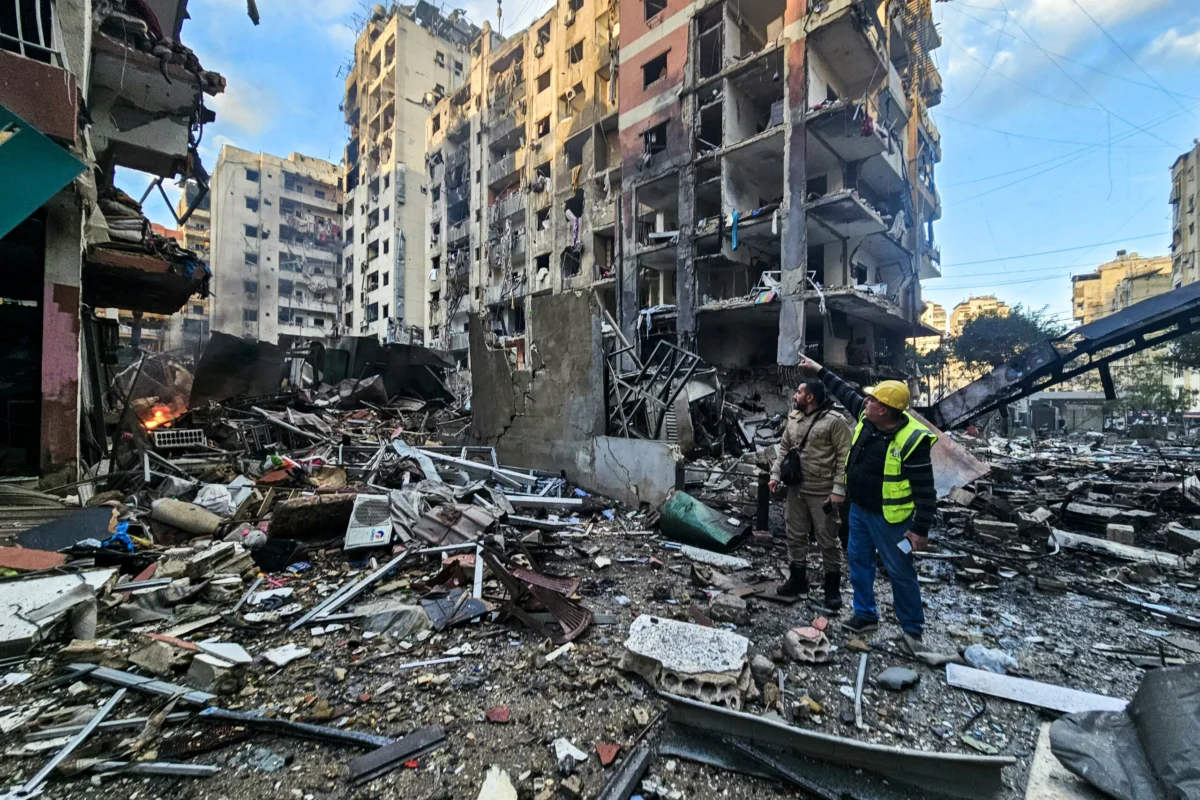
Beirut’s southern suburbs lie in ruins following a sustained campaign of Israeli bombing attacks, forcing hundreds of thousands of residents to flee their homes. The Israeli military asserts its operations are specifically targeting Hezbollah infrastructure, but the scale of civilian displacement and widespread destruction points to a devastating humanitarian crisis unfolding in the Lebanese capital. The ongoing conflict has shattered neighborhoods, disrupted essential services, and left an indelible mark on the city’s fabric.
Escalating Conflict Devastates Beirut Neighborhoods
The latest wave of violence has inflicted catastrophic damage upon densely populated areas in Beirut’s southern districts. Residential buildings, commercial centers, and vital infrastructure have been reduced to rubble. The sheer scale of the destruction has overwhelmed local emergency services, with rescuers struggling to reach affected areas and provide aid amidst the ongoing hostilities.
Witnesses describe scenes of chaos and despair as families, many with minimal possessions, scramble to find safe havens. The constant threat of aerial bombardment has instilled widespread fear, forcing a mass exodus from areas deemed most vulnerable. The humanitarian toll is mounting with each passing day, as the displacement crisis deepens.
Israeli Operations Target Hezbollah Infrastructure
The Israeli Defense Forces (IDF) have stated their objective is to dismantle Hezbollah’s military capabilities, which they claim are deeply embedded within civilian areas. These operations, according to official statements, are aimed at disrupting rocket launch sites, weapons depots, and command centers. The IDF maintains that it takes measures to avoid civilian casualties, but the collateral damage has been extensive.
This military strategy, however, has drawn sharp international condemnation due to the severe impact on the civilian population. Critics argue that operating within densely populated urban environments inherently risks widespread harm to non-combatants, regardless of stated intentions. The effectiveness of targeting infrastructure while minimizing civilian suffering remains a contentious point.
The Human Cost of Displacement
The most immediate and profound consequence of the intensified bombing is the unprecedented wave of mass displacement. Hundreds of thousands of Lebanese citizens have been uprooted from their homes, transforming Beirut’s southern suburbs into ghost towns. These displaced individuals are seeking refuge in other parts of Beirut, in neighboring towns, and in makeshift shelters, placing immense strain on already limited resources.
Families are separated, livelihoods are shattered, and access to basic necessities like food, water, and medical care is severely compromised. The psychological trauma inflicted upon those who have witnessed such destruction and experienced forced displacement is immeasurable. Children, in particular, are bearing the brunt of this crisis, facing uncertainty and trauma that will have long-lasting effects.
Historical Context of Beirut’s Southern Suburbs
Beirut’s southern suburbs, often referred to as "Dahieh," have a complex history. For decades, these areas have been a stronghold for Hezbollah, a powerful Shiite political and militant group. Following the Israeli withdrawal from southern Lebanon in 2000, many Shiite families displaced during earlier conflicts settled in these neighborhoods, contributing to their rapid growth and dense population.
Hezbollah’s deep integration into the social and political landscape of these suburbs means that Israeli military operations, even if precisely targeted, inevitably affect a large civilian population. The group’s political influence and its role as a major provider of social services further complicate any military intervention, making it a delicate and fraught endeavor.
Timeline of Escalation and Destruction
The current intensification of hostilities appears to be a significant escalation in the long-standing conflict between Israel and Hezbollah. While skirmishes and cross-border incidents have been a recurring feature, the scale and ferocity of the recent bombing campaign are particularly alarming. Reports indicate that the current operations have surpassed previous levels of intensity, leading to a rapid deterioration of the situation on the ground.
Initial reports of targeted strikes have since evolved into widespread destruction across multiple neighborhoods. The relentless nature of the aerial bombardments has left little respite for the civilian population, who are trapped between the ongoing attacks and the daunting prospect of rebuilding their lives. The continuous nature of the bombing has made assessment and aid delivery exceptionally challenging.
International Reactions and Humanitarian Concerns
The international community has expressed grave concern over the escalating violence and the humanitarian crisis in Beirut. United Nations agencies and various non-governmental organizations are calling for an immediate cessation of hostilities and unimpeded access for humanitarian aid. Diplomatic efforts are reportedly underway to de-escalate the situation, but progress remains slow.
Aid organizations are struggling to mobilize sufficient resources to meet the overwhelming needs of the displaced population. Concerns are mounting about the potential for disease outbreaks due to overcrowding and inadequate sanitation in temporary shelters. The long-term implications for Lebanon’s already fragile economy are also a significant worry.
Impact on Lebanon’s Fragile State
The destruction in Beirut’s southern suburbs compounds the severe economic and political challenges already facing Lebanon. The country has been grappling with a profound financial crisis, hyperinflation, and a paralyzed government. The added burden of mass displacement and widespread destruction will undoubtedly strain Lebanon’s capacity to respond and recover.
Rebuilding efforts will require substantial international assistance, but the ongoing instability and the deep-seated political divisions within Lebanon present significant obstacles. The future stability of the region is intricately linked to the resolution of this conflict and the ability of Lebanon to navigate this new crisis.
Challenges of Rebuilding and Recovery
The path to recovery for Beirut’s devastated southern suburbs will be long and arduous. Beyond the immediate need for shelter and humanitarian assistance, there is the monumental task of rebuilding homes, businesses, and essential infrastructure. The economic impact of this destruction will be felt for years to come, further exacerbating Lebanon’s existing economic woes.
The psychological scars of witnessing such devastation and experiencing forced displacement will require extensive support services. Ensuring that displaced populations can eventually return to their homes and rebuild their lives will be a critical challenge, requiring a comprehensive and sustained effort.
The Broader Implications for Regional Stability
The continued conflict and destruction in Beirut have far-reaching implications for regional stability. The ongoing tensions between Israel and Hezbollah are a persistent source of concern for the wider Middle East. Any significant escalation could have unpredictable consequences, potentially drawing in other regional actors.
The humanitarian crisis unfolding in Lebanon also poses a challenge to neighboring countries and the international community. Addressing the root causes of the conflict and fostering a lasting peace will be essential to prevent further cycles of violence and displacement in the region.
Public Impact and Community Resilience
Despite the overwhelming destruction, there are glimmers of resilience within the affected communities. Neighbors are supporting one another, sharing scarce resources, and offering comfort in the face of unimaginable hardship. Local aid initiatives, though dwarfed by the scale of the crisis, demonstrate the enduring spirit of the Lebanese people.
However, the sheer magnitude of the displacement and destruction is testing the limits of this resilience. The long-term impact on community cohesion and social structures remains a critical concern. The rebuilding process will not only involve physical reconstruction but also the vital work of healing and reconnecting shattered communities.
Next Steps and the Road Ahead
The immediate priority remains providing urgent humanitarian assistance to the hundreds of thousands displaced. This includes ensuring access to food, water, shelter, and medical care. Simultaneously, diplomatic channels must be vigorously pursued to achieve a sustainable ceasefire and to address the underlying causes of the conflict.
Long-term recovery efforts will require significant international investment and a commitment to supporting Lebanon’s stability. The international community faces a critical juncture, needing to balance immediate humanitarian concerns with the imperative of fostering a peaceful resolution and enabling the long-term rebuilding of Beirut and its shattered southern suburbs. The path forward is fraught with challenges, demanding a concerted and sustained effort from all stakeholders.