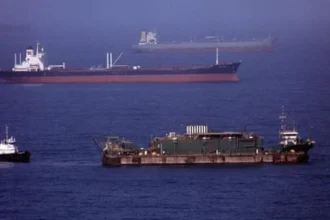
The White House is facing a deepening diplomatic standoff as several European allies formally declined or expressed severe reservations regarding President Donald Trump’s demand for a multi-national naval coalition to break an Iranian blockade in the Strait of Hormuz. As the US-Israeli war against Iran enters its third week, the tension between Washington and the European Union has reached a critical juncture, with leaders in Berlin, Paris, and London questioning the long-term strategic objectives of the conflict. The refusal to commit warships comes despite a direct warning from the president that the future of the NATO alliance could be in jeopardy if member states fail to provide military assistance in the Persian Gulf.

European Union foreign ministers gathered in Brussels on Monday to coordinate a response to the escalating Middle East crisis, which has seen global oil prices surge past $104 per barrel. German Foreign Minister Johann Wadephul led the call for transparency, stating that the United States and Israel must define the specific military milestones that would signal the end of their deployment. Wadephul told reporters that the lack of clarity regarding the endgame of the offensive has made it impossible for European governments to justify a military intervention to their respective parliaments.
The friction between the Trump administration and its traditional partners was further underscored by German Chancellor Friedrich Merz’s spokesperson, Stefan Kornelius. In a blunt assessment of the situation, Kornelius clarified that the ongoing hostilities in the Middle East do not fall under the purview of the North Atlantic Treaty Organization. He emphasized that NATO is a defensive alliance designed to protect the territory of its members and noted that the United States did not consult its allies before initiating strikes against Iranian targets. "We believe this is not a matter for NATO or the German government," Kornelius said, effectively distancing Berlin from the American-led campaign.

European Capitals Question Strategic Goals in the Strait of Hormuz
The resistance is not limited to Germany, as a wave of skepticism has swept through Eastern and Southern Europe. Estonian Foreign Minister Margus Tsahkna echoed the need for a comprehensive plan, asking for a detailed explanation of the administration’s "strategic goals." Meanwhile, Polish Foreign Minister Radek Sikorski suggested that any request for military aid should be processed through formal NATO channels rather than public ultimatums. While Sikorski expressed "respect and sympathy" for the American position, he maintained that any Polish contribution would require a rigorous vetting process that has yet to occur.
In the United Kingdom, Prime Minister Keir Starmer has attempted to walk a fine line between maintaining the "Special Relationship" and avoiding entanglement in a wider regional conflagration. During a press conference at Downing Street, Starmer stated that the UK’s primary objectives are to protect its personnel and work toward a swift resolution that ensures regional stability. While Starmer confirmed he is discussing a "viable plan" with European allies to reopen the Strait of Hormuz, he has so far resisted the White House’s specific request to dispatch Royal Navy aircraft carriers or destroyers to the Gulf. Reports suggest the UK may instead opt to provide minesweeping drones, a move seen as a compromise to assist in maritime safety without escalating the combat role of British forces.

Italy and Greece have also signaled their intent to remain on the sidelines of the active conflict. Italian Foreign Minister Antonio Tajani stated that while Rome supports existing EU naval missions in the Red Sea, those operations are strictly defensive and focused on anti-piracy. Tajani clarified that he does not believe these missions can be expanded to include the Strait of Hormuz, which has become a high-intensity combat zone. Similarly, the Greek government has officially stated it will not engage in military operations within the strait, despite the heavy reliance of the Greek shipping industry on the waterway.
Trump Intensifies Pressure on Allies and Global Partners
President Trump, speaking from the White House, expressed his frustration with the tepid response from traditional allies. He singled out the United Kingdom, stating he was "very surprised" and "not happy" with London’s hesitation. The president suggested that a later offer from the UK to send aircraft carriers might be "too late" and emphasized that allies should be involved "enthusiastically." Secretary of State Marco Rubio is expected to release a formal list of countries willing to join the coalition, though the current roster of confirmed participants remains thin.
The administration has also turned its sights on Beijing, suggesting that China’s heavy reliance on Middle Eastern crude oil should compel it to join the effort to clear the waterway. In an interview, President Trump indicated that his upcoming meeting with Chinese President Xi Jinping, scheduled for late March, could be delayed if China does not provide assistance. White House spokesperson Karoline Leavitt confirmed that while the meeting is not yet canceled, a postponement is a distinct possibility as the president remains focused on the military campaign. This move adds a layer of economic uncertainty to the crisis, as Washington and Beijing are already embroiled in a complex dispute over trade tariffs.
Despite the lack of international military support, the president claimed that US forces have already made significant progress in degrading Iran’s capabilities. According to the White House, the military has struck over 7,000 targets across Iran, focusing on drone manufacturing plants and ballistic missile sites. Trump claimed a 90% reduction in Iranian missile launches and noted that over 100 Iranian naval vessels have been destroyed in the past ten days. He also asserted that US strikes have neutralized 30 Iranian mine-laying ships, though he admitted that intelligence is unclear on whether any mines have actually been deployed into the shipping lanes.
Ground Operations in Lebanon and Rising Humanitarian Toll
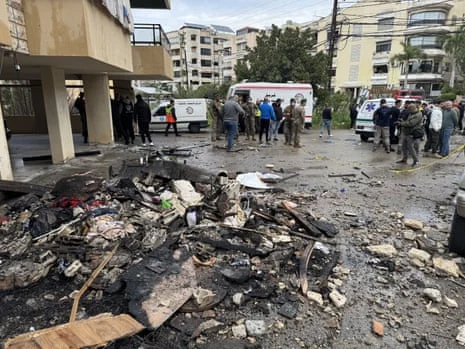
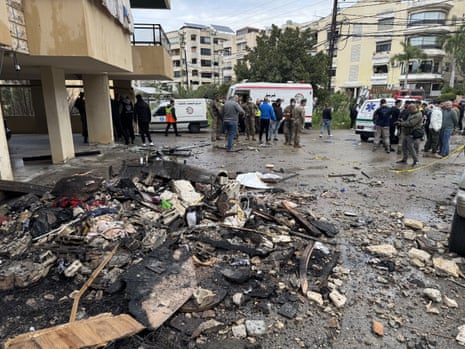
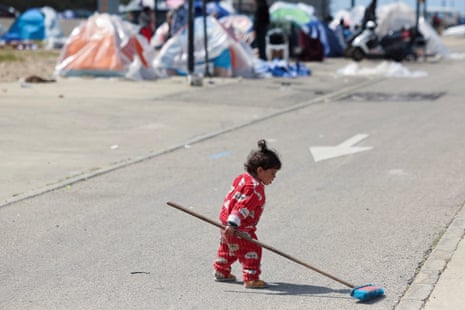
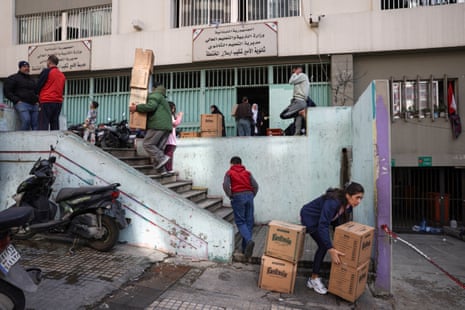
While the maritime standoff continues, the conflict on the ground has expanded significantly. The Israel Defense Forces (IDF) announced on Monday the commencement of "limited ground operations" against Hezbollah strongholds in southern Lebanon. The Israeli military stated that the incursion followed a series of artillery and air strikes designed to mitigate threats to northern Israel. However, the human cost of the escalation has been severe. Lebanese authorities report that more than one million people have been displaced within the last two weeks, with hundreds of thousands seeking refuge in collective shelters or fleeing across the border into Syria.
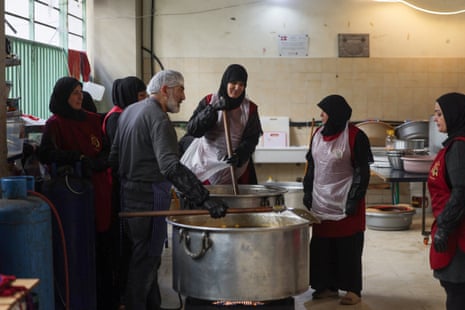
The Lebanese Health Ministry reported that at least 850 people have been killed in Israeli strikes since March 2. The displacement has created a massive humanitarian crisis, with families often forced to flee their homes with only minutes of warning. The UN Refugee Agency (UNHCR) noted that more than half of those fleeing into Syria are children, and the sheer volume of displaced persons has overwhelmed the government’s ability to provide basic necessities.
The regional instability has also spilled over into neighboring Gulf states. Iranian drone and missile attacks have targeted facilities in the United Arab Emirates and Kuwait. A drone strike on the Fujairah Oil Industry Zone in the UAE caused a significant fire at a major global trading hub, though no casualties were reported. In Kuwait, a drone attack hit the Ali Al Salem airbase, which hosts both US and Italian personnel. While the Italian military confirmed that a remotely piloted aircraft was destroyed, all personnel were reported safe.
Global Economic Fallout and Energy Security Concerns
The Middle East crisis has sent shockwaves through the global economy, particularly in the energy sector. With the Strait of Hormuz effectively closed to vessels from the US, Israel, and their allies, the international benchmark Brent crude has seen a steady climb. This volatility has forced several nations to take emergency measures. Japan has begun the release of its strategic oil reserves, tapping into a stockpile of over 400 million barrels to cushion the impact of rising prices.
In South Asia, the fuel crisis has led to drastic domestic policies. Sri Lanka has ordered the closure of government offices, schools, and universities on Wednesdays to conserve energy, while Bangladesh has implemented strict fuel rationing to prevent panic buying. US Energy Secretary Chris Wright attempted to project optimism, stating that gas prices could drop by the summer, but he acknowledged that such a decrease is entirely contingent on the swift conclusion of the Iran war.
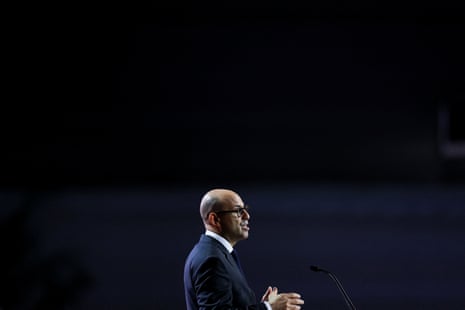
UN Climate Chief Simon Stiell used the crisis to issue a warning to EU policymakers regarding the dangers of fossil fuel dependency. Speaking in Brussels, Stiell argued that the current turmoil is a direct result of Europe’s reliance on energy imports from volatile regions. He described the situation as an "abject lesson" in how fossil fuels can undermine national security and sovereignty, urging a faster transition to renewable energy to avoid future geopolitical shocks.

Diplomatic Deadlock and the Search for a Resolution
As the military campaign enters its third week, the path to a diplomatic resolution remains obscured. Iranian Foreign Minister Abbas Araghchi has maintained a defiant posture, stating that the Strait of Hormuz remains open to neutral parties but will stay closed to "enemies" of the state. He thanked Pakistan for its "solidarity" after a Pakistani-flagged tanker successfully transited the strait, suggesting that Tehran is using the waterway as a tool for selective diplomacy.
Araghchi also dismissed calls for a ceasefire, arguing that the war must end in a way that prevents future "aggression" against Iran. This hardline stance is complicated by uncertainty regarding Iran’s internal leadership. President Trump noted that the new Supreme Leader, Ayatollah Mojtaba Khamenei, has not appeared in public since assuming the position eight days ago, leading to rumors concerning his health or status. "We don’t know who their leader is," Trump told reporters, adding that the lack of a visible counterpart has hampered any potential for negotiation.
The European Union’s foreign policy chief, Kaja Kallas, has proposed a diplomatic initiative modeled after the grain deal that allowed Ukraine to export agricultural products during its conflict with Russia. The plan would aim to create a safe corridor for oil and gas shipments through the Strait of Hormuz, overseen by neutral international observers. However, with the US and Israel committed to their campaign of "degrading" Iranian infrastructure and Iran vowing to continue its resistance, the prospects for such a deal remain slim in the immediate future.