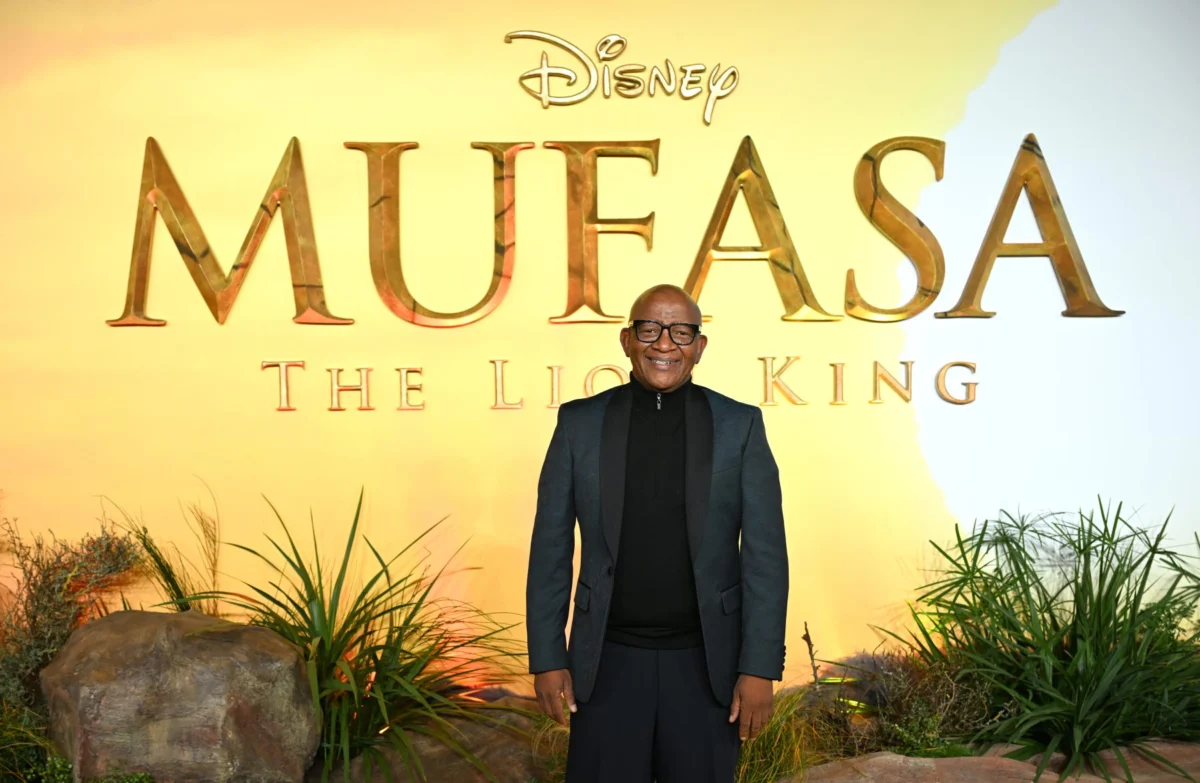
The iconic composer and performer behind the opening Zulu chant of Disney’s "The Lion King," Lebo M., has initiated legal action against Zimbabwean comedian Learnmore Jonasi, alleging defamation over a viral podcast segment that misinterpreted the song’s profound meaning. The lawsuit, filed on Monday, March 16, centers on Jonasi’s assertion during a February appearance on the podcast "One54 Africa" that the renowned phrase "Nants’ingonyama bagithi Baba" translates to a simplistic "Look, there’s a lion. Oh my god."
Lebo M., whose full name is Lebohang Morake, is credited with composing and performing this pivotal chant in both the original 1994 animated film and the 2019 photorealistic remake of "The Lion King." The legal complaint argues that Jonasi’s rendition is not merely a mistranslation but a deliberate and damaging distortion of a culturally significant piece of royal praise poetry. Lebo M. contends that the chant’s true essence, steeped in metaphor, signifies "All hail the king, we all bow in the presence of the king," a profound expression of reverence and respect.
Allegations of Defamation and Artistic Sabotage
The lawsuit, filed in Los Angeles, seeks a substantial $27 million in damages from Jonasi. Lebo M.’s legal team asserts that the comedian’s widely circulated remarks constitute defamation, libel, and business interference. The complaint elaborates that Jonasi’s "reduction to ‘Look, there’s a lion. Oh my god’ is not a simplified translation – it is a fabricated, trivializing distortion, meant as a sick joke for unlawful self-profit and destruction of the imaginative and artistic work of Lebo M." This alleged distortion, according to the filing, risks undermining Lebo M.’s decades-long collaborative relationship with Disney and the artistic integrity of his contributions to one of the most beloved franchises in cinematic history.

The Impact of Viral Misinformation
The repercussions of Jonasi’s statement have extended beyond the digital realm, impacting Lebo M. directly during his current European tour with acclaimed composer Hans Zimmer. The lawsuit states that Lebo M. "now fears for his life due to Xenophobic comments" and has been "confronted and bombarded" with reactions to the podcast clip. This suggests that the comedian’s misrepresentation has not only trivialized the artistic work but has also, perhaps unintentionally, fueled harmful sentiments and personal threats against the artist.
Legal Challenges and Free Speech Defenses
Navigating the legal landscape, Lebo M.’s case faces significant hurdles due to the broad protections afforded to comedic expression under the First Amendment in the United States. These protections generally shield comedians from defamation claims unless their statements are presented as factual assertions with malicious intent. Lebo M.’s attorney, Michael Younge, is attempting to circumvent these free speech defenses by arguing that Jonasi "did not frame this as a joke in delivery." The legal complaint further asserts that the defendant "presented it as factual knowledge with misguided authenticity to increase exposure and mockery of Lebo M.’s creative masterpiece."
A History of Digital Discord
The lawsuit marks a formal escalation of a dispute that has played out publicly on social media platforms. Following the podcast clip’s virality, Lebo M. took to Instagram on March 4 to express his concerns directly. In a video, he stated that he had attempted to message Jonasi about the matter, but the comedian reportedly dismissed his concerns, claiming he had been using the same joke for eight years and had no intention of stopping. Lebo M. characterized the situation as "painful to see an ignorant wannabe comedian promote ignorance and it become so globally powerful," adding, "I did try to engage this young man, and he was so arrogant."
Jonasi, in turn, responded via an Instagram video on March 14. He claimed that he was initially open to Lebo M.’s messages and had hoped to collaborate on a video to clarify the situation. However, Jonasi stated that the conversation broke down after Lebo M. referred to him as "self-hating." According to Jonasi, he realized he was not engaging in a constructive dialogue, stating, "This person is literally not attacking the joke, but my character." A representative for Jonasi had not immediately responded to requests for comment as of Tuesday, March 17.

The Cultural Significance of "The Circle of Life"
The opening chant of "The Circle of Life" is more than just a musical hook; it is a powerful invocation that sets the tone for the entire narrative of "The Lion King." Composed primarily by Lebo M. himself, with additional lyrics by Tim Rice and music by Elton John, the chant is sung in isiZulu, a language spoken by millions in South Africa. Its inclusion is a deliberate artistic choice to ground the film’s universal themes in African culture and heritage. The chant is traditionally performed by Lebo M. as a solo, a powerful and moving introduction that immediately transports the audience to the African savanna and introduces the concept of the great circle of life.
The phrase "Nants’ingonyama bagithi Baba" is widely understood by Zulu speakers and scholars to be a poetic and ceremonial declaration. The specific words have nuances that go beyond a simple noun and exclamatory phrase. "Nants’ingonyama" translates to "Here comes the lion," while "bagithi Baba" is a form of respectful address, akin to "father" or "chieftain," often used when referring to a revered elder or leader. Therefore, a more accurate and culturally sensitive interpretation aligns with Lebo M.’s claim of royal praise, acknowledging the arrival of a powerful and respected figure, the king.
The Broader Implications for Art and Comedy
This legal battle highlights a perennial tension between artistic expression, particularly in comedy, and the potential for harm through misinformation. While comedians often rely on exaggeration and satire to provoke thought and laughter, the line between humorous commentary and harmful defamation can become blurred, especially when the subject matter carries significant cultural or personal weight. The lawsuit also underscores the importance of cultural context and accurate representation in global media.
The "Nants’ingonyama" chant has become an indelible part of popular culture, recognized by audiences worldwide. Its perceived meaning has, for decades, been a source of wonder and awe. Jonasi’s claim, amplified by social media, threatened to reduce this complex cultural artifact to a simplistic, almost dismissive, observation. The scale of the damages sought by Lebo M. reflects the profound impact he believes this misrepresentation has had on his legacy, his livelihood, and his personal safety.

The Future of the Dispute
The legal proceedings are expected to be closely watched, not only for their outcome regarding the specific claims of defamation but also for their potential to shape the boundaries of comedic speech in the digital age. The argument that Jonasi presented his remarks as factual, rather than humorous, is crucial to Lebo M.’s case. The outcome could set precedents for how comedians are held accountable for statements that, while delivered in jest, are perceived as damaging factual inaccuracies by the individuals or entities they concern, particularly when those statements gain widespread traction and have tangible negative consequences.
As the legal battle unfolds, the public discourse surrounding "The Lion King," its iconic music, and the cultural significance of its Zulu elements is likely to intensify. The lawsuit serves as a stark reminder of the power of viral content and the responsibilities that come with disseminating information, whether intended as humor or not. The world of entertainment and media law will be observing to see how this clash between comedic intent and artistic integrity is ultimately resolved.