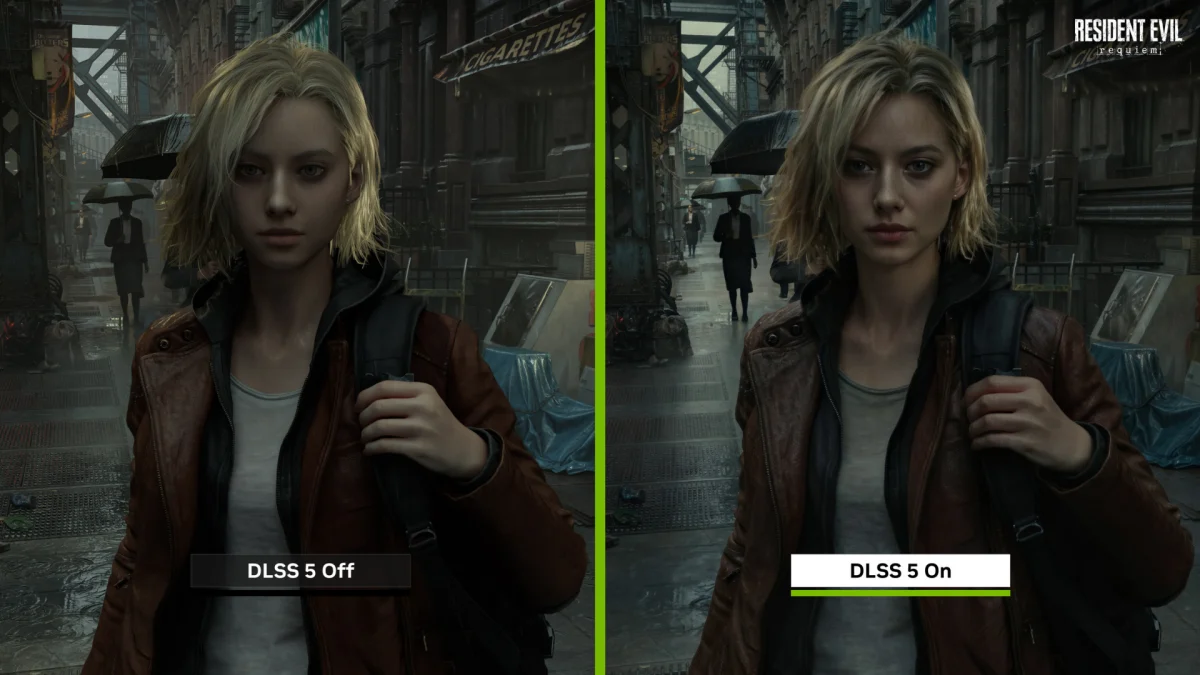
NVIDIA Chief Executive Officer Jensen Huang has issued a firm rebuttal to a wave of online criticism following the unveiling of DLSS 5, a new AI-powered rendering technology that some gaming enthusiasts have dismissed as a tool for creating "AI slop." The controversy erupted after the company’s GTC keynote on Monday, where the technology was presented as a revolutionary leap in visual fidelity, promising to use generative AI to overhaul lighting, textures, and materials in real time. While NVIDIA positions the software as the "GPT moment" for the gaming industry, a significant portion of the player base argues that the technology risks erasing the intentional artistic direction of game developers in favor of a generic, hyper-realistic aesthetic.
The tension between the Silicon Valley hardware giant and its core consumer base highlights a growing rift in the entertainment industry regarding the role of generative artificial intelligence. During the GTC presentation, NVIDIA showcased DLSS 5—the fifth iteration of Deep Learning Super Sampling—running on high-profile titles such as Resident Evil Requiem, Hogwarts Legacy, and Starfield. The demonstration video utilized side-by-side comparisons to show how the AI could take existing game assets and "re-render" them with photorealistic lighting and skin textures. However, the response on social media platforms like X and YouTube was almost immediate, with users claiming the AI-enhanced versions looked "soulless" and "uncanny."
The Evolution of Neural Rendering and the DLSS 5 Vision
NVIDIA’s DLSS technology has undergone several transformations since its inception. Originally designed as a method for upscaling lower-resolution images to improve performance, the suite has expanded to include "Frame Generation" and "Ray Reconstruction." DLSS 5 represents the most radical shift yet, moving beyond simple optimization into the realm of generative content. According to the company, the model does not just clean up an image; it adds "photoreal lighting and materials" that were not present in the original game code.
"DLSS 5 is the GPT moment for graphics," Huang stated in a formal press release accompanying the announcement. He argued that the technology represents a fundamental shift in how digital worlds are constructed, blending traditional handcrafted rendering with generative AI. The goal, according to NVIDIA, is to deliver a dramatic leap in visual realism while providing developers with the tools to maintain creative expression. This "neural rendering" approach is intended to bypass the traditional hardware limitations that often force developers to compromise on lighting and texture detail.
Despite these lofty ambitions, the gaming community has focused on the visual discrepancies seen in the demonstration. One of the most cited examples involved a character named Grace from the upcoming Resident Evil Requiem. Critics pointed out that the DLSS 5 version of the character appeared significantly different from the original model, with some comparing the new look to an "AI-generated dating profile picture." The sentiment that the technology acts as a "filter" that homogenizes diverse art styles has become a central point of contention.
The Rise of the ‘AI Slop’ Critique
The term "AI slop" has gained traction among internet users to describe generative content that appears technically polished but lacks human intentionality or artistic soul. This critique was leveled heavily at NVIDIA’s X announcement, which was quickly flooded with thousands of negative replies. Many users expressed frustration that years of work by digital artists and character designers could be effectively "painted over" by an algorithm that favors a specific, airbrushed look.
User @GamersNexus, a prominent voice in the hardware community, shared a screenshot of the Resident Evil footage, noting that the AI-transformed character lacked the "soul" of the original design. Other users echoed this sentiment, arguing that the photorealistic style applied by DLSS 5 made distinct characters look like generic, AI-generated humans used in online scams. The backlash suggests a deep-seated anxiety among gamers that the pursuit of "realism" is coming at the expense of unique art direction and creative vision.
Professional artists have also joined the fray, expressing concern that the technology devalues the manual labor involved in perfecting 3D models. "Artists spend hours perfecting a model for you to come and replace it with AI faces," wrote one critic on X. The argument is that while the AI may produce an image with more "detail" in a technical sense, it lacks the nuanced decision-making that a human artist uses to convey character personality and mood through lighting and texture.
NVIDIA’s Technical Rebuttal and the Defense of Artistic Control
In response to the mounting criticism, Jensen Huang used a GTC Q&A session to clarify the mechanics of DLSS 5, asserting that his critics are "completely wrong" about how the technology functions. Huang emphasized that DLSS 5 is not a post-processing filter applied on top of a finished frame, but rather a "content-control" system that operates at the geometry level of the game engine.
"DLSS 5 fuses controllability of the geometry and textures and everything about the game with generative AI," Huang explained. He differentiated the technology from standard generative AI models that produce unpredictable results, calling it "neural rendering." According to the CEO, the system allows developers to "fine-tune" the AI so that it adheres strictly to their desired aesthetic. By integrating the AI into the rendering pipeline rather than applying it as a final layer, NVIDIA claims that developers can maintain full control over the output.
The official NVIDIA GeForce YouTube account further attempted to quell the backlash by pinning a detailed comment on its announcement video. The company explained that the DLSS 5 Software Development Kit (SDK) includes "intensity, color grading, and masking" tools. These features allow developers to exclude certain areas of the screen from the AI’s influence and adjust how aggressively the generative model alters the source material. NVIDIA insists that because the model uses the game’s own motion vectors and color data as anchors, the output remains grounded in the original 3D content.
Developer Endorsements and Industry Support
While the public reaction has been largely skeptical, several high-profile game developers have come forward to support NVIDIA’s new tool. Bethesda Game Studios, the developer behind Starfield and The Elder Scrolls, confirmed that they are already working with DLSS 5. Todd Howard, Executive Producer at Bethesda, released a statement praising the technology for allowing artistic detail to "shine through without being held back by the traditional limits of real-time rendering."
Bethesda’s social media channels clarified that their art teams would be responsible for "further adjusting" the AI’s lighting and effects to ensure the final product aligns with their creative vision. This suggests a workflow where the AI provides a baseline of high-fidelity lighting, which is then curated and corrected by human artists. Capcom, the developer of the Resident Evil series, also reportedly worked closely with NVIDIA on the demonstration footage that sparked much of the initial controversy.
NVIDIA’s Global PR Director, Ben Berraondo, emphasized on social media that the demonstrations were collaborative efforts. The message from the industry side appears to be that DLSS 5 is an optional, high-end feature intended to give players more choices in how they experience a game, rather than a mandatory replacement for traditional art styles. However, these assurances have done little to stop the technology from becoming the subject of widespread mockery.
The Viral Backlash and Meme Culture
The controversy has evolved from a technical debate into a full-scale internet meme. Social media users have begun applying the "DLSS 5" label to a variety of images, comparing stylized or iconic characters to "grotesque" or overly airbrushed versions of themselves. These memes often highlight the "uncanny valley" effect, where an image is close enough to a human likeness to be recognizable but "off" enough to cause a sense of unease or revulsion.
Independent game developers have also joined the trend, using the DLSS 5 "comparison" format to joke about their own art styles. The official accounts for games like Among Us, Cult of the Lamb, and Worms posted satirical side-by-side images, jokingly showing their 2D or stylized characters transformed into "photorealistic" monstrosities. This industry-wide levity underscores a serious point: for many developers, the "imperfections" and specific constraints of their art style are what make their games memorable.
The meme culture surrounding the announcement has also touched on the aesthetic similarities between DLSS 5’s output and AI-generated pornography. Critics have pointed out that the smooth, highly detailed, yet strangely plastic-looking skin textures produced by the AI model mirror the aesthetics found in AI-generated adult content. This association has further fueled the "slop" narrative, as users associate the look with mass-produced, low-effort digital content.
Ethical Questions and the Future of Generative Graphics
Beyond the aesthetic concerns, the introduction of DLSS 5 has reignited discussions regarding the ethics of AI training data. NVIDIA has not publicly disclosed the specific datasets used to train the DLSS 5 model, leading to speculation about whether the AI was trained on copyrighted game assets or the work of digital artists without their explicit consent. This follows a broader trend of legal challenges facing AI companies, including recent lawsuits involving platforms like Reddit and Perplexity over data misappropriation.
Critics argue that if NVIDIA trained its model on the work of the very artists it now seeks to "assist," the technology represents a form of creative cannibalization. "If you want to upgrade graphics, hire talented artists to do it instead of using technology that exploited your own studio’s copyrighted work," wrote one social media critic. This ethical cloud hangs over the technology’s rollout, as players and creators alike question the long-term impact on the gaming industry’s labor market.
Despite the current firestorm, NVIDIA appears committed to the generative path. The company’s stock has seen historic growth over the past two years, largely driven by its dominance in the AI hardware space. DLSS 5 is a clear attempt to bring that AI expertise directly into the consumer gaming market. Whether the "AI slop" label will stick or if gamers will eventually embrace the "GPT moment" remains to be seen. For now, the industry stands at a crossroads, balancing the undeniable power of generative tools against the deeply held value of human-led art direction.