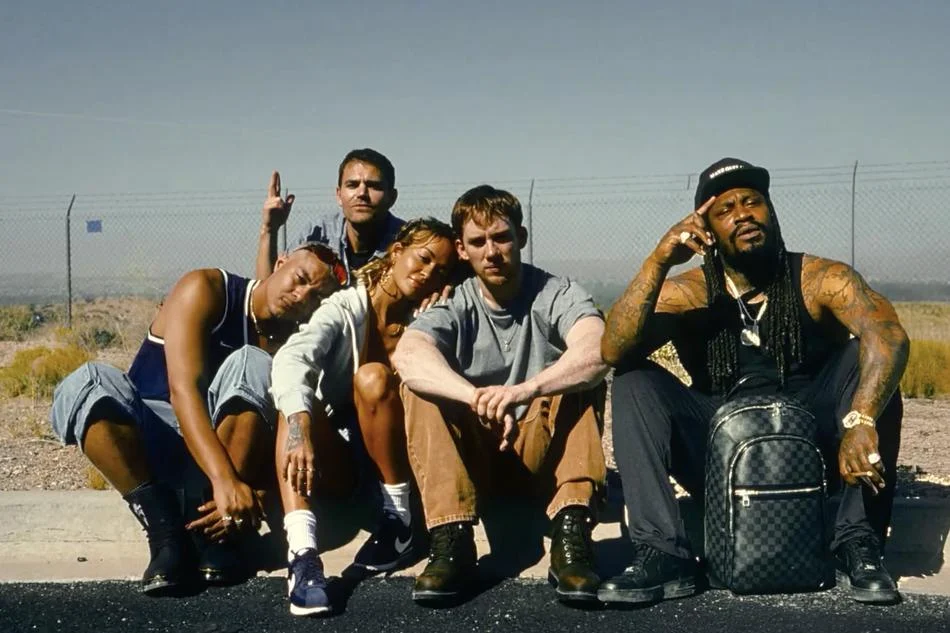
Drew Kirsch’s debut feature film, He Bled Neon, premiered at the SXSW Film Festival, marking a significant transition for the director known for high-profile music videos, including Taylor Swift’s "You Need to Calm Down." The film, starring Joe Cole, Rita Ora, Marshawn Lynch, Ismael Cruz Córdova, and Paul Wesley, has garnered early critical reception characterizing it as a derivative and unconvincing entry into the neo-noir crime genre. Critics have pointed to its heavy reliance on established tropes and a perceived lack of authentic grit, despite its visually tailored aesthetic.
Director’s Ambitious Leap to Feature Filmmaking
Drew Kirsch’s move from directing music videos to helming a full-length feature film represents an ambitious career progression, a path previously navigated by acclaimed directors such as David Fincher and Spike Jonze. Kirsch established his reputation in the music industry with visually distinct and often star-studded short-form content. The transition to a feature film presents unique challenges, requiring a sustained narrative vision and the ability to command a longer storytelling arc.
He Bled Neon showcases Kirsch’s visual flair, employing a palette of saturated colors and utilizing atmospherically grimy locations, with New Mexico standing in for the seedier expanses of Las Vegas. The film maintains a modest scale, focusing on a personal revenge narrative rather than attempting a sprawling epic. This deliberate choice for a contained story, working from a script by Tim Cairo and Jake Gibson—reportedly inspired by producer Nate Bolotin’s childhood experiences—suggests a pragmatic approach to a directorial debut.
A SXSW Debut for ‘He Bled Neon’
The film’s premiere at the SXSW Film Festival positioned it within a significant independent cinema showcase. SXSW is renowned for fostering new talent and providing a platform for films that often push creative boundaries or represent unique voices. Premiering at such a festival can generate early buzz and critical attention, setting the tone for a film’s subsequent release. He Bled Neon joined a diverse lineup, aiming to capture the attention of industry professionals and cinephiles alike in the Narrative Spotlight section.
The Narrative Core: A Revenge Story Unravels
At its core, He Bled Neon is a revenge thriller centered on Ethan, portrayed by Joe Cole. Ethan, a former petty gangster from Las Vegas, has ostensibly left his past behind, building a successful real estate career in Los Angeles and preparing for marriage. His carefully constructed new life is shattered when his older brother, played by Paul Wesley, dies under mysterious circumstances back in Vegas. This tragedy forces Ethan to return to his hometown, where he confronts his senile mother, unresolved grief, and the simmering resentments of former associates who view his departure as a betrayal.
Ethan’s quest for justice for his family propels him into a violent descent back into the Las Vegas underworld. The plot attempts to weave an intricate web of low-level dealers and mid-tier crime bosses, charting Ethan’s bloody journey through a series of encounters. However, the narrative has been criticized for its repetitive structure, with many scenes replicating earlier confrontations without significantly advancing the plot or revealing new information about the characters or their motivations.
Assembling a Diverse Ensemble
The film features a diverse cast, blending established actors with figures from other entertainment spheres. Joe Cole, known for his role in Peaky Blinders, leads the ensemble as Ethan, a character attempting to escape a troubled past. Paul Wesley, recognized for his work in The Vampire Diaries, plays Ethan’s deceased brother, a catalyst for the film’s events.
The cast also includes Marshawn Lynch, a former NFL star making an appearance in a supporting role, and Ismael Cruz Córdova, who gained prominence in The Lord of the Rings: The Rings of Power. Pop star Rita Ora also features, and her performance has been singled out for possessing a notable screen presence, often described as bringing a much-needed dynamism to the ensemble. Despite this, critics have largely found the performances, including those of Cole, Lynch, and Córdova, to be hindered by the script’s reliance on clichéd "tough talk," diminishing their credibility within the film’s gritty setting.
Critiques of Authenticity and Style in He Bled Neon
A central criticism leveled against He Bled Neon concerns its perceived lack of authenticity and its heavily derivative style. The film has been described as a pastiche, Frankensteined together from influences ranging from Quentin Tarantino and Nicolas Winding Refn to Harmony Korine and even Sam Levinson. This borrowing of stylistic elements, while not uncommon in filmmaking, is seen as failing to coalesce into a unique or convincing vision.
The film’s attempt at crafting a neo-noir atmosphere, complete with its saturated colors and gritty locales, has been deemed superficial. Critics argue that the aesthetic comes across as "obnoxious posing," akin to "private school kids flashing gang signs," rather than a genuine portrayal of a criminal underworld. This superficiality is said to prevent the film from establishing a coherent internal logic or a credible connection to reality, leading to a narrative that succeeds neither as a high-style criminal fantasy nor as a hard-boiled verité piece. The kinetic energy present in Kirsch’s blocking and shot choices reportedly wanes quickly due to the repetitive nature of the action and the overarching stylistic sameness.
The "Ersatz A24" Aesthetic and Its Limitations
The criticism extends to the film’s attempt to emulate the distinctive style often associated with independent studio A24, a company known for its curated selection of often dark, character-driven, and stylistically bold films. He Bled Neon has been characterized as going through "ersatz A24-ish motions," suggesting a superficial adoption of the indie aesthetic without the underlying substance or originality that defines many A24 productions. This points to a broader challenge for new filmmakers seeking to make their mark within the competitive independent cinema landscape. The film’s script has been described as "soggy" and "banal," ultimately undermining any visual ambition and leading to a "limp endeavor."
Broader Implications for Indie Cinema and Debut Directors
The reception of He Bled Neon highlights several challenges and considerations for first-time feature directors and the broader independent cinema industry. While the ambition to transition from music videos to feature films is commendable, the outcome underscores the difficulty of translating visual flair into compelling narrative and character development. "Cool crime movies" can indeed resonate with audiences and offer a creative sandbox for filmmakers, but success often hinges on a project that truly speaks to the director’s unique vision and offers something distinct to the genre.
The film’s struggles with authenticity and originality raise questions about the creative pressures within independent filmmaking, where the desire to produce something marketable or stylistically relevant can sometimes overshadow the development of a truly original voice. The importance of a robust, credible script is paramount, even when supported by strong visual direction and a recognizable cast.
Ultimately, He Bled Neon has been met with a critical consensus that it falls short of its potential. Despite the director’s commendable leap into feature filmmaking and the visible effort in its production design, the film’s reliance on clichés, its unconvincing portrayal of its subject matter, and its derivative style have positioned it as a less-than-stellar debut. The critical reception suggests that for a film titled He Bled Neon, the expectation for its "gunk and viscera" to genuinely "glow" was left unmet, resulting in a film that struggled to forge its own identity within the crowded genre of crime thrillers.