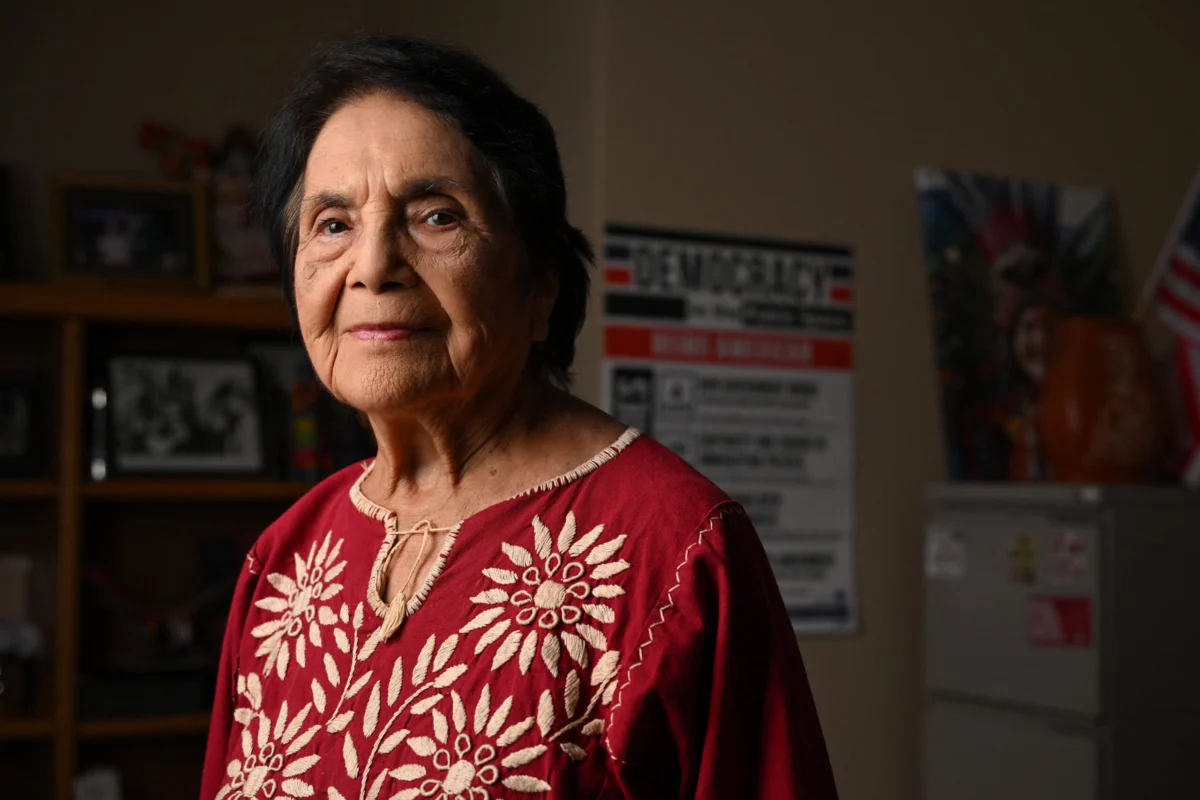
Civil rights icon Dolores Huerta has broken decades of silence, joining other women who have come forward to accuse labor leader Cesar Chavez of enduring sexual violence at his hands, revelations that are sending shockwaves through the historical narrative of the American farmworker movement. Huerta, at nearly 96 years old, stated her decision to speak out was prompted by an investigation by The New York Times, which detailed allegations of abuse by Chavez, including against minors as young as 12.
Huerta’s statement, released on Wednesday, marked a profound personal reckoning, acknowledging the immense personal cost of her long-held secret. "For the last 60 years have kept a secret because I believed that exposing the truth would hurt the farmworker movement I have spent my entire life fighting for," Huerta wrote, her words carrying the weight of history and personal trauma. She explained that the New York Times’ multi-year investigation into Chavez’s alleged sexual misconduct compelled her to share her own experiences, shattering a silence maintained out of a deep-seated concern for the movement’s integrity.
A Legacy Tarnished: The Unfolding Allegations
Cesar Chavez, a towering figure in American labor history and a co-founder of the National Farm Workers Association alongside Dolores Huerta, emerged as a pivotal leader during the Civil Rights Movement of the 1960s. Alongside Huerta and other dedicated advocates, Chavez championed the rights of vulnerable immigrant farmworkers, particularly within the Hispanic and Filipino American communities. Their nonviolent protest tactics, inspired by figures like Mahatma Gandhi and Martin Luther King Jr., drew national attention to the exploitative labor practices prevalent in the agricultural sector.
The movement’s enduring slogans, such as "Si, se puede" (Yes, we can), adopted by President Barack Obama’s campaign, and "Isang bagsak" (One Fall), a rallying cry for collective action, continue to resonate in contemporary American politics. The fight for equality and fair labor practices spearheaded by Chavez and Huerta is remembered as a defining chapter of the 1960s, a testament to their commitment to social justice. However, the recent allegations cast a dark shadow over this celebrated legacy, revealing a hidden dimension of abuse that women involved in the movement say they endured in silence, fearing it would undermine their hard-won progress.
Huerta articulated the difficult choice she faced, stating, "I carried this secret for as long as I did because building the movement and securing farmworker rights was my life’s work." She explained her fear of jeopardizing the nascent civil rights movement, a concern that led her and other women to suppress their own experiences of alleged abuse. Her focus, she said, was always on advocating for millions of farmworkers and others suffering injustices, ensuring they received the equal rights they deserved.
Personal Accounts of Abuse and Manipulation
Dolores Huerta’s personal account details a pattern of manipulation and coercion. She described her first sexual encounter with Chavez as occurring after she was "manipulated and pressured" into submitting to his advances during a trip to San Juan Capistrano. At the time, she deeply admired Chavez, who was her boss and the leader of the movement to which she had already dedicated years of her life, making it incredibly difficult for her to refuse him.
The second instance, Huerta stated, was an act of sexual assault. According to her account, which is summarized in The New York Times investigation, Chavez, while driving, pulled over to an isolated grape field and raped her. Both encounters resulted in pregnancies, which Huerta kept secret, eventually placing the children with other families to raise. She internalized these experiences, telling herself they were incidents she had to endure alone and in silence, a coping mechanism exacerbated by previous experiences of abuse.
Her narrative is tragically echoed by the testimonies of other women featured in The New York Times report. Ana Murguia recounted an incident when she was just 13 years old, during which a 45-year-old Chavez allegedly kissed her, undressed her, and attempted to sexually assault her in his locked office. Chavez had known Murguia since she was eight, and the trauma of this encounter led her to attempt suicide.
Debra Rojas shared her own disturbing experiences, stating that Chavez began groping her when she was 12. She was later raped by him at a motel near Stockton, California, when she was 15 years old. Esmeralda Lopez reported that Chavez attempted to pressure her into a sexual relationship while they were alone on a tour, even offering to use his influence to have something named in her honor. Lopez refused his advances, and her mother, also an activist, corroborated her daughter’s account based on conversations they had at the time.
Grappling with the Legacy and the Movement’s Future
These women explained their profound struggle with whether to come forward, acknowledging the immense challenge of being believed given Chavez’s revered status as a civil rights hero. The revelations have prompted a significant response from the United Farm Workers (UFW), the organization that evolved from the National Farm Workers Association. In a statement released on Wednesday, the UFW announced it would no longer participate in any events commemorating Cesar Chavez Day.
While the UFW stated it had not received any direct reports of abuse, the organization pledged to establish a clear and accessible channel for individuals to report harm allegedly caused by Cesar Chavez. "Over the coming weeks, in partnership with experts in these kinds of processes, we are working to establish an external, confidential, independent channel for those who may have experienced harm caused by Cesar Chavez," the UFW stated. The organization described the allegations as "profoundly shocking" and emphasized the need for time to "get this right," including ensuring trauma-informed services are available.
The widening scandal has also spurred political reactions. Lawmakers from across the political spectrum have called for the removal of Cesar Chavez’s name from public buildings, roads, and other honors. Texas Governor Greg Abbott and New Mexico Representative Ben Ray Luján were among those urging such action. Luján characterized the revelations in The New York Times report as "horrific" and a "betrayal of the values that Latino leaders have championed for generations." He explicitly stated, "His name should be removed from landmarks, institutions, and honors. We cannot celebrate someone who carried out such disturbing harm."
Dolores Huerta’s Call for Truth and Accountability
In the wake of these devastating revelations, Dolores Huerta has emphasized the critical importance of community advocacy and speaking truth to power. Her decision to break her silence represents a pivotal moment, signaling a commitment to confronting uncomfortable truths and ensuring accountability. "I have kept this secret long enough," she declared. "My silence ends here."
The allegations against Cesar Chavez challenge a foundational narrative of American labor and civil rights history. The courage of Dolores Huerta and the other survivors in coming forward necessitates a re-examination of the past and a commitment to supporting those who have experienced harm. The ongoing fallout from these revelations underscores the complex and often painful process of reckoning with historical figures whose legacies are now being scrutinized through the lens of alleged misconduct and abuse. The UFW’s commitment to establishing a pathway for reporting and providing support is a crucial step in addressing the impact of these allegations on survivors and the broader community. The calls for removing Chavez’s name from public spaces reflect a growing societal demand for accountability and a re-evaluation of whom and what we choose to honor.