Jenni Murray, the veteran British broadcaster who served as the authoritative and compassionate voice of BBC Radio 4’s Woman’s Hour for more than three decades, has died at the age of 75. Murray’s passing marks the conclusion of a career that spanned the evolution of modern British media, during which she transformed a mid-afternoon radio program into a powerhouse of political discourse and social advocacy. Known for her ability to pivot seamlessly from hard-hitting political interrogations to intimate discussions on domestic life, Murray became a fixture of British cultural life, earning a reputation for a unique broadcasting style that balanced professional steel with personal vulnerability.
Born in Barnsley, Yorkshire, Murray’s trajectory to the pinnacle of British broadcasting was marked by a relentless drive to overcome the systemic barriers of the era. She joined the BBC in Bristol in 1973, eventually transitioning to television as a reporter and presenter for South Today. By the time she joined the prestigious Today program in the 1980s, she had established solid news credentials. However, the media landscape of the time was characterized by deep-seated institutional sexism. On the Today program, male presenters typically monopolized high-stakes political segments, while female broadcasters were often relegated to human interest stories and lighter fare. This restrictive environment eventually led Murray to Woman’s Hour in 1987, a platform she would eventually reshape in her own image.
The Magic and Tenacity of Jenni Murray on Woman’s Hour
When Murray took the helm of Woman’s Hour, the program was undergoing a significant transition. Under her stewardship, the show moved from its traditional afternoon slot to a prime morning position in the early 1990s, a move that fundamentally changed its relationship with the audience. The magic and tenacity of Jenni Murray were evident in how she refused to let the program be pigeonholed. She rejected the notion that "women’s issues" were separate from the "serious" news of the day. On any given morning, Murray could be heard grilling a cabinet minister about economic policy before transitioning into a segment on gardening or a campaign against domestic violence.
Her voice became her most recognizable asset. Frequently described by listeners and critics as "mellifluous" and "rounded," it possessed a quality that suggested both authority and comfort. Yet, Murray was often quick to point out that her delivery was not merely a product of natural talent but a navigation of the BBC’s rigid class standards. Despite her middle-class roots—her father was a civil engineer and her mother a civil servant—she entered a BBC that still prioritized Received Pronunciation (RP) as the "standard" for broadcasting. Murray mastered this "posh" cadence while retaining a directness and "beadiness" that betrayed her sharp journalistic instincts.
Confronting Power: The Thatcher and Clinton Interviews
The magic and tenacity of Jenni Murray were perhaps most visible during her high-profile interviews with global political figures. She was rarely intimidated by the stature of her subjects, a trait that allowed her to extract remarkably candid responses from some of the world’s most guarded leaders. One of her most famous encounters was with former Prime Minister Margaret Thatcher following her departure from 10 Downing Street. Murray challenged Thatcher on the sexism she faced during her career, reciting a list of derogatory comments made by male colleagues, including Alan Clark’s remarks about her ankles and François Mitterrand’s famous observation that she had "the eyes of Caligula and the lips of Marilyn Monroe."
According to Murray’s later recollections, Thatcher was visibly stunned by the recitation. The former Prime Minister had reportedly been insulated from many of these specific insults, and Murray’s decision to put them to her directly created a rare moment of genuine shock from a woman known as the "Iron Lady." This ability to pierce the armor of public figures became a hallmark of Murray’s interviewing style.
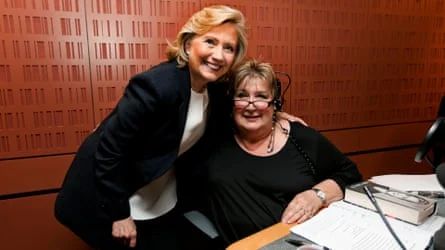
Similarly, her 2014 interview with Hillary Clinton was lauded for its "humanity." Murray did not shy away from the personal, questioning Clinton about her husband’s infidelities and the nature of their marriage. The resulting conversation, in which Clinton described their relationship as being built on friendship rather than just physical attraction, was hailed as one of the most truthful interviews the former U.S. Secretary of State had ever given. Murray’s lack of being "starstruck" allowed her to treat global icons as human beings, a skill she maintained even when she admitted to being privately terrified, such as during her interview with the legendary actress Bette Davis.

A Legacy of Feminist Advocacy and Solidarity
Throughout her 33 years on Woman’s Hour, Murray remained a steadfast advocate for gender equality and a mentor to younger generations of feminists. She possessed an instinctive sense of female solidarity, often using her platform to elevate the voices of activists and campaigners who were just beginning their careers. In 2013, she hosted a landmark episode featuring Caroline Criado-Perez, who was then campaigning to have women represented on British banknotes, and Laura Bates, the founder of the Everyday Sexism Project.
This commitment to the "new wave" of feminism ensured that Woman’s Hour remained relevant to younger listeners while maintaining its core audience. Murray understood that the domestic and the political were inextricably linked. She could discuss the best foods to cure a hangover with chef Allegra McEvedy with the same intellectual rigor she applied to discussions of reproductive rights or the gender pay gap. This breadth of coverage ensured that her "warmth filled the kitchen" every morning, as she spoke to a diverse audience of women across the United Kingdom.
Balancing the Private and Public in the Face of Illness
The magic and tenacity of Jenni Murray were tested in 2006 when she was diagnosed with breast cancer. While she was famously private and often expressed a distaste for discussing her health, she felt a profound responsibility to her listeners. Murray realized that her decades-long presence in people’s homes had created a unique bond that could not be ignored. "I couldn’t just disappear to have a mastectomy," she later told the Radio Times. "You develop a closeness to your audience."
Her decision to share her journey with breast cancer was not born out of a desire for sympathy, but rather a commitment to the two-way street of communication she had built with her audience. Even while undergoing treatment, she continued to advocate for better healthcare outcomes for women, turning her personal struggle into a broader conversation about public health. This period of her life further solidified the trust her listeners placed in her, as she navigated the complexities of illness with the same directness she applied to her journalism.
The Enduring Impact of the Magic and Tenacity of Jenni Murray
Murray retired from Woman’s Hour in 2020, ending a tenure that saw the program move through decades of social change. Her departure was seen as a turning point for the BBC, as the network sought to fill the void left by a presenter who had become synonymous with the brand. Her legacy is defined by her refusal to accept the limitations placed upon women in the media and her insistence that women’s lives deserve the highest level of journalistic scrutiny.
In the years following her retirement, Murray remained an active voice in British culture, continuing to write and comment on the issues that had defined her career. Her death has prompted a wave of tributes from across the political and media spectrum, with colleagues and listeners alike noting her role as a "broadcasting giant." Many have pointed to her ability to make every listener feel as though they were part of a private conversation, a skill that is increasingly rare in the age of digital media.
The magic and tenacity of Jenni Murray served as a bridge between the traditional world of the BBC and the modern era of inclusive, activist-led journalism. She proved that a broadcaster could be both a formidable interviewer and a warm companion, a combination that made her one of the most beloved and respected figures in the history of British radio. As the media landscape continues to shift, Murray’s career stands as a testament to the power of a single voice to shape the national conversation and advocate for progress.