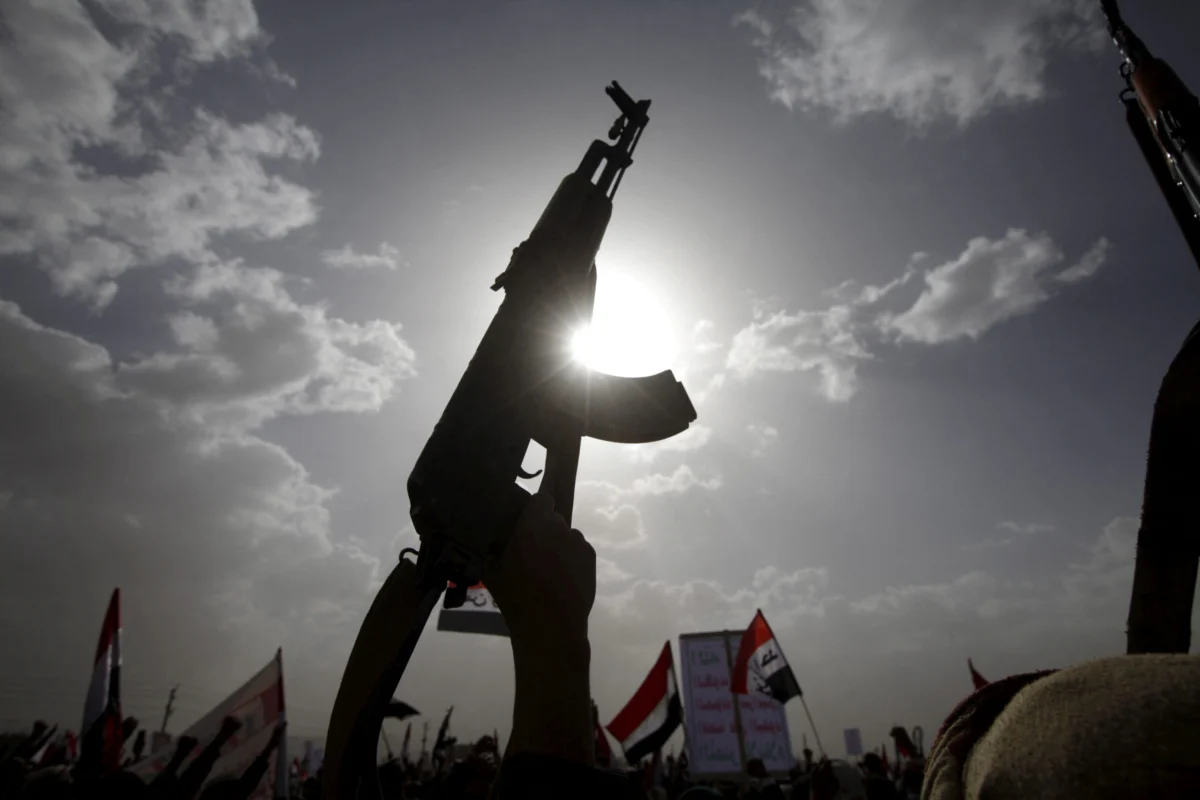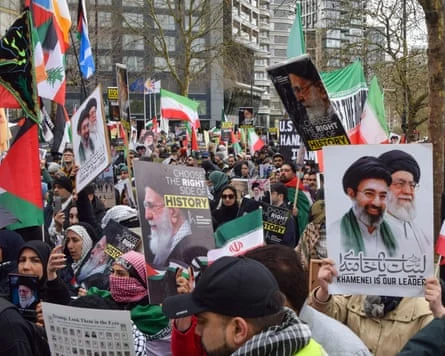
British-Iranians in UK report safety concerns to authorities amid Iran war as long-standing geopolitical tensions spill over into the streets of London, creating a climate of intimidation and fear within one of the largest expatriate communities in Europe. Local law enforcement agencies and community leaders have confirmed a significant uptick in reports of harassment, physical threats, and coercive behavior, much of it linked to the escalating conflict involving the United States, Israel, and the Islamic Republic. As the Middle East remains a powderkeg following the death of Iran’s Supreme Leader, Ayatollah Ali Khamenei, the ripples of instability are being felt acutely in neighborhoods like Finchley, known colloquially as "Little Tehran."
The Metropolitan Police and local government officials in the borough of Barnet have been forced to increase patrols and hold emergency meetings with community representatives to address what many describe as a breakdown in social cohesion. Activists and residents claim that the diaspora, once united by a shared opposition to the clerical regime in Tehran, is now fracturing into hostile factions. These divisions are being exacerbated by the broader regional war, leading to a surge in reported incidents where individuals are targeted for their political affiliations or their refusal to align with specific opposition movements.
Tensions Rise as British-Iranians in UK Report Safety Concerns to Authorities Amid Iran War
In the heart of North London, the atmosphere has shifted from one of cultural vibrancy to one of guarded suspicion. Naghmeh Rajabi, a prominent British-Iranian activist who immigrated to the United Kingdom at the age of 11, told authorities that she no longer feels safe in areas she has called home for decades. Rajabi, whose own family members were killed by the Iranian regime, noted that while the community has lived in relative peace for 40 years, the current environment is marked by daily reports of intimidation.
The primary source of concern for many residents is the rise of aggressive pro-monarchist groups. According to reports filed with the Metropolitan Police, individuals supporting the restoration of the Pahlavi dynasty have been accused of using "coercive" tactics to force their ideology on local business owners. This includes demanding that shops display the "lion and sun" flag—the national symbol of Iran prior to the 1979 Islamic Revolution—as a litmus test for political loyalty. Viral videos circulating on social media platforms, recorded in Farsi, reportedly show individuals being confronted and harassed for failing to comply with these demands.
Geopolitical Instability and the Fracturing of the Diaspora
The internal strife comes at a moment of extreme external pressure. The death of Ayatollah Ali Khamenei has triggered a frantic power struggle within Iran and a corresponding surge in activity among exile groups vying for influence. While some segments of the British-Iranian community took to the streets to celebrate the possibility of regime change following U.S. and Israeli military strikes, others have expressed a profound sense of doom, fearing that the UK will be drawn into a protracted and bloody conflict.
British-Iranians in UK report safety concerns to authorities amid Iran war while simultaneously urging the government of Prime Minister Keir Starmer to exercise restraint. In a formal letter to Downing Street, several high-profile members of the diaspora warned that further military escalation could have catastrophic consequences for their relatives in Iran and for the security of Iranians living in Britain. The community, which found a rare moment of unity during the "Woman, Life, Freedom" protests of 2022, is now deeply divided over the role of Western intervention and the identity of a potential transitional government.

The Role of the Pahlavi and MEK Factions
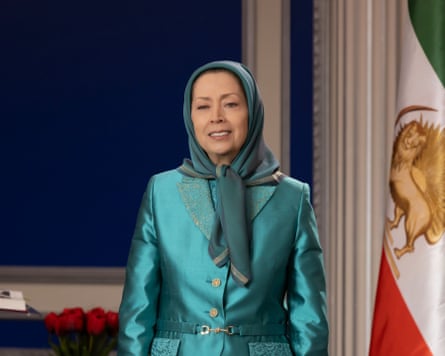
Central to the current friction are two major opposition groups: the supporters of Reza Pahlavi, the exiled son of the former Shah, and the Mujahedin-e Khalq (MEK), led by Maryam Rajavi. The MEK, an exiled dissident group that has previously been characterized by some Western officials as having cult-like tendencies, has a significant presence in London. Supporters like Rajabi and Laila Jazayeri, director of the Association of Anglo-Iranian Women in the UK, have labeled certain areas of London "no-go zones" due to the alleged aggression of monarchist supporters.
For her part, Jazayeri has described the current environment as an "atmosphere of terror," drawing parallels between the intimidation felt in London and the repressive tactics used by the regime in Tehran. She has called on the British government to take a harder line against the Islamic Revolutionary Guard Corps (IRGC), advocating for its formal proscription as a terrorist organization—a move that previous UK administrations have resisted due to diplomatic and intelligence-gathering concerns.
Conversely, supporters of Reza Pahlavi have grown increasingly vocal. Pahlavi recently encouraged Iranians abroad to use the ancient Persian fire festival, Chaharshanbe Suri, as a platform for protest outside Iranian embassies. While Pahlavi has publicly denounced political violence and intimidation, a petition on Change.org has garnered thousands of signatures calling on the Home Office to investigate his UK-based supporter groups for alleged threats against Kurds, Iraqis, and other minority communities within the diaspora.
National Security and Counter-Espionage Operations
The safety concerns reported by the community are not limited to internal brawling; they also involve state-sponsored threats. British intelligence services and the Metropolitan Police have been on high alert for Iranian "hit squads" and espionage activities targeting dissidents on UK soil. In early March, four men were arrested on suspicion of spying for Iranian intelligence services. Two of these individuals were subsequently charged with conducting surveillance on London’s Jewish community, highlighting the intersection of the Iran-Israel conflict and domestic UK security.
Furthermore, the banning of the annual Al-Quds Day march—a pro-Palestinian and pro-Tehran event—along with planned counter-protests, underscores the volatility of the current situation. Authorities cited a high risk of public disorder as the primary reason for the cancellation. The arrest of two individuals, including one Iranian national, for allegedly attempting to enter the Faslane nuclear submarine base in Scotland has only added to the sense of a nation on edge.
Detective Superintendent Katie Harber, who leads policing efforts in the borough of Barnet, acknowledged the gravity of the situation. "London is a global city, and the impact of events that take place thousands of miles away play out locally in the capital," Harber stated. She emphasized that the police are working closely with community leaders to manage these "exported" tensions and to ensure that the Iranian diaspora feels protected from both foreign state actors and domestic agitators.
The Search for a Unified Path Forward
As British-Iranians in UK report safety concerns to authorities amid Iran war, activists like Vahid Beheshti, founder of Iran Front, are warning that the regime in Tehran may be exploiting these internal divisions. Beheshti, who previously staged a two-year hunger strike and protest outside the Foreign Office, suggested that the Iranian government often uses "monarchist masks" or other opposition identities to attack dissidents and create the perception of a chaotic, unready opposition.
"The regime wants to spread the narrative that there is a big division between Iranian opposition groups and that they cannot sit at one table," Beheshti said. He argued that this strategy is designed to convince the international community that there is no viable replacement for the current clerical rule, thereby discouraging Western support for regime change. Beheshti, who was recently warned by security services that he remains a high-priority target for assassination, maintains that the only way forward is a legal framework that allows all diverse groups to work together toward a secular democracy.
Impact on Local Businesses and Cultural Life
The immediate impact of this unrest is visible in the commercial heart of Little Tehran. Shop owners, many of whom have operated in London for decades, find themselves caught in the crossfire of political purity tests. The coercion to display specific flags or slogans has created a rift among merchants, with some choosing to close their doors rather than face harassment. This economic and social withdrawal threatens to erode the cultural fabric of a community that has historically been a model of successful integration and entrepreneurial spirit.
The Metropolitan Police have responded by increasing the visibility of "Safer Neighbourhoods" teams and engaging in direct outreach to businesses. However, for residents like Naghmeh Rajabi, the presence of more uniforms on the street is a temporary fix for a much deeper problem. She and others are calling for concrete legal action against those who use digital platforms to coordinate harassment campaigns and physical intimidation.
Conclusion and Future Outlook
The situation facing the British-Iranian community remains fluid and highly sensitive to developments in the Middle East. As the UK government weighs its military and diplomatic options in the ongoing Iran war, the domestic consequences of those decisions are becoming impossible to ignore. The reports of safety concerns filed with authorities serve as a stark reminder that international conflicts are rarely contained within geographic borders.
For the thousands of Iranians who fled to the UK seeking refuge from political persecution, the current climate is a painful irony. The streets of London, once a sanctuary for free expression and political discourse, have become a secondary battlefield for a war that shows no signs of abating. Whether the community can bridge its internal divides and present a unified front will likely depend on the ability of UK authorities to restore a sense of security and the willingness of diaspora leaders to prioritize communal safety over factional dominance.