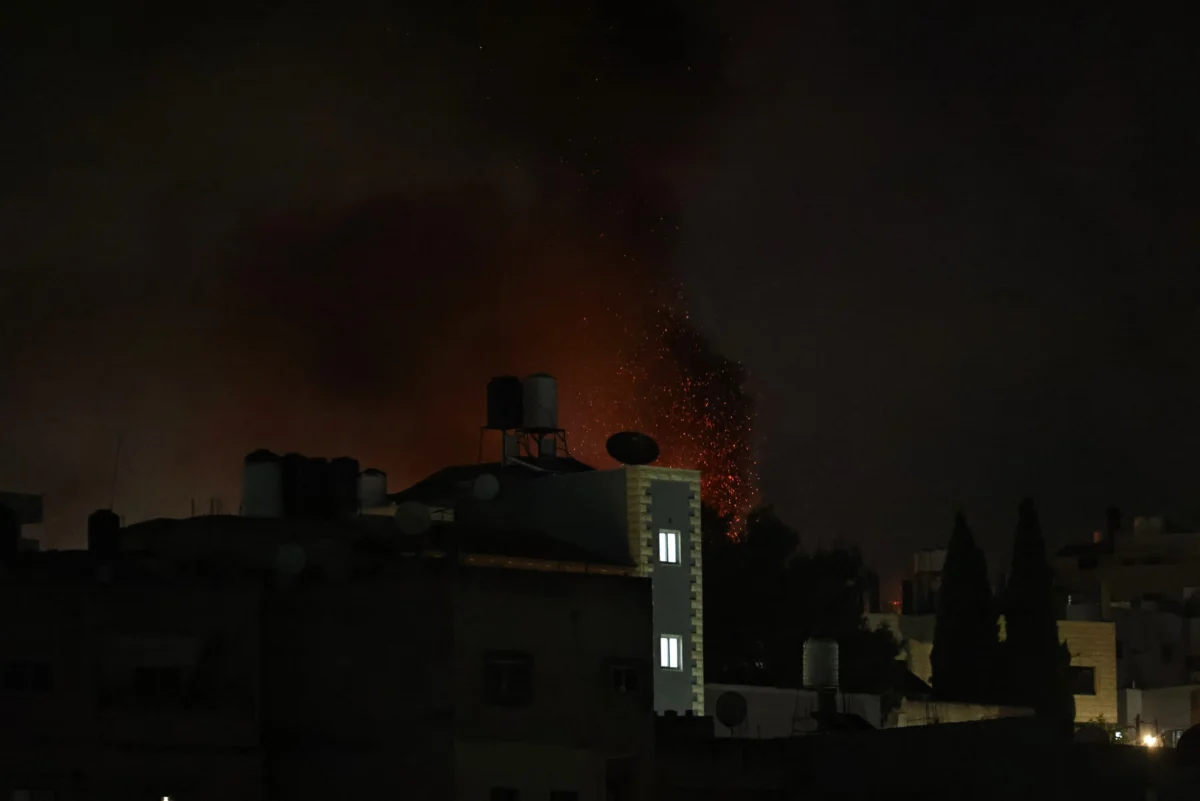
Palestinians sustained injuries for a second consecutive night as Israeli settlers unleashed a wave of violence across towns and villages in the occupied West Bank. The attacks, which involved property destruction and physical assaults, occurred against a backdrop of escalating Israeli settlement expansion and heightened tensions in the region. At least nine Palestinians were reported injured during these coordinated raids.
The latest surge of settler violence began Sunday evening, following a funeral held for an 18-year-old Israeli identified as Yehuda Sherman. Sherman was killed in a collision with a Palestinian vehicle in an area north of the villages targeted by settlers. Israeli police stated they are investigating claims from settlers that the collision was intentional.
Escalating Settler Violence and Palestinian Casualties
On Sunday night, a 45-year-old Palestinian man was shot in the foot during a confrontation with settlers in Deir al-Hatab, a village east of Nablus. The Palestinian Red Crescent also reported that a 47-year-old man was attacked by settlers in Jabal al-Arma, near Beita, with other individuals also subjected to beatings.
Earlier on Saturday night, Israeli settlers set fire to homes and cars in at least two locations south of Jenin. Property was vandalized across multiple communities, including the villages of Silat al Dahr and Fandaqumiya, both near Jenin. Attacks also targeted Jalud and Salfit, south of Nablus, and extended to the agricultural areas of Masafer Yatta and the Jordan Valley.
Reports from Palestinian news agencies indicated that homes and vehicles were engulfed in flames, and residents were pepper-sprayed. At least five people were wounded during these assaults, which took place during the Eid al-Fitr holiday, marking the end of Ramadan. This period, typically a time of celebration and family gatherings, was marred by fear and destruction for many Palestinian communities.
Context of Increased Israeli Settlement Activity
These incidents of settler rampage occur within a broader context of intensified Israeli settlement expansion in the occupied West Bank. The Israeli government has recently ratified decisions that facilitate the claiming of large swathes of West Bank land as "state property," a move that requires Palestinians to prove ownership or risk losing their land. This policy, championed by Finance Minister Bezalel Smotrich and Defense Minister Israel Katz, has been condemned by the Palestinian presidency as a "grave escalation" and a "flagrant violation of international law," amounting to "de facto annexation."
The United Nations Office for the Coordination of Humanitarian Affairs (OCHA) has documented a disturbing trend of violence, reporting that 25 Palestinians have been killed by Israeli settlers and soldiers since the beginning of the year. This statistic underscores the perilous environment faced by Palestinians in the occupied territories.
International Law and Judicial Rulings
The actions of Israeli settlers and the policies of the Israeli government are in direct contravention of international law. In 2024, the International Court of Justice (ICJ) ruled that Israel’s continued presence in the occupied Palestinian territory is unlawful and must end "as rapidly as possible." The court cited a litany of Israeli policies, including the construction and expansion of settlements in the West Bank and East Jerusalem, the exploitation of natural resources, land annexation, and discriminatory practices against Palestinians, as violations of international law.
Despite these rulings and widespread international condemnation, Israel has continued its settlement expansion. Amnesty International has characterized the state-backed settler violence and settlement growth as a "direct indictment of the international community’s catastrophic failure to take decisive action." The organization highlights a persistent pattern of impunity that emboldens further illegal actions.
Broader Implications and Growing Tensions
The current wave of settler violence is also taking place as global attention is increasingly focused on the ongoing conflict in Iran. This shift in focus, analysts suggest, may embolden certain factions within the Israeli government to accelerate settlement policies and exert greater control over Palestinian territories with less international scrutiny.
The systematic nature of these attacks, often occurring simultaneously across multiple locations, suggests a level of organization and tacit approval that raises serious concerns about accountability. Human rights organizations have repeatedly called for the international community to hold Israel responsible for the actions of its settlers, who often operate with impunity.
Impact on Palestinian Communities
For the Palestinian communities targeted, the violence represents not only physical harm and property destruction but also a profound sense of insecurity and displacement. The destruction of homes and agricultural land not only impacts livelihoods but also erodes the very fabric of these communities. The psychological toll of living under constant threat and the trauma inflicted by such attacks are significant and long-lasting.
The timing of these assaults during Eid al-Fitr, a period meant for joy and reflection, adds a layer of cruelty to the violence. It disrupts traditions, traumatizes children, and further isolates communities already struggling under occupation.
International Response and Future Outlook
The international community’s response to the escalating settler violence and settlement expansion has been largely condemnatory but has yet to translate into concrete punitive measures against Israel. The ICJ’s ruling provides a legal framework for challenging Israel’s actions, but its enforcement remains a significant hurdle.
The continued disregard for international law and court rulings by the Israeli government, coupled with the persistent violence perpetrated by settlers, signals a deepening of the conflict and a hardening of positions. The lack of decisive international action risks further destabilizing the region and perpetuating a cycle of violence. The future outlook for Palestinians in the West Bank remains fraught with challenges, as they continue to face the dual threats of state-sponsored settlement expansion and vigilante settler violence.