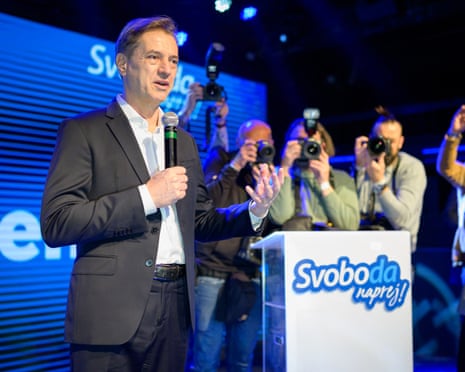
Slovenian Prime Minister Robert Golob and his pro-EU liberal party held a razor-thin lead over populist conservative rivals on Monday, marking a pivotal moment in a high-stakes weekend of European elections that saw major shifts in Germany and France while Italy entered the final hours of a critical national referendum. With nearly all ballots counted in Ljubljana, the incumbent’s Freedom Movement (Gibanje Svoboda) secured 28.62% of the vote, narrowly edging out the 27.95% garnered by the Slovenian Democratic Party, led by former Prime Minister and prominent Donald Trump ally Janez Janša. The result, while tighter than many analysts predicted, positions Golob to lead complex exploratory talks to form a coalition government, providing a significant sigh of relief for European Union officials in Brussels who have long viewed Janša’s brand of national-conservatism as a threat to bloc-wide unity.
Slovenia’s Political Crossroads: Golob vs. Janša
The Slovenian parliamentary elections served as a referendum on the country’s direction within the European Union. Robert Golob, a former solar energy executive who entered politics to counter what he described as Janša’s "authoritarian tendencies," maintained a platform centered on green energy, rule of law, and deep integration with the EU. Janša, a veteran politician who has served three terms as prime minister, campaigned on a "Slovenia First" platform, emphasizing border security and traditional values, while frequently clashing with EU institutions over judicial independence and media freedom.

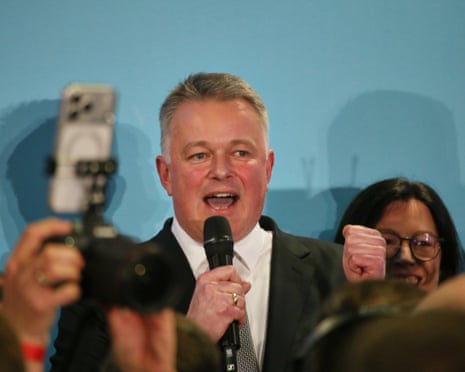
With 99.85% of the votes tabulated, the distribution of seats in the 90-member National Assembly reflects a deeply polarized electorate. Golob’s party is on track to control 29 seats, just one more than the 28 seats projected for Janša’s conservatives. This narrow victory necessitates a coalition-building process that will likely include smaller center-left and social-democratic parties. Addressing a crowd of jubilant supporters in the capital late Sunday night, Golob struck a hopeful tone, stating that the people’s confidence would allow the nation to "go forward under a free sun." He immediately extended an invitation to other moderate parties to begin discussing the next steps for a stable governing majority.
Observers in Brussels have closely watched the Slovenian race, fearing that a Janša victory would have bolstered the "illiberal" bloc within the EU, currently led by Hungary. The narrow win for pro-EU liberals in Slovenia as key Italian referendum enters final hours suggests a continued, albeit fragile, preference for centrist stability in Central Europe. However, the slim margin of victory indicates that Golob will face significant pressure from a reinvigorated conservative opposition that remains popular in rural and traditionalist regions of the country.
Italy’s Judiciary Referendum: A Proxy Vote on Meloni
As Slovenia processed its results, the focus of European political observers shifted toward Rome, where Italy entered the second and final day of a national referendum on sweeping judiciary reforms. The vote, which asks citizens to approve or reject amendments to the country’s post-fascism constitution, seeks to fundamentally reorganize the justice system. The proposed changes would separate the career paths of judges and prosecutors, a move the government argues is necessary to ensure impartiality, but which critics and judicial associations claim is an attempt to weaken the independence of the courts.

While the technical nature of the referendum is complex, it has evolved into a de facto confidence vote on Prime Minister Giorgia Meloni’s administration. Meloni, whose Brothers of Italy party has dominated the political landscape since 2022, has framed the "Yes" campaign as a necessary step toward modernizing a sluggish and often politicized legal system. Opponents, including the Five Star Movement and the Democratic Party, argue the reform is a power grab intended to shield politicians from legal scrutiny.
By the close of polling on Sunday, voter turnout had reached 46%, a figure higher than many anticipated for a technical constitutional vote. On Monday morning, Meloni took to social media to urge the remaining electorate to cast their ballots before the 3:00 PM local time deadline. "Participation is important," Meloni stated, posting a photo of herself with a ballot paper. Defence Minister Guido Crosetto echoed this sentiment, warning that those who abstain are effectively "giving others the opportunity to choose their future." The outcome of this vote is expected to set the tone for the remainder of Meloni’s term leading up to the 2027 general election.
French Municipal Shifts: The Socialist Victory in Paris
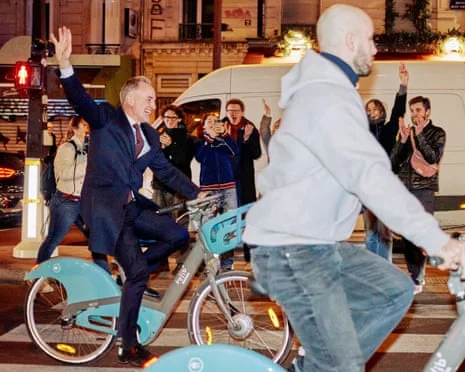
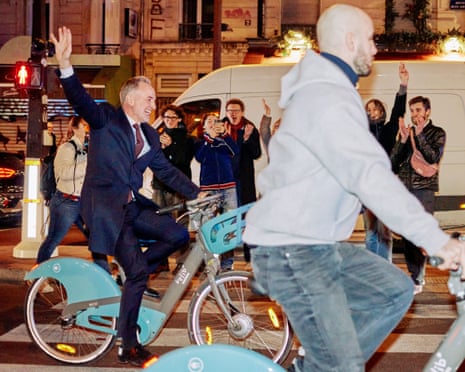
In France, the political landscape underwent its own transformation over the weekend as the Socialist Party secured a high-profile victory in the capital. Emmanuel Grégoire was elected Mayor of Paris, successfully defending the city for the left and dealing a blow to President Emmanuel Macron’s centrist allies and the far-right National Rally (RN). Grégoire, who previously served as the first deputy mayor, campaigned on a platform of urban renewal, expanded social housing, and continued environmental transformations of the city’s infrastructure.
The French local elections were also a critical test for Marine Le Pen’s National Rally. Despite making significant gains in national polls over the last year, the far-right party failed to capture several key cities it had targeted in the second round of voting. This failure to translate national momentum into local executive power suggests that the "Republican Front"—a tactical voting strategy where voters of different stripes unite to block the far right—remains a potent force in French municipal politics.
The victory for Grégoire in Paris provides the struggling French Socialist Party with a vital stronghold and a national platform. For the National Rally, the results indicate that while their anti-immigration and Euroskeptic rhetoric resonates in parliamentary contests, the French electorate remains hesitant to hand them control of major metropolitan centers. This dynamic underscores the persistent divide between France’s urban hubs and its disenchanted peripheral and rural regions.
Germany’s Rhineland-Palatinate: A Boost for the CDU
The electoral wave also hit Germany, where Chancellor Friedrich Merz’s Christian Democrats (CDU) claimed a decisive victory in the Rhineland-Palatinate state election. Early projections showed the CDU capturing 30.8% of the vote, successfully unseating the Social Democrats (SPD), who fell to 26%. This win is particularly significant for Merz, as it marks a successful rebound after the party narrowly lost a state election in neighboring Baden-Württemberg earlier this month.
Rhineland-Palatinate has long been an SPD stronghold, and the shift to the CDU signals a growing dissatisfaction with the federal coalition government in Berlin. The CDU and SPD are now expected to enter negotiations to form a "grand coalition" at the state level, mirroring the traditional power-sharing arrangements that have defined much of modern German history. Merz’s victory strengthens his position within his own party and cements his status as the primary challenger to the current federal leadership.
The German results reflect a broader trend across the continent: a resurgence of center-right parties that are adopting tougher stances on migration and economic fiscal responsibility to ward off challenges from the far right. For the SPD, the loss in Rhineland-Palatinate is a sobering reminder of the challenges facing center-left parties as they struggle to balance industrial interests with aggressive climate goals.
Regional Consequences and the Danish Outlook
The cumulative impact of these elections points to a Europe in flux. While pro-EU liberals see narrow win in Slovenia as key Italian referendum enters final hours, the gains made by the center-right in Germany and the resilience of the left in Paris suggest that no single political movement has achieved total dominance. Instead, the continent is characterized by a "checks and balances" electorate that appears to be shifting toward more conservative economic policies while remaining wary of radical right-wing populism.
The political marathon continues on Tuesday as Denmark heads to the polls for its own general election. The Danish contest is expected to focus heavily on the country’s famously stringent immigration laws, the future of the Nordic welfare model, and the role of Denmark within the EU’s defense framework. Prime Minister Mette Frederiksen faces a stiff challenge from a fragmented opposition, with polls suggesting a tight race that could lead to weeks of coalition negotiations.
As the final ballots are cast in Italy and the results are finalized in Ljubljana, the broader implications for the European Union are becoming clear. The narrow victory for Golob in Slovenia prevents the formation of a new "Eastern bloc" of dissenters, but the strength of Janša’s support ensures that internal divisions will persist. Meanwhile, the Italian referendum results will either embolden Meloni to pursue more radical constitutional changes or serve as a significant roadblock to her administration’s ambitions.
The weekend’s events demonstrate that European voters are increasingly using local and state elections, as well as referendums, to send signals to their national leaders. Whether it is the rejection of the far right in French cities or the pivot to the CDU in German states, the European electorate is proving to be both volatile and highly engaged. As the continent prepares for the Danish vote and the fallout from the Italian referendum, the balance of power in Europe remains as delicate as ever.