The Australian political landscape reached a critical juncture this week as Independent MP Kate Chaney moved to force a vote on a comprehensive gambling advertisement ban, marking exactly 1,000 days since a landmark parliamentary report recommended the measure. The legislative push coincides with significant industrial unrest in the education sector, where tens of thousands of Victorian teachers have walked off the job, leading to widespread class cancellations and school closures across the state.

Lawmakers in Canberra are facing mounting pressure to address the legacy of the late Labor MP Peta Murphy, whose 2023 report provided a roadmap for eliminating gambling inducements from public broadcasts. Despite the report’s 31 recommendations, the Albanese administration has yet to provide a formal response or implement the suggested total ban, opting instead for a prolonged period of consultation with sporting bodies and the wagering industry.
The 1,000-Day Milestone and the Push for a Gambling Ad Ban
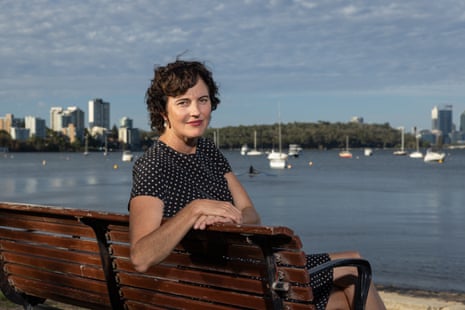
Kate Chaney, the Independent MP for Curtin, announced her intention to introduce a private member’s bill next week that would legislate a complete phase-out of online gambling advertisements over a three-year period. The proposed legislation seeks to remove betting promotions from television, streaming platforms, social media, and physical sporting grounds. Chaney described the 1,000-day delay as a "deeply disappointing milestone" that reflects government inaction on an issue with broad public support.

The push for reform is not limited to the crossbench. The Australian Medical Association (AMA) has joined the call for immediate intervention, citing the "immeasurable harm" inflicted on families by predatory advertising. AMA President Dr. Danielle McMullen warned that partial bans are insufficient to protect vulnerable populations, particularly children who are being "groomed" to view gambling as a natural component of sports consumption.
Australia currently holds the title for the highest gambling losses per capita in the world. Health advocates argue that the normalization of betting through high-frequency advertising has created a public health crisis that requires a legislative response similar to the historic crackdown on tobacco promotion. While Communications Minister Anika Wells continues to meet with stakeholders, including media organizations and harm reduction advocates, the lack of a definitive timeline has exhausted the patience of reform-minded legislators.
Victorian Teachers Strike Causes Widespread Disruption
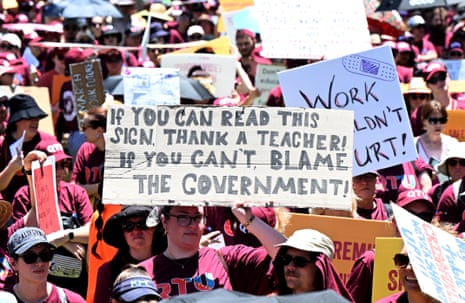
As the debate over gambling reform intensifies in the capital, the Victorian government is grappling with the first major teachers strike in more than 13 years. Members of the Australian Education Union (AEU) downed tools on Tuesday, demanding better pay and significant reductions in workload. The strike has forced the cancellation of classes at hundreds of schools, leaving parents to find alternative childcare arrangements on short notice.
The industrial action involves not only teachers but also principals and education support staff. Union leaders argue that the current offer from the state government fails to address the cost-of-living pressures facing educators or the chronic understaffing that has plagued the system since the pandemic. A major rally is scheduled for the steps of the state parliament, where thousands are expected to march from Victorian Trades Hall to voice their grievances.
The Department of Education has stated that while it is working to minimize disruption, many schools can only provide basic supervision for a limited number of students. The strike in Victoria is being mirrored by similar industrial action in Tasmania, signaling a broader regional crisis in the teaching profession. With a state election looming in eight months, the standoff represents a significant political risk for the incumbent Victorian government.
National AI Act Demanded Amid Rising Technology Risks
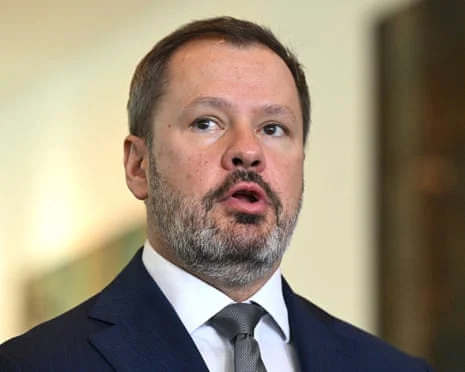
The intersection of technology and public safety has also emerged as a primary focus for federal lawmakers. Labor backbencher Ed Husic has broken ranks with the official government position to call for a comprehensive, economy-wide National AI Act. Husic, who served as the science minister until 2025, argued that the government cannot simply act as a "cheerleader" for artificial intelligence while ignoring the associated risks to employment and social cohesion.
Husic’s comments follow a series of high-profile layoffs in the tech sector, where thousands of workers have seen their roles automated or eliminated by AI integration. The Albanese government recently scrapped plans for standalone AI legislation, favoring voluntary measures and "national data centre expectations" instead. Husic characterized this "laissez-faire" approach as inadequate, calling for a structured legal framework to manage risks that threaten the most vulnerable members of society.
The urgency of this debate was underscored by a report from Australia’s eSafety Commissioner, Julie Inman Grant. The regulator warned that "predatory" AI companion chatbots are increasingly targeting children, exploiting their developmental vulnerabilities for emotional manipulation. A recent survey revealed that nearly 97% of children aged 10 to 17 have interacted with some form of AI assistant or companion, with many of these platforms lacking basic safety guardrails for self-harm or sexual exploitation.

NSW Crackdown on Illegal E-Bikes and Road Safety
In New South Wales, the state government is moving to implement a "seize and destroy" policy for illegal e-bikes. Transport Minister John Graham introduced legislation that would grant police the authority to seize high-powered, throttle-only e-motorbikes and send them to the crusher. The crackdown follows a surge in road injuries and a high-profile incident where a swarm of e-bikes disrupted traffic on the Sydney Harbour Bridge.
The new laws target bikes capable of exceeding 25km/h, a threshold that separates assisted bicycles from motor vehicles. Authorities will deploy roadside "dyno units" to test vehicle speeds in real-time. Additionally, the government is considering a minimum age requirement for e-bike riders, likely between 12 and 16 years old. Minister Graham emphasized that while safe e-bike use is encouraged, the proliferation of "illegal e-motorbikes" poses a significant threat to public safety.

Trade Tensions and Energy Security Concerns
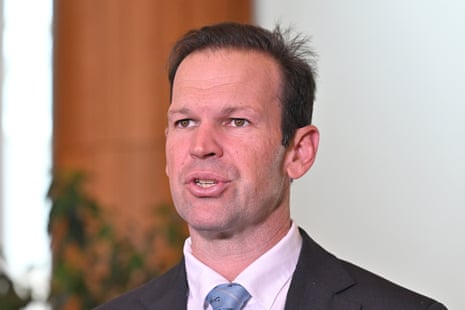
On the international stage, Australia is navigating complex negotiations regarding the EU-Australia Free Trade Agreement. Nationals Leader Matt Canavan expressed concern that the federal government might "roll over" on key agricultural interests, specifically regarding red meat exports. Canavan argued that any deal must match or exceed the "unlimited" access for beef and lamb negotiated in the prior UK trade agreement.
Negotiations have stalled for years over naming rights for products like feta and prosecco, as well as the specific quotas for Australian meat in European markets. Canavan warned that compromising on these exports would be a blow to national sovereignty and the economic interests of regional farmers. The arrival of European Commission President Ursula von der Leyen in Canberra this week has fueled speculation that a final agreement may be imminent, though significant hurdles remain.
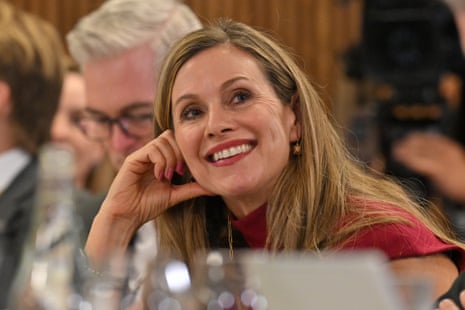
Simultaneously, the International Energy Agency (IEA) has warned that the world is facing the most significant energy security threat in history. IEA Chief Fatih Birol noted that Australians are feeling this pressure through volatile fuel prices. In response, Minister Amanda Rishworth announced new measures to support the trucking industry, including shortening contract negotiation times to ensure drivers are fairly compensated for fuel spikes. This move aims to protect the stability of the national supply chain as global energy markets remain unstable.
Broad Implications for the Albanese Government
The convergence of these issues—gambling reform, industrial action, AI regulation, and international trade—presents a multifaceted challenge for the federal government. The 1,000-day anniversary of the Murphy report serves as a symbolic focal point for critics who argue that the administration has become overly cautious in its pursuit of major social and economic reforms.

As Kate Chaney prepares to introduce her gambling ad ban bill, the government must decide whether to support the crossbench initiative or continue its path of industry consultation. Meanwhile, the school closures in Victoria and Tasmania highlight a growing dissatisfaction within the public sector that could have long-term electoral consequences. The coming weeks in Parliament will likely determine whether the government can regain the initiative on these critical national debates or if it will continue to face a fractured and increasingly impatient legislative body.