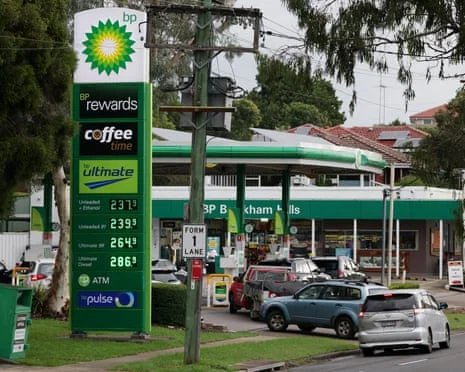
The Australian federal government has moved to de-escalate public anxiety regarding the nation’s fuel security, with senior ministers asserting that Labor says ‘way too soon’ to talk about fuel rationing and government not considering $40 cap on refills as the Middle East crisis continues to disrupt global energy markets. Education Minister Jason Clare and Environment Minister Murray Watt both issued statements on Wednesday intended to stabilize consumer expectations, emphasizing that while the government is monitoring supply chains closely, the implementation of drastic restrictive measures is not currently on the legislative or regulatory agenda. The administration is instead focusing on a series of supply-side "levers," including the temporary relaxation of fuel quality standards and a potential increase in ethanol blending to ensure that both urban commuters and the agricultural sector remain operational.

The geopolitical instability in the Middle East has sent ripples through the Australian economy, prompting a surge in headline inflation and raising questions about the resilience of the country’s refined petroleum reserves. In response to mounting speculation about potential pump closures or purchase limits, Minister Jason Clare told ABC News Breakfast that the government has already taken preemptive steps to bolster supply. These measures include lowering the environmental standards for petrol and diesel to allow for a broader range of imports that might otherwise be restricted. Clare noted that while the situation is serious, the rhetoric surrounding rationing is premature and could lead to unnecessary panic buying among the public.
Labor Says ‘Way Too Soon’ to Talk About Fuel Rationing and Government Not Considering $40 Cap on Refills Amid Global Supply Volatility
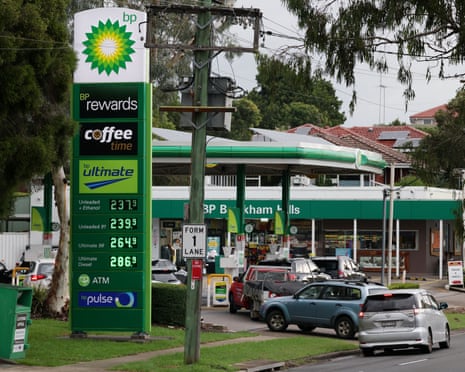
The discourse surrounding fuel security has been further complicated by rumors of a mandatory $40 limit on individual fuel purchases. Environment Minister Murray Watt explicitly dismissed these reports, clarifying that the idea of an automatic pump shut-off at $40 was a legacy concept from a 2019 planning document and does not reflect current cabinet deliberations. Watt emphasized that the economic landscape of 2026 is vastly different from that of 2019, and the government is committed to maintaining a free-market approach to fuel distribution for as long as possible. The rejection of the price cap comes as the government faces pressure to provide immediate relief to motorists who are seeing prices climb well above historical averages.
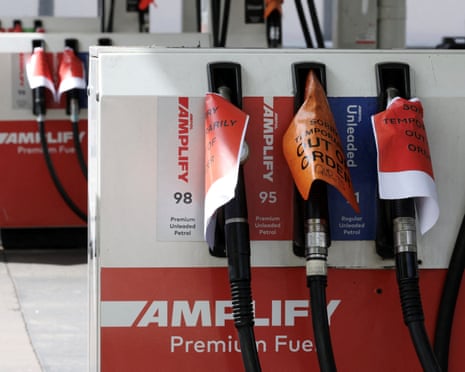
To mitigate the impact of reduced oil imports, the Albanese government is exploring the expansion of the domestic ethanol industry. This move has received preliminary support from the National Roads and Motorists’ Association (NRMA), which argues that increasing ethanol content in fuel could provide a necessary buffer against international price shocks. However, the proposal is not without its critics; some agricultural groups have warned that diverting more grain production to fuel could inadvertently drive up food prices, creating a secondary inflationary pressure on Australian households.
Inflationary Pressures and the May Federal Budget
The fuel crisis is unfolding against a backdrop of worsening economic data. Treasurer Jim Chalmers has warned that the Australian economy will be "buffeted" by the conflict in the Middle East, with headline inflation already reaching 3.8% for the year ending in January. This figure is significantly higher than the Reserve Bank of Australia’s target band of 2% to 3%, leading to expectations of further interest rate hikes. Chalmers has indicated that the upcoming May budget will be the most ambitious of his tenure, focusing on a dual strategy of economic resilience and structural reform.
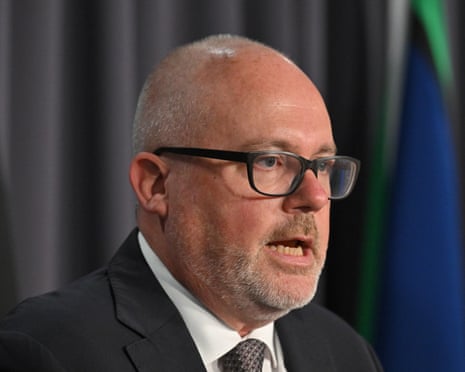
The government’s Expenditure Review Committee, led by Finance Minister Katy Gallagher, has been meeting for extended sessions to finalize a "broader than usual" range of policy options. Sources within the Treasury suggest that the government is considering controversial reforms to property-investor tax concessions, such as negative gearing and capital gains tax discounts, to address intergenerational inequity. Additionally, there are discussions regarding a windfall profits levy on gas companies and the potential removal of tax breaks for electric vehicles, which were originally implemented to spur early adoption but are now seen as an expensive luxury in a tightening fiscal environment.
National Security and the Rise of Digital Radicalization
While the economy remains a primary concern, the government is also grappling with an evolving national security landscape. Home Affairs Minister Tony Burke recently addressed a National Security College dinner, where he detailed the gravity of an alleged attempted terrorist attack at an Invasion Day rally in Perth earlier this year. The incident involved a homemade fragment bomb that failed to detonate in a crowd of over 2,500 people. Burke stated that Australia was "so lucky" the device malfunctioned, noting that the event did not receive the level of public scrutiny it warranted.

Burke used the incident to highlight a shift in how violent extremism manifests within the country. He argued that radicalization is now more likely to occur "across a browser" than a physical border, with algorithms and online echo chambers replacing traditional foreign training camps. The Minister cautioned that blaming immigration for domestic security threats is "ignorance in the extreme," pointing out that the perpetrators of several recent plots were Australian citizens radicalized entirely within the domestic digital ecosystem. This shift necessitates a new approach to counter-terrorism that focuses on online monitoring and community-based deradicalization programs.
Industrial Viability and the $2 Billion Aluminium Bailout
In a significant move to protect regional employment and sovereign industrial capability, the federal and Queensland governments have announced a joint $2 billion subsidy for Rio Tinto’s Boyne aluminium smelter. The facility, which employs approximately 1,000 people in central Queensland, has struggled with high energy costs and global market volatility. Under the agreement, the governments will each provide $1 billion to keep the smelter operational, while Rio Tinto has committed to underwriting substantial investments in renewable energy and transmission infrastructure.
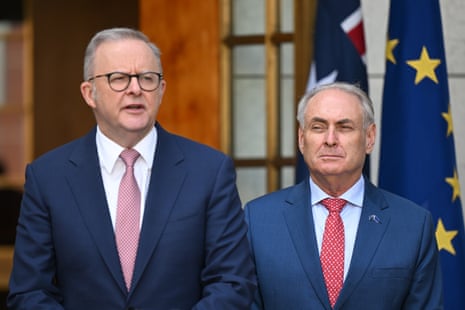
Industry Minister Tim Ayres described the bailout as a cornerstone of the "Future Made in Australia" program. The government believes that by securing the future of the Boyne smelter, they can catalyze up to $7.5 billion in private investment in the region’s energy grid. This approach reflects a broader shift in Australian industrial policy, where the state plays a more active role in de-risking critical industries during the transition to a low-carbon economy. However, the move has sparked debate over the long-term sustainability of subsidizing heavy emitters and whether similar support will be extended to other struggling facilities, such as the Tomago smelter in New South Wales.
Trade Relations and the European Union Free Trade Agreement
On the international stage, Trade Minister Don Farrell has been defending the recently finalized free trade agreement with the European Union. The deal, which was greenlit during a visit by European Commission President Ursula von der Leyen, has been hailed by the government as a "win-win" that will provide Australian producers with significantly better access to one of the world’s largest markets. Farrell noted that the agreement includes an 800% increase in market access for Australian cattle producers, a figure he believes justifies the lengthy and often contentious negotiations.
Despite the government’s optimism, the cattle industry has expressed frustration, claiming they were not adequately consulted on the final export quotas until the morning the deal was announced. Farrell has rejected these criticisms, asserting that industry associations were briefed throughout the process and that the final offer was a substantial improvement over previous iterations. The agreement also aims to lower the cost of European imports, such as wine, chocolate, and automobiles, providing some relief to Australian consumers amidst the broader cost-of-living crisis.
Energy Exploration and the Great Australian Bight
The debate over fuel security has also reignited calls for increased domestic oil and gas exploration. Nationals leader Matt Canavan has suggested that the government should reconsider drilling in the Great Australian Bight to reduce reliance on foreign imports. This proposal was sharply rebuked by Minister Murray Watt, who labeled the suggestion a "fake idea from a fake politician." Watt pointed out that major energy companies, including Equinor, abandoned plans to drill in the Bight years ago because the projects were not commercially viable and faced overwhelming public opposition.

The government remains firm in its stance that the solution to the fuel crisis lies in diversification and the transition to renewables rather than opening up environmentally sensitive areas for fossil fuel extraction. As Labor says ‘way too soon’ to talk about fuel rationing and government not considering $40 cap on refills, the focus remains on navigating the immediate supply constraints while preparing the nation for a more volatile energy future. The coming months will be a critical test for the Albanese administration as it attempts to balance economic stability, national security, and the long-term goals of its industrial and environmental agendas.