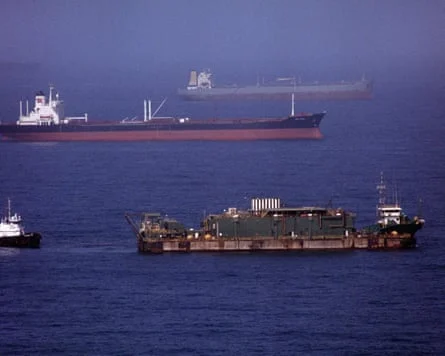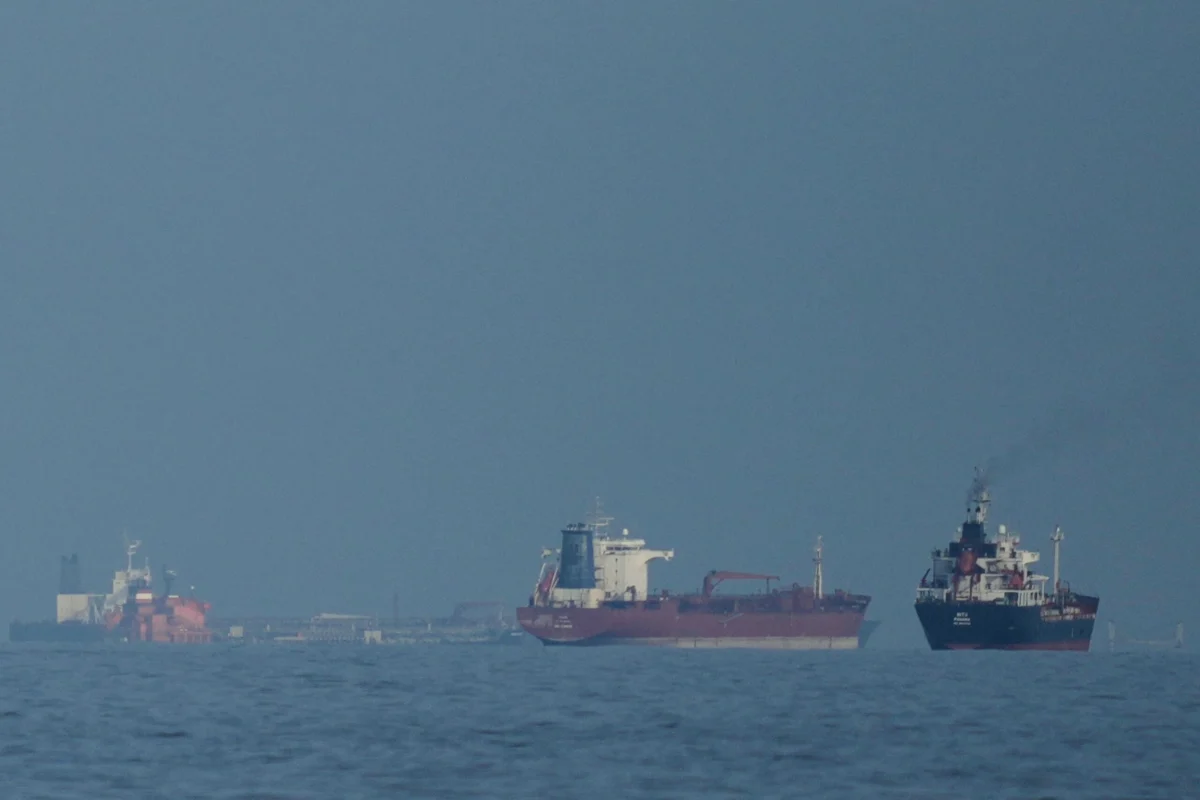
The U.S. military’s Central Command (CENTCOM) stated Tuesday that no vessels successfully circumvented the newly imposed American naval blockade in the Strait of Hormuz during its initial 24 hours, with six merchant ships reportedly adhering to orders to turn back. This assertion from CENTCOM directly contradicts earlier reports from news agencies suggesting some vessels, including sanctioned tankers, had transited the critical waterway. The Pentagon’s declaration comes on the heels of President Donald Trump’s announcement of the blockade, enacted following the failure of weekend talks in Pakistan aimed at de-escalating the ongoing conflict with Iran.
The U.S. military’s operational directive for the blockade specifies that it applies solely to vessels intending to enter or exit Iranian ports. This clarification seeks to reassure international maritime traffic that passage to and from non-Iranian destinations remains unimpeded. CENTCOM emphasized that U.S. forces are actively supporting freedom of navigation for ships transiting the Strait of Hormuz, provided they are not bound for Iranian ports.
However, differing accounts have emerged regarding the actual movement of ships. Reuters, citing shipping data, reported that at least three vessels transited the strait within the first 24 hours of the blockade’s implementation. Among these were two tankers that have previously been sanctioned by the United States. Reuters stressed that these three ships were not proceeding to Iranian ports. In contrast, reports from AFP and several U.S. media outlets, referencing data from maritime tracking firm Kpler, indicated that two ships had passed through the strait after departing Iranian ports on Monday.
The scale of the U.S. military operation supporting the blockade is substantial. CENTCOM confirmed the deployment of 10,000 U.S. sailors, Marines, and airmen. This personnel contingent is supported by over a dozen U.S. warships and dozens of aircraft, underscoring the significant resources dedicated to enforcing the maritime cordon.
Military analysts have widely assessed that U.S. forces possess the capability to sustain the blockade for an extended period. However, the sustained pressure exerted by the blockade is seen as increasing the potential for retaliatory Iranian attacks. Such actions could jeopardize the fragile two-week ceasefire that commenced on Wednesday, potentially leading to its collapse and a renewed escalation of hostilities.
Furthermore, any attempts to intercept vessels belonging to strategic adversaries, such as China, could precipitate new and unpredictable escalations in geopolitical tensions. The U.S. strategy is also anticipated to continue its destabilizing effect on global oil markets, as the Strait of Hormuz is a vital chokepoint for crude oil transportation. Iran has vehemently condemned the U.S. approach, labeling it as an act of "piracy." President Trump, meanwhile, has issued a stern warning, vowing to "eliminate" any Iranian ships that attempt to breach the blockade.
Trump Signals Potential for Renewed Diplomatic Engagement
Amidst the heightened military posture, both the United States and Iran have indicated a willingness to re-engage in diplomatic discussions. This openness follows a period of intensive negotiations over the weekend, which spanned 21 hours and concluded without a breakthrough agreement. The talks involved a U.S. delegation led by Vice President JD Vance and an Iranian delegation headed by parliamentary Speaker Mohammad Bagher Ghalibaf.
These discussions represented the highest level of direct engagement between the two nations since the 1979 Islamic Revolution, marking a significant, albeit currently stalled, diplomatic effort. Key contentious issues that remain unresolved include the strategic control of the Strait of Hormuz, the future of Iran’s nuclear program, and the extent to which the existing ceasefire encompasses Israel’s ongoing military operations in Lebanon.
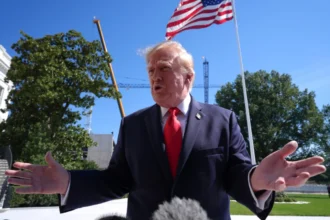
President Trump, in an interview with the New York Post on Tuesday, expressed optimism regarding the possibility of further diplomatic progress. He suggested that "something could be happening over the next two days" in Islamabad, acknowledging the pivotal role of Pakistani Field Marshal Asim Munir in facilitating the negotiations.
Reporting from Tehran, Al Jazeera’s correspondent Ali Hashem indicated that channels of communication remain open, with messages being exchanged concerning issues deemed "bridgeable" by both sides. Hashem relayed that Iran has reiterated its openness to dialogue, a stance demonstrated by its participation in last week’s talks in Islamabad. He identified mutual distrust as the primary impediment to substantial progress.
"Iran is open to talks, and it showed that from last week when it went to Islamabad," Hashem stated. "The main hurdle always is the mistrust, distrust between both sides." He further elaborated on the Iranian perspective: "For the Iranians, they’ve been repeating that they’re open. If the Americans want to fight, they’re going to fight. And if they want to talk, they can talk."
The Strategic Significance of the Strait of Hormuz
The Strait of Hormuz, a narrow waterway connecting the Persian Gulf to the Gulf of Oman, is one of the world’s most critical maritime chokepoints. An estimated 20-30% of the world’s oil shipments, including a significant portion of crude oil destined for East Asian markets, traverse this vital passage. Its strategic importance has made it a perennial focal point of geopolitical tension in the Middle East.
The U.S. military’s decision to implement a blockade, even a limited one targeting vessels associated with Iran, carries profound implications. It signals a significant escalation in the ongoing standoff, raising concerns about potential disruptions to global energy supplies and further inflaming regional instability. The economic ramifications of any prolonged disruption in the Strait of Hormuz could be severe, impacting global markets and potentially triggering price spikes for oil and refined products.
Background of the U.S.-Iran Standoff
The current escalation stems from a protracted period of strained relations between the United States and Iran, exacerbated by issues ranging from Iran’s nuclear program and regional proxy activities to alleged support for militant groups. The recent conflict, which commenced on February 28, has seen intensified military engagements and heightened rhetoric from both sides. The U.S. and its ally Israel have accused Iran of orchestrating attacks and destabilizing regional security.
The imposition of the blockade represents a significant shift in U.S. tactics, moving beyond sanctions and diplomatic pressure to direct military intervention in maritime traffic. This move is likely intended to exert maximum pressure on Tehran to alter its behavior and potentially return to the negotiating table with more conciliatory terms.
Public and Global Reactions
The U.S. blockade in the Strait of Hormuz has elicited varied reactions from the international community. While some U.S. allies have expressed understanding of the need to counter Iranian assertiveness, many nations reliant on maritime trade have voiced concerns about the potential for unintended consequences and the impact on global commerce. International organizations, including the United Nations, have called for de-escalation and a renewed commitment to diplomatic solutions.
The situation is being closely monitored by global financial markets, with any perceived increase in tensions or disruptions to oil flow likely to trigger volatility. Energy-dependent economies are particularly vulnerable to fluctuations in supply and price, making the stability of the Strait of Hormuz a matter of international economic security.
The Path Forward: Diplomacy Amidst Military Pressure
The coming days will be crucial in determining the trajectory of the U.S.-Iran relationship and the broader regional security landscape. While the U.S. military maintains its posture of pressure through the Hormuz blockade, the signals from both Washington and Tehran regarding a willingness to engage in further talks offer a glimmer of hope for a diplomatic resolution.
The success of any future negotiations will hinge on the ability of both sides to overcome deep-seated mistrust and find common ground on the critical issues at stake. The international community will be watching closely to see if diplomatic channels can prevail over the risks of further military confrontation, particularly in such a strategically vital and volatile region. The current dynamic underscores the precarious balance between deterrence and dialogue, a challenge that has defined U.S.-Iran relations for decades.