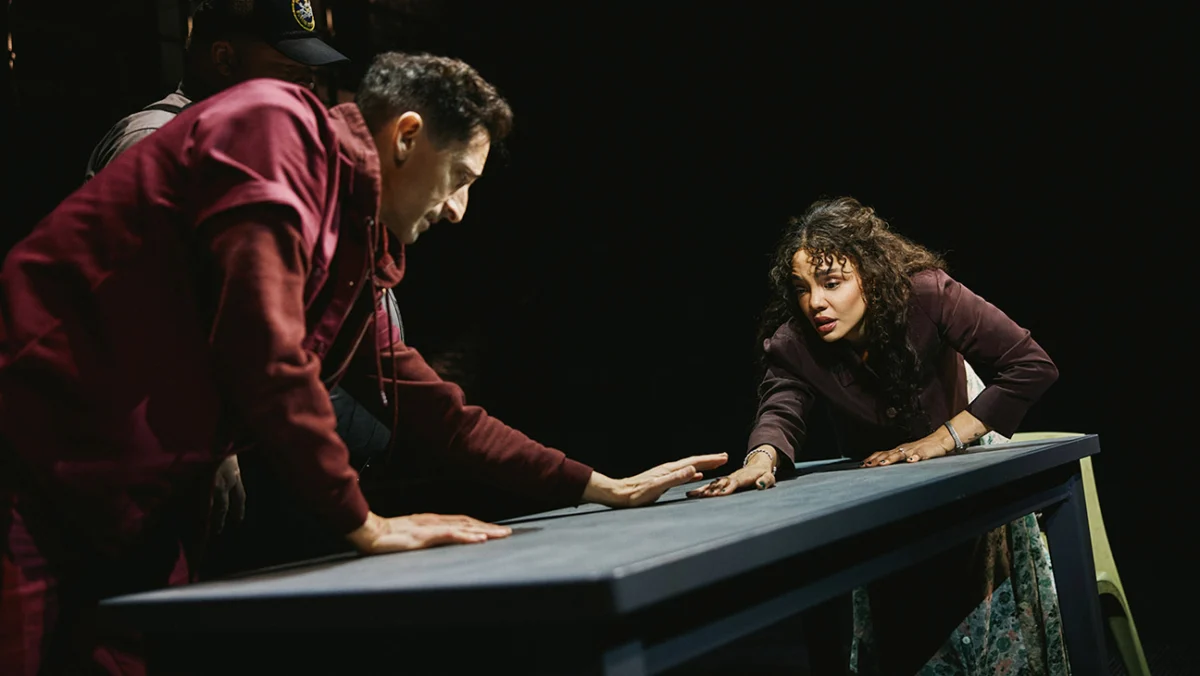
Adrien Brody delivers a powerfully intense performance as Nick Yarris in "The Fear of 13," a new Broadway play grappling with the profound injustices of the American legal system and the harrowing realities of wrongful incarceration. Despite Brody’s undeniable dedication to portraying a man who spent 22 years on death row for a crime he did not commit, the production at the James Earl Jones Theatre struggles to transcend its source material, presenting a narrative that critics have found verbose and dramatically inert due to pedestrian writing.
The Core of the Drama: A Story of Injustice
"The Fear of 13" is based on the remarkable true story of Nick Yarris, who was convicted of murder and rape in Pennsylvania in 1982. Yarris consistently maintained his innocence throughout his decades-long ordeal. His case became a stark example of systemic failures, plagued by a bungled investigation, mishandled court procedures, damaged DNA evidence, and initial botched attempts at forensic analysis. These setbacks contributed to a protracted legal battle, forcing Yarris to endure years of uncertainty and despair while awaiting an appeal or execution.
Adrien Brody’s Portrayal of Nick Yarris
Adrien Brody, making his Broadway debut, embodies Nick Yarris with an intensity that has been widely lauded. His performance is described as deeply committed, portraying Yarris’s journey from his turbulent youth, involved in petty crime for drug money, through the fateful traffic stop that led to his wrongful arrest and conviction. Brody navigates the psychological complexities of a man whose life was put on hold for over two decades, vividly depicting the emotional toll of constant appeals, legal delays, and the oppressive environment of death row. The actor’s portrayal effectively conveys Yarris’s resilience, his intellectual curiosity developed in prison, and the deep-seated trauma that profoundly shaped his existence, including a pivotal revelation of childhood sexual abuse.
From Documentary Screen to Broadway Stage
The play itself is an adaptation of British filmmaker David Sington’s critically acclaimed 2015 documentary of the same name. In the documentary, Yarris himself serves as a compelling and often discursive narrator, recounting his story directly to the camera. This direct, first-person account was a cornerstone of the documentary’s success, allowing Yarris’s unique voice and perspective to drive the narrative. The transition of this narrative style to the stage, however, has proven problematic for playwright Lindsey Ferrentino.
Challenges of Adaptation and Narrative Structure
Ferrentino’s one-act play attempts to translate the documentary’s power to a live theatrical setting, but reviewers have noted an awkward blend of narrative styles. A significant portion of the stage production relies on monotonous direct address, with characters speaking directly to the audience, a technique that often sacrifices dramatic vitality. There are too few fully dramatized scenes to allow the story to unfold organically, leading to a largely static and talky experience rather than a taut, tension-filled drama. This structural choice has been identified as a primary reason the play fails to build significant dramatic momentum or allow for deeper psychological exploration of its characters.
This isn’t Ferrentino’s first challenge with adapting non-fiction for the stage; she previously saw another documentary adaptation, "The Queen of Versailles," struggle on Broadway earlier this season. Critics suggest that Nick Yarris’s verbose, anecdotal style, which worked so effectively in a documentary format, might have been better suited for a solo theatrical performance, allowing his powerful storytelling to dominate without structural distractions.
Staging and Performance Dynamics
The production, directed by David Cromer, attempts to scale the story for the larger Broadway stage, a considerable contrast to its more intimate London premiere two years prior at the 250-seat Donmar Warehouse. That earlier production, also starring Brody, was reportedly better received, possibly benefiting from a more claustrophobic and focused staging. For Broadway’s James Earl Jones Theatre, with a capacity of over 1,000, the material seems to have been stretched thin, doing "no favors" to the already "lumpy" script.
Casting and Chemistry Concerns
Tessa Thompson, also making her Broadway debut, plays Jacki Miles, the volunteer who eventually becomes Yarris’s wife. While Thompson’s individual performance is deemed competent, the on-stage chemistry between her and Brody has been described as stiff and unconvincing. Jacki’s character primarily serves as a prompt for Nick to recount his story, following the maddening twists and turns of his court case and the implications of damaged DNA evidence. However, her presence also creates a dynamic of "dueling narrators," further contributing to the cumbersome delivery system and diminishing the actors’ ability to delve into their characters’ psychological depths.
Beyond the lead duo, other supporting characters such as cartoonishly thuggish guards and other prisoners are largely relegated to background roles or "window dressing." A notable exception is a brief, tender subplot involving fellow inmates Wesley (Ephraim Sykes) and Butch (Michael Cavinder), which includes a song performed by the "golden-voiced" Sykes. This moment provides a rare glimpse of emotional depth and narrative variation within the production.
The Set Design and Production Scale
Arnulfo Maldonado’s austere principal set, designed primarily for a one-person play, further exacerbates the issues with the larger Broadway venue. It creates a vast expanse of "dead space" around the actors, failing to provide the intimate, claustrophobic atmosphere that might have better served the story of a man confined for decades. This design choice, in stark contrast to the London staging, inadvertently highlights the narrative’s lack of dynamic interaction and movement.
Thematic Depth and Missed Opportunities
Yarris’s story is undeniably compelling. It chronicles his journey from a desperate young man to an unjustly convicted individual, enduring a legal system riddled with ineptitude and error. Key developments include the mishandling of autopsy material, the initial failure to properly process DNA samples, and the crushing weight of each legal setback. A particularly dramatic moment unfolds when Yarris impulsively seizes an opportunity to escape during transport to an appeal trial, briefly tasting freedom on a bicycle in New York City. His tales are so picaresque that even Jacki initially questions the line between fact and embellishment, only to later learn their essential truth.
The ultimate revelation of Yarris’s story comes when, after years of agonizing waiting, he petitions the state to set an execution date, desperate for an end to his limbo. It is only after this extreme act that conclusive DNA evidence finally proves his innocence, leading to his exoneration. This sequence of events should culminate in a powerful indictment of a legal system that can hold an innocent man’s life captive for over two decades. However, Ferrentino’s struggle to synthesize these profound themes results in a play that, despite Brody’s affecting moments in the closing scenes, remains emotionally ineffectual and flat. The narrative fails to fully harness the inherent tension and outrage of Yarris’s experience, leaving a significant thematic opportunity unfulfilled.
Critical Reception and Broader Implications
The critical reception for "The Fear of 13" on Broadway has largely underscored the disappointment that two actors of Adrien Brody’s and Tessa Thompson’s caliber are making their debuts in a production widely described as bland and poorly conceived. The play’s nearly two-hour runtime, without intermission, contributes to a sense of intellectual and emotional fatigue for the audience. The struggle to translate a powerful documentary into a compelling stage drama highlights the inherent challenges of adaptation, particularly when the original source relies heavily on a single, strong narrative voice.
A Disappointing Broadway Debut
Ultimately, "The Fear of 13" stands as a testament to Adrien Brody’s unwavering commitment to a challenging role, yet also as a cautionary tale about the pitfalls of theatrical adaptation. The production falls short of its potential to deliver a searing indictment of the American justice system, instead presenting a compelling true story through a cumbersome and dramatically inert lens. The play’s critical reception suggests a missed opportunity to leverage star power and a profoundly moving narrative into a resonant and impactful theatrical experience.