The Toronto International Film Festival (TIFF) market has announced the inaugural slate of eight groundbreaking projects for its newly established Innovation Hub, a dedicated programming section designed to showcase advancements in virtual reality (VR), mixed reality (MR), and other cutting-edge immersive formats. Presented by the Canada Media Fund, this initiative marks a significant strategic expansion for TIFF, positioning the festival at the forefront of digital storytelling and interactive entertainment by offering buyers and industry professionals a curated look at the future of content creation. The selection highlights a global array of creators pushing the boundaries of traditional narrative, from interactive explorations of Indigenous culture to socially conscious virtual experiences, all poised to redefine audience engagement.
A New Frontier for the TIFF Film Market
The launch of the Innovation Hub is a pivotal development for the TIFF market, which runs from September 10-16, coinciding with the 2026 Toronto Film Festival (Sept. 10-20). This move signals TIFF’s ambition to evolve beyond its traditional role as a premier film festival, transforming into a comprehensive international platform for film and television projects, intellectual property (IP) sales, and a broad spectrum of innovative content across all platforms. In an increasingly competitive global landscape, where festivals like Cannes, Berlin, and Sundance are also exploring new media, TIFF’s dedicated Innovation Hub aims to carve out a distinct niche by focusing explicitly on immersive and interactive storytelling.
The impetus behind the Innovation Hub stems from a recognition that storytelling is no longer confined to linear film or television. Emerging technologies like virtual reality and mixed reality offer unprecedented opportunities for creators to immerse audiences in narratives, making them active participants rather than passive observers. This shift necessitates a dedicated space where these experimental projects can be discovered, financed, and distributed. The Canada Media Fund’s partnership is crucial, underscoring a commitment to fostering Canadian talent and content within these burgeoning fields, ensuring that national creators have a prominent stage in the global market for immersive experiences.
A nine-member committee meticulously reviewed submissions for this inaugural program, selecting eight projects that represent a diverse range of technological approaches and narrative themes. These chosen works hail from creators based in Canada, France, Denmark, the U.S., Germany, Belgium, Taiwan, Greenland, and the Netherlands, reflecting a truly international scope. The slate includes a mix of world, international, North American, and Canadian premieres, indicating the Hub’s role in introducing these cutting-edge works to a global audience of industry stakeholders. This geographic and thematic diversity underscores the universal appeal and potential of immersive media to address a wide array of cultural, social, and personal narratives.
Diverse Narratives Through Immersive Technologies
The selected projects for the TIFF Innovation Hub exemplify the transformative power of immersive technologies to tell stories that resonate deeply and authentically. They demonstrate how VR and MR can transcend traditional cinematic limitations, offering experiential narratives that engage audiences on multiple sensory and emotional levels. The Hub’s curated lineup is a testament to the artistic potential when technological innovation meets profound human storytelling, exploring themes from cultural heritage and identity to social justice and personal grief.

-
Mekwâc: Now Is Good (Canada): This 360-degree interactive projection installation from Quantum Wampum/James Monkman Studio delves into Indigenous culture with a profound exploration of Cree cosmology. It creates an immersive space designed for reflection on the intricate relationships between water, land, and memory. The project’s world premiere at the TIFF market showcase highlights the critical role immersive media can play in preserving and reinterpreting cultural heritage, offering an interactive dialogue with ancestral knowledge. Such projects are vital for promoting Indigenous voices and perspectives on a global stage, leveraging technology to foster deeper understanding and connection.
-
Tartupaluk (Canada, Greenland, Denmark): Acclaimed Greenlandic-Canadian artist Laakkuluk Williamson presents a compelling VR piece set on a small Arctic island, an area historically subject to competing territorial claims between the two nations. Framed as a tour of a fictional republic, the experience invites participants to earn citizenship among a community described as a "nation of circumpolar lovers." This project is distributed by Hubblo and will have its world premiere at TIFF, offering a unique blend of political commentary, cultural storytelling, and interactive world-building, challenging perceptions of sovereignty and belonging in a globalized world.
-
Lesbian Simulator (Netherlands, Canada, Belgium): From Dutch director Iris Van der Meule, this VR video game centers on the nuanced experiences of a lesbian character, exploring themes of sexuality, love, and discrimination. Its Canadian premiere at the TIFF Innovation Hub signifies a crucial step in promoting LGBTQ+ representation within interactive media. By placing players directly into the lived experiences of marginalized communities, such projects foster empathy and understanding, pushing the boundaries of social commentary in gaming and virtual reality.
-
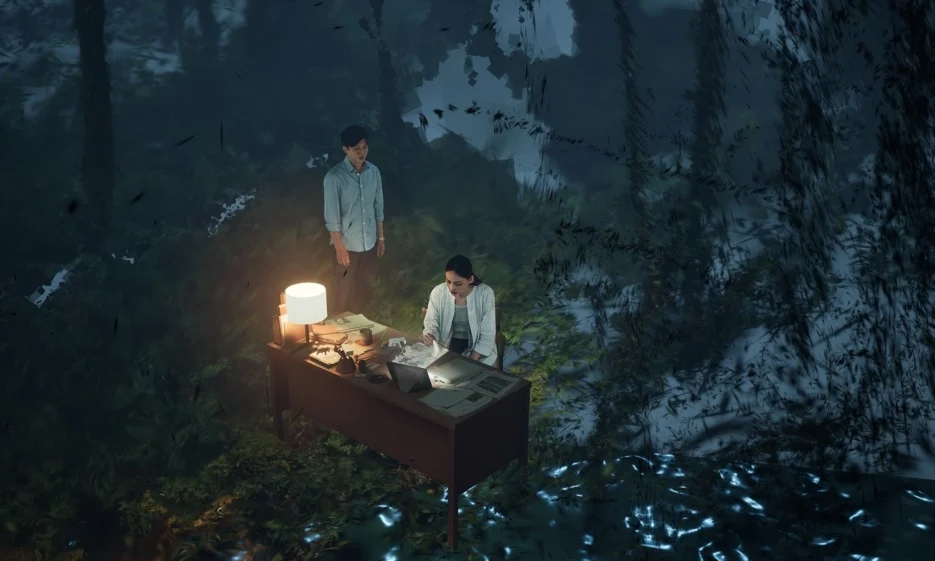
The Clouds Are Two Thousand Meters Up (Taiwan, Germany): Taiwanese director Singing Chen adapts a story by renowned author Wu Ming-Yi into a single-user, large-scale free-roam VR experience. This poignant narrative follows a man grappling with the death of his wife through her unfinished novel. Having its Canadian premiere, the project exemplifies how immersive technology can translate complex emotional landscapes and literary depth into a profoundly personal and interactive journey, offering new avenues for processing grief and memory through digital art.
-
The Big Picture – Lunch Atop a Skyscraper (France): Chloé Rochereuil and TARGO present a VR experience that recontextualizes the iconic 1932 photograph of construction workers perched precariously on a skyscraper beam. This world premiere offers a unique opportunity to step into a historical moment, providing new perspectives on a universally recognized image. Such projects highlight VR’s capacity to transport audiences through time and space, offering intimate encounters with historical events and cultural touchstones.
-
Interstellar Arc (Canada): From the globally recognized Felix & Paul Studios, creators Féliz Lajeunesse and Paul Raphaël bring a free-roam VR experience focused on interstellar exploration. This project, making its international premiere, capitalizes on Felix & Paul’s reputation for high-quality immersive content, promising a breathtaking journey into the cosmos. Free-roam VR enhances the sense of presence and agency, making space exploration not just a visual spectacle but an active adventure for participants.
-
Solwata (United States): A mixed reality installation from Felix Gaedtke and Gayatri Parameswaran, in collaboration with Human Rights Watch and NowHere Media/Agog, is set for its North American premiere. The involvement of Human Rights Watch suggests a project with significant social and political undertones, likely exploring themes of human rights, environmental justice, or humanitarian crises through an immersive lens. Mixed reality, by blending digital content with the physical world, offers powerful new ways to engage with real-world issues.
-
Body Proxy (United States): Developed by Tender Claws, this project leverages AI glasses, marking its Canadian premiere. The integration of artificial intelligence with wearable technology like AI glasses represents the cutting edge of immersive interaction, hinting at future possibilities for augmented reality and personalized digital experiences. This project exemplifies the Hub’s commitment to showcasing not just VR, but the broader spectrum of emerging technological formats.

Industry Vision and Market Impact
The establishment of the Innovation Hub is a strategic declaration by TIFF, signaling its intent to be a central player in the evolving landscape of global content. Charles Tremblay, TIFF market head, emphasized the Hub’s purpose: to give buyers a crucial look at projects that merge innovative production approaches with formats extending far beyond traditional film and television. "For buyers, it’s a prime opportunity to discover pioneering projects that transcend formats and borders and deliver the high entertainment value audiences are seeking," Tremblay stated, highlighting the commercial viability and artistic merit of these new ventures.
Geoff Macnaughton, TIFF’s vice president of market programming and theatrical, echoed this sentiment, adding, "These eight projects are the perfect complement to a diverse lineup of market programming that elevates the conversations around the future of global content." Their statements collectively underscore TIFF’s commitment to facilitating connections between innovative creators and a global network of distributors, investors, and platform operators who are increasingly looking for unique, engaging, and technologically advanced content. The "buyers" at this market are not just traditional film distributors but also include tech companies, gaming publishers, museums, and experiential entertainment venues, reflecting the multidisciplinary nature of immersive media.
The Innovation Hub will be physically located on the 200-level of the Metro Toronto Convention Centre, providing a dedicated space for delegates to experience these installations firsthand. This immersive environment is crucial for appreciating the full scope and impact of VR and MR projects, which often require specialized hardware and spatial setups. Access to the Hub will be granted to all registered delegates for the duration of the seven-day market, fostering an environment of discovery and networking.
In addition to the hands-on installations, the TIFF market will host a Speakers’ Summit Talks series. This programming will feature the Innovation Hub creators, who will discuss their projects, artistic processes, and the challenges and opportunities of working with new technologies. Complementary panels will delve into broader industry topics, such as adapting intellectual property across multiple formats—a key consideration for studios and content owners looking to maximize the reach and impact of their stories in a multi-platform world. The Hollywood Reporter’s designation as the official media partner for the Innovation Hub further elevates its profile and ensures broad industry coverage.
Shaping the Future of Global Content
The TIFF Film Market’s Innovation Hub represents a bold step into the future of storytelling and entertainment. By curating and showcasing these eight groundbreaking projects, TIFF is not merely acknowledging the rise of immersive media but actively shaping its trajectory. The initiative reinforces Toronto’s position as a dynamic hub for creativity and technological advancement, attracting creators and industry leaders from around the globe.
The projects unveiled, ranging from deep cultural dives to poignant personal narratives and ambitious explorations, demonstrate the expansive potential of VR and MR to engage, educate, and entertain. They challenge existing cinematic paradigms and invite audiences into new realms of experiential media. As these technologies become more accessible and sophisticated, the precedents set by initiatives like the Innovation Hub will be crucial in guiding the development of future content. TIFF’s commitment ensures that the dialogue around the future of global content will remain vibrant, diverse, and at the cutting edge of innovation for years to come.