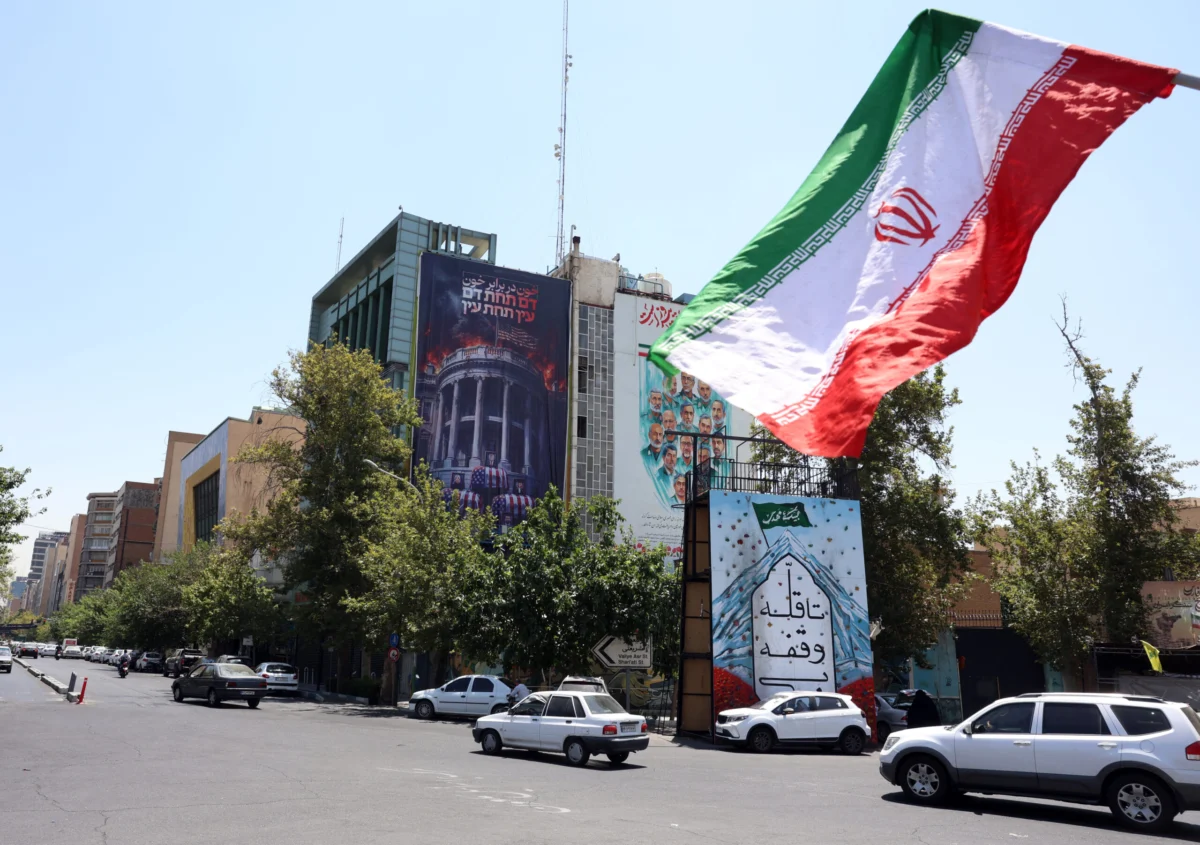
The United States launched its sixth consecutive night of airstrikes against targets within Iran, escalating a volatile conflict that has raised fears of a broader regional conflagration. The latest assaults, initiated Thursday evening, reportedly struck key infrastructure in southern Iran, including an airport, a bridge, and a communications tower, according to Iranian state media. These actions follow a period of intense hostilities and come amid increasingly dire warnings from Tehran that further US aggression could ignite a wider war across the Middle East.
The renewed US military action commenced at 18:00 GMT on Thursday, with reports of explosions emanating from Qeshm Island, Bandar Abbas, Chabahar, Iranshahr, and Bandar-e Khamir. Iranian news agencies, including Tasnim and Fars, provided specific details of the alleged strikes. Tasnim reported a US missile attack directly targeting an airport in Iranshahr, while also noting an "enemy" strike on a communications tower in Bandar Abbas, which reportedly resulted in a significant power outage in the vicinity. Fars news agency, meanwhile, indicated that a bridge in Bandar-e Khamir was a suspected target of US forces.
These strikes underscore a dramatic deterioration in US-Iran relations, occurring just days after US President Donald Trump had publicly threatened to target Iranian infrastructure if the nation did not return to the negotiating table. The escalating military exchanges have cast a long shadow over an interim agreement between the two nations, signed just last month. Both Washington and Tehran have since accused each other of violating the terms of this memorandum of understanding, leading to a week of rapidly spiraling hostilities that have the region on edge.
A Escalating Cycle of Retaliation
The current wave of US strikes represents a significant intensification of military action, moving beyond maritime interdictions to direct assaults on Iranian soil. Earlier on Thursday, Iran’s Islamic Revolutionary Guard Corps (IRGC) claimed responsibility for an attack on an airbase utilized by US forces in Bahrain. The IRGC framed this action as a direct response to what it described as a "barbaric" US attack near a children’s cancer hospital in the southwestern Iranian city of Ahvaz, an incident that necessitated the evacuation of patients.
Beyond Bahrain, the IRGC also asserted responsibility for further attacks targeting Kuwait and Jordan. The Kuwaiti army confirmed that Iranian strikes, reportedly involving 32 drones, had targeted vital facilities within the country, resulting in material damage. The rhetoric from Tehran has become increasingly belligerent. Mohammad Akraminia, an Iranian army spokesman, issued a stark warning, stating that Iran’s retaliatory actions "will spread to new areas" if the US continues its attacks.
Regional Tensions Reach Boiling Point
The heightened tensions have prompted significant concern among Gulf states, who are actively bolstering their defenses. Aksel Zaimovic, reporting from Doha, Qatar, noted that regional governments are enhancing their air defenses and increasing military preparedness around critical infrastructure. This heightened state of alert reflects the pervasive "time of uncertainty" gripping the region, as the specter of a wider conflict looms large.
Diplomatic Openings Amidst Military Posturing
Despite the ongoing military engagements, the United States has maintained that it remains open to diplomatic solutions. White House Press Secretary Karoline Leavitt stated on Thursday that President Trump would hold Iran "accountable" for its actions but emphasized that the administration "is always open to diplomacy at the very same time." Leavitt indicated that Iranian officials had expressed a continued desire to reach a deal with the President, adding, "We’re talking to them, but again, the president is not going to allow them to fire on ships in the strait without paying a consequence for that."
However, this conciliatory tone from Washington has been met with firm resistance from Tehran. Iran’s Ministry of Foreign Affairs reiterated on Wednesday that the country has no intention of engaging in talks with the United States, stating that its sole focus is on national defense. This firm stance suggests a deep divergence in objectives and a significant challenge to any potential diplomatic breakthrough.
Underlying Standoff: A Game of High Stakes
The current impasse between the US and Iran can be understood as a high-stakes strategic maneuver, with both sides seeking to compel the other to concede. Sina Azodi, an assistant professor of Middle East Politics at George Washington University, explained that both nations are engaged in a "trying to force the other side to blink first and capitulate to the other side’s demands."
According to Azodi, the US objective is to draw Iran back to the negotiating table and secure concessions aligned with American interests. Conversely, Iran’s primary demand is for the United States to lift economic sanctions and fully implement the terms of the previously agreed-upon memorandum of understanding. This fundamental disagreement over sanctions relief and adherence to past agreements forms a significant obstacle to de-escalation.
Economic and Security Implications
The ongoing conflict has profound implications for regional and global stability, particularly concerning energy markets and international trade routes. The Strait of Hormuz, a critical chokepoint for global oil shipments, remains a focal point of tension. Iran’s threats to disrupt maritime traffic in the strait, and the US commitment to ensuring freedom of navigation, create a volatile scenario with the potential for significant economic disruption.
The repeated strikes on infrastructure also raise concerns about the long-term impact on Iran’s economic development and the well-being of its population. Civilian casualties and damage to essential services could exacerbate humanitarian concerns and further destabilize an already complex geopolitical landscape. The international community is watching closely, with many nations urging restraint and a return to diplomatic channels to prevent a wider humanitarian and economic crisis.
The Road Ahead: Uncertainty and Potential Escalation
The immediate future of US-Iran relations remains deeply uncertain. The tit-for-tat military exchanges demonstrate a dangerous pattern of escalation, with each side viewing the other’s actions as provocations that necessitate a response. The risk of miscalculation or accidental engagement is a constant concern, which could rapidly draw in other regional actors and further complicate the situation.
The stated diplomatic openness from the US, juxtaposed with Iran’s unwavering commitment to defense and refusal to negotiate under duress, highlights the deep chasm that needs to be bridged. The effectiveness of international pressure and mediation efforts will be crucial in navigating this precarious period. The coming days and weeks will likely reveal whether either side is willing to de-escalate or if the current trajectory of conflict is set to continue, with potentially devastating consequences for the entire Middle East. The world remains a vigilant observer, hoping for a diplomatic resolution to avert a full-blown regional war.