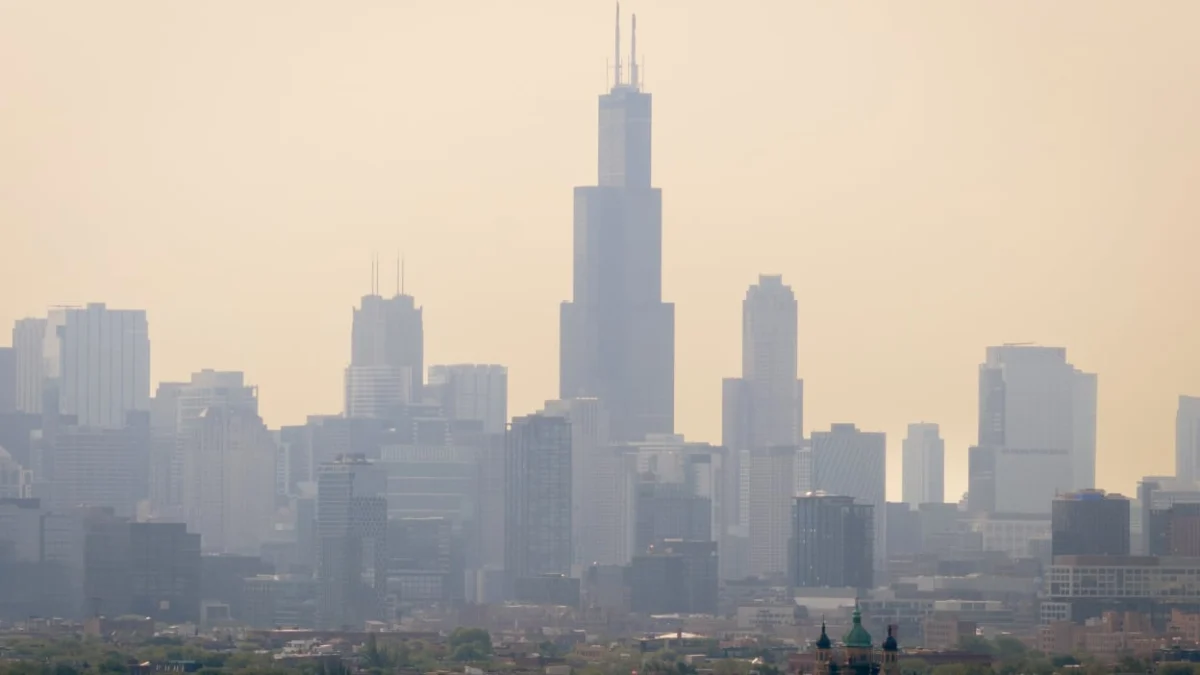
As historic wildfire seasons continue to degrade air quality across North America, the integration of high-efficiency particulate air (HEPA) filtration into the modern household has transitioned from a niche luxury to a critical public health necessity. Recent environmental data indicates that indoor air quality can often be significantly worse than outdoor levels due to the infiltration of microscopic pollutants that seep through window seals and ventilation systems. To address these growing concerns, a series of rigorous independent tests have identified the top-performing units capable of neutralizing everything from thick wood smoke to persistent pet dander.

The necessity of these devices is underscored by the increasing frequency of "Air Quality Action Days" in major metropolitan areas. According to the Environmental Protection Agency (EPA), fine particulate matter known as PM2.5—particles 30 times smaller than a human hair—poses the greatest risk to human health. These particles are small enough to bypass the body’s natural defenses, entering the lungs and eventually the bloodstream, where they can cause systemic inflammation. The following analysis breaks down the most effective home air purifiers currently available, vetted for their CADR (Clean Air Delivery Rate) and long-term filtration efficiency.
The Public Health Imperative for Advanced Filtration
Public health officials from the Centers for Disease Control and Prevention (CDC) have warned that repeated exposure to wildfire smoke can lead to a range of acute and chronic conditions. While sensitive groups such as children, the elderly, and those with pre-existing respiratory conditions like asthma are at the highest risk, healthy adults are not immune to the effects of prolonged exposure. Symptoms often begin with coughing, wheezing, and headaches, but long-term inhalation of PM2.5 is linked to cardiovascular disease and impaired cognitive function.

The impact extends beyond human occupants to domestic animals. The American Veterinary Medical Association (AVMA) notes that pets often experience respiratory distress long before their owners notice a change in air quality. Birds, in particular, are highly susceptible to airborne toxins, making a reliable air purifier a mandatory component of a safe living environment.
Coway Airmega: The Industry Standard for Smoke Mitigation
For consumers facing the direct path of wildfire plumes, the Coway Airmega series remains a top-tier recommendation. Specifically, the Airmega Mighty is engineered to cover up to 1,748 square feet, utilizing a sophisticated four-stage filtration process. While the standard HEPA and carbon filters are effective against routine allergens, the unit’s specialized "Intense Smoke Filter" sets it apart in the market.

This specialized filter is designed to capture the specific volatile organic compounds (VOCs) found in wood smoke. Technical evaluations show that the combination of a washable pre-filter and the upgraded smoke filter allows the unit to maintain high airflow even when dealing with heavy pollutant loads. For residents in the Pacific Northwest or the Canadian provinces, where smoke can linger for weeks, this level of industrial-grade filtration is often the only way to maintain a safe "clean room" environment within the home.
Shark NeverChange: Redefining Long-Term Maintenance
One of the primary deterrents for air purifier ownership is the recurring cost of replacement filters. The Shark NeverChange Air Purifier Max addresses this consumer pain point with a HEPA system designed to last up to five years. This longevity is achieved through a multi-layered approach that includes two distinct pre-filters. These screens catch larger debris, such as hair and dust, before they can reach the delicate HEPA material, and they can be easily cleaned with a household vacuum.

The Shark Max model is particularly suited for open-concept living areas, with a coverage rating of 1,400 square feet. It features the proprietary "Clean Sense IQ" system, which provides a real-time digital readout of air quality. When the unit detects a spike in pollutants—such as smoke from a kitchen or incoming outdoor smog—it automatically accelerates its fan speed to scrub the air before the levels become hazardous. This proactive technology removes the guesswork for users who may not be aware of fluctuating AQI levels.
Specialized Solutions for Pet Owners and Nurseries
Indoor air quality is not solely dictated by external environmental factors; internal pollutants like pet dander and fur play a significant role in respiratory health. The Dreame FP10, marketed as a pet-specific purifier, features a unique "Furcatch" roller. Traditional HEPA filters are often rendered useless within weeks in homes with multiple shedding animals because the fur physically blocks the intake. The FP10’s internal mechanism constantly clears the filter surface, ensuring that the HEPA core can focus on microscopic allergens rather than being smothered by visible hair.

For parents, the Levoit Sprout represents a shift toward multifunctional nursery tech. Beyond its HEPA filtration capabilities, the Sprout integrates a nightlight and a white noise machine, reducing the number of electronic devices needed in a child’s room. More importantly, the unit provides hyper-local data on CO2 levels and TVOCs through a dedicated mobile application. Given that children breathe more air per pound of body weight than adults, the ability to monitor and mitigate PM1.0 and PM2.5 in a nursery is a significant advancement in pediatric home care.
Multipurpose Units: The Blueair and LG Tower Designs
The trend of "3-in-1" appliances has reached the air purification sector, with the Blueair ComfortPure and the LG PuriCare AeroTower leading the charge. These units are designed for year-round utility, functioning as heaters, fans, and purifiers. The Blueair ComfortPure uses a magnetic filter system and a highly intuitive app that tracks outdoor air quality in real-time, notifying the user when it is time to seal the home and activate the purification mode.

The LG PuriCare AeroTower is one of the few consumer units to carry an official "asthma and allergy friendly" certification from the Asthma and Allergy Foundation of America. Its tower design is intended to maximize vertical airflow, which is more efficient for circulating air in rooms with high ceilings. In testing, the AeroTower was able to complete four full air changes per hour in a standard bedroom, a rate that significantly reduces the concentration of airborne viruses and bacteria during flu season.
Budget-Friendly Efficiency: The Levoit Core 300P
High-quality air filtration does not always require a massive financial investment. The Levoit Core 300P has emerged as a dominant force in the entry-level market, offering true HEPA filtration for under $100. While it lacks the massive coverage area of the Shark or Coway models, its compact 14-inch frame makes it an ideal choice for dorm rooms, home offices, or small bedrooms. Its simplicity—a literal "plug-and-play" device—appeals to consumers who want immediate protection without navigating complex smart home integrations.

Analyzing the Science of HEPA and PM Levels
To understand why these specific models were selected, one must look at the underlying technology of HEPA (High-Efficiency Particulate Air) filters. By definition, a true HEPA filter must remove 99.97% of particles that are 0.3 microns in diameter. This includes not only smoke and dust but also many bacteria and respiratory droplets that carry viruses.
Purifiers that track PM10 and PM2.5 provide users with a window into the invisible world of indoor pollution. PM10 includes larger particles like pollen and mold spores, which typically cause hay fever and itchy eyes. PM2.5, however, is the more insidious threat. Because these particles are so light, they can remain suspended in the air for days or even weeks. Without active filtration, these particles eventually settle into carpets and upholstery, only to be kicked back into the breathing zone by foot traffic.

Economic and Environmental Implications
The rise of the air purifier industry reflects a broader shift in consumer behavior toward "wellness architecture." As climate change makes outdoor air increasingly unpredictable, the home is becoming a sanctuary where environmental variables must be strictly controlled. This has led to a surge in innovation, with companies competing to create filters that last longer and consume less energy.
Energy Star-certified purifiers are now the baseline, as many of these units are designed to run 24 hours a day. The economic impact is also felt in the healthcare sector; proactive air purification is increasingly seen as a way to reduce the frequency of emergency room visits for asthma attacks and other pollution-related ailments.

Final Considerations for Home Air Quality
Choosing the best home air purifier requires a balance between room size, specific pollutant threats, and long-term maintenance capacity. For those in wildfire-prone regions, a unit with a heavy carbon stage for smoke is non-negotiable. For urban dwellers near busy highways, the focus should be on high-CADR ratings to combat nitrogen dioxide and fine soot.
As technology continues to evolve, the integration of AI-driven sensors and long-life filters will likely make these devices even more autonomous. For now, the vetted models from Coway, Shark, Levoit, and Blueair represent the gold standard in protecting the air we breathe within the four walls of our homes. Maintaining clean indoor air is no longer just about comfort; it is a fundamental pillar of modern preventative health.