Rising temperatures across the Indian subcontinent are systematically dismantling the economic stability of the nation’s most vulnerable populations, according to new research indicating that outdoor laborers are losing nearly 9% of their annual income to climate-driven heat stress. Analysis conducted by the International Institute for Environment and Development (IIED) suggests that extreme heat is now operating as a "poverty multiplier," trapping hundreds of millions of informal workers in a cycle of medical debt and diminished productivity. As India strives to transition into a developed economy over the next two decades, the accelerating climate crisis threatens to undermine the very workforce required to build its future infrastructure.
The financial toll of these rising temperatures is staggering, particularly for those whose livelihoods depend on physical exertion in the agriculture, construction, and transport sectors. On average, highly physical jobs saw a 6.6% reduction in salary in 2024, but the burden was even heavier for those working directly under the sun. These outdoor workers suffered a loss of approximately $151 (£112) this year alone, a sum that represents a catastrophic portion of their annual earnings.
The Poverty Multiplier: How Extreme Heat Saps Health and Wages
The concept of heat as a "poverty multiplier" reflects a dangerous feedback loop where environmental factors exacerbate existing socio-economic inequalities. For the 550 million people working in India’s informal sector—who represent roughly 90% of the country’s total workforce—there is no safety net to catch them when the mercury rises. Unlike salaried office workers, these laborers are paid only for the hours they can physically perform, meaning every hour spent seeking shade is an hour of lost wages.
The IIED data estimates that India loses an average of 21.1 working days per year due to extreme heat. This is not merely a statistic of lost time; it represents a direct drain on the food security and housing stability of millions. When income drops, families are forced to reduce their caloric intake, further weakening their bodies and making them more susceptible to heat-related illnesses. This creates a downward spiral where the worker becomes too weak to earn, leading to deeper poverty and poorer health outcomes.
Regional Disparities and the Survival Limit in Rajasthan
While the entire country is experiencing warming trends, certain regions have become hotspots for climate-driven economic ruin. In the arid desert state of Rajasthan, prolonged heatwaves have pushed the limits of human endurance. Informal workers in this region reported income losses equivalent to 8.3% of their total earnings in 2024. The combination of high humidity and extreme temperatures in these areas often approaches what scientists call the "human survivability limit," where the body can no longer cool itself through perspiration.
A report from the World Bank previously warned that India could become one of the first places in the world where heatwaves break this survivability threshold. In Rajasthan and other northern territories, the death toll associated with extreme heat is rising, yet many deaths go unrecorded as heat-related because they occur in the informal sector without medical oversight. The grueling effects on the body are not just temporary; they represent a permanent erosion of the workforce’s physical capital.

The Invisible Tax on Labor: Construction and Infrastructure Risks
In the satellite cities surrounding New Delhi, such as Gurugram, the skyline is a forest of cranes and unfinished concrete, all built by a migrant workforce that is currently under siege. Interviews with laborers in these construction hubs reveal a pattern of systemic neglect. Many workers report falling ill multiple times over a single season, suffering from fevers, body aches, and total exhaustion.
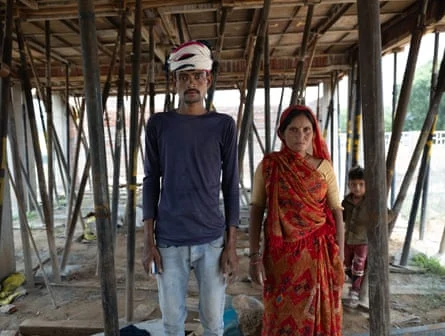
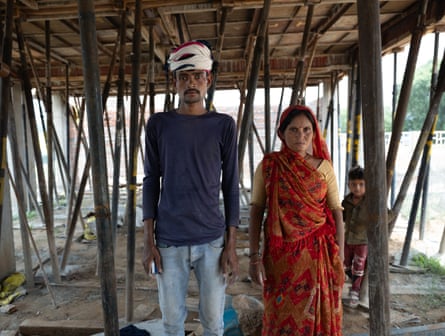
For workers like Inder and Laxmi Kumar, a couple toiling on a dusty site in Gurugram, the heat is a physical adversary. The couple earns approximately 800 rupees ($9.50) each per day, supporting a family of eight. Over the last three months, they have lost nearly four weeks of work to illness. "I felt like I would collapse, like my body was on fire," Laxmi said. "We kept working because if we stopped, we wouldn’t be paid." This "choice" between health and hunger is a daily reality for millions. Whatever small savings they manage to accumulate are often immediately spent on medicines and private clinics, leaving them with nothing to send back to their home villages.
Gendered Vulnerabilities and the Impact on Families
The crisis of how extreme heat saps health and wages of India’s poorest workers is particularly acute for women. Female laborers often bear a double burden, managing heavy physical work while also caring for young children at the worksite. In the absence of childcare facilities or shaded nurseries, children are frequently exposed to the same lethal temperatures as their parents.
At many construction sites, mothers are forced to pause their labor to pour water over their children to prevent heatstroke. Kumkumari, a 35-year-old worker, noted that her two-year-old daughter falls sick frequently due to the environment. When the child is ill, the mother must stay home, leading to a total loss of income for that day. This dynamic ensures that families headed by female laborers or those with young children remain the most economically fragile during the summer months.
The Looming Crisis of Chronic Kidney Disease
Beyond the immediate threat of heatstroke, medical experts are increasingly concerned about the long-term physiological damage caused by repeated dehydration. Prolonged exposure to extreme temperatures is a known risk factor for chronic kidney disease (CKD). The IIED research suggests that if current trends continue, one in 20 informal workers in India could develop CKD—a figure that represents more than 26 million people.
Sattavir, a 38-year-old laborer in Gurugram, exemplifies this medical catastrophe. After working through successive heatwaves, he developed a severe kidney infection. In the span of two months, he earned only 7,000 rupees but was forced to spend 9,000 rupees on medical treatments, pushing him into a debt trap. "The heat is killer," he said, standing by the roadside hoping for work. "When people see you’re weak, they don’t hire you." This creates a "survival of the fittest" labor market where the most damaged workers are discarded, further deepening their poverty.
Macroeconomic Consequences for the Indian Economy
The aggregate impact of these individual tragedies poses a significant threat to India’s national economy. Estimates suggest that extreme heat could cost the country at least $78 billion (£58bn) annually, or roughly 2% of its total GDP. This loss is calculated through a combination of reduced labor productivity, mandatory worksite closures during peak sun hours, and the long-term healthcare costs associated with heat-related disabilities.
The economic analysis accounts for three primary ways heat exposure reduces output:
- Direct Illness: Time lost due to workers being physically unable to perform.
- Reduced Capacity: The slowing of work speed as the body struggles to regulate temperature.
- Operational Suspensions: Occasions where temperatures become so high that worksites must be shuttered entirely.
For a nation aiming to become a global manufacturing and construction powerhouse, the reality that extreme heat saps health and wages of India’s poorest workers is a structural barrier to growth.
Infrastructure Gaps and the Need for Policy Intervention
Current labor protections for the informal sector are largely non-existent or unenforced. Most construction sites lack basic amenities such as clean drinking water, adequate shade, or medical stations. Furthermore, the housing available to these workers provides no respite. Many live in makeshift tarpaulin shelters or unfinished buildings that act as "ovens," retaining heat long after the sun has set.
In many labor camps, diesel generators that power fans are switched off shortly after the workday ends to save on fuel, leaving families to sleep in stifling, stagnant air. This lack of "thermal recovery" at night means workers return to the site the next morning already exhausted and dehydrated, compounding the risk of collapse.
Addressing this crisis will require more than just climate mitigation; it necessitates a fundamental shift in labor rights and urban planning. Experts suggest that "heat action plans" must be integrated into every level of government, providing for mandatory breaks, water distribution, and insurance schemes for heat-related income loss. Without such interventions, the very people building India’s future will continue to pay for the climate crisis with their lives and their meager savings.