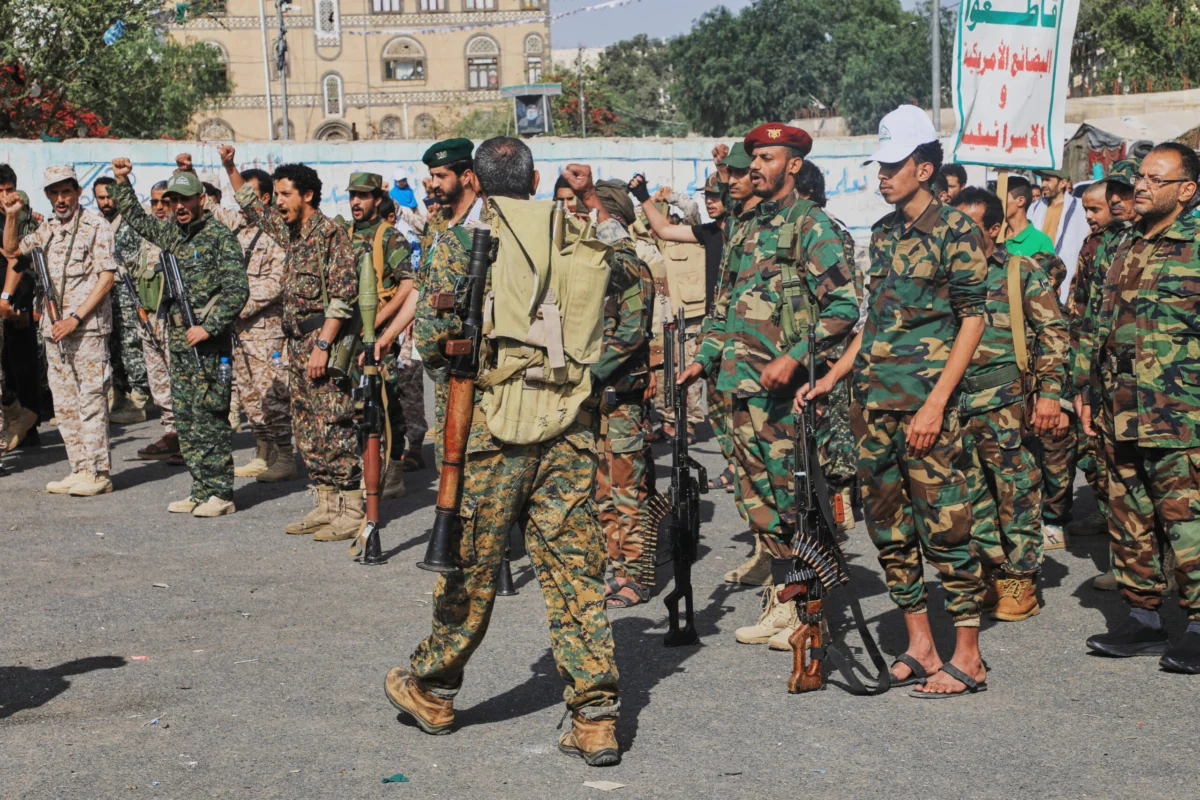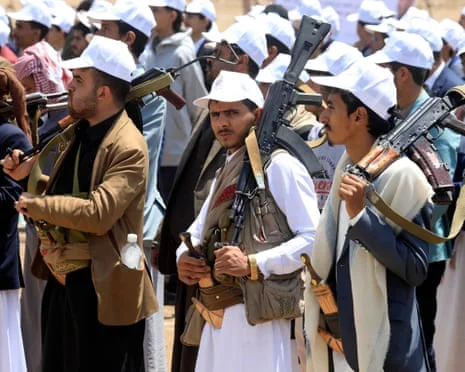
The United States military conducted a 12th consecutive night of targeted airstrikes against Iranian military installations on Thursday, marking a significant escalation in a widening regional conflict that now threatens global energy corridors. The operations, authorized by President Donald Trump, coincided with a bold claim from Houthi rebels in Yemen regarding successful missile and drone strikes against two Saudi Arabian oil tankers in the Red Sea. These dual developments have sent shockwaves through international markets and diplomatic circles, as the specter of a full-scale maritime blockade looms over the Arabian Peninsula.
According to US Central Command (CENTCOM), the latest round of aerial bombardments was designed to further degrade the Islamic Republic’s capacity to launch offensive operations against commercial shipping. Military officials stated that the strikes targeted command-and-control centers, drone manufacturing facilities, and missile storage sites within Iranian territory. The White House has maintained that these actions are defensive measures intended to ensure the safety of civilian mariners and the free flow of commerce in regional waters, which have seen a sharp increase in hostilities over the past two weeks.
The intensification of the air campaign follows a series of warnings from Washington that it would not tolerate interference with international shipping lanes. However, the persistence of the strikes—now entering their second week—suggests that the initial wave of deterrents has yet to achieve its primary objective of neutralizing Iranian-backed regional proxies. Instead, the conflict appears to be metastasizing, with the Houthi movement in Yemen now directly targeting Saudi Arabian infrastructure in response to what they describe as a "maritime embargo" linked to the broader US-Iran war.
Houthi Attacks on Red Sea Tankers and the Maritime Embargo
The Houthi movement, officially known as Ansar Allah, announced on Wednesday that its naval forces had carried out what it termed a "qualitative military operation" in the Red Sea. The group claimed to have successfully struck two Saudi-flagged oil tankers, identified as the Encelia and the Layla. According to a statement released via the group’s Telegram channel, the vessels were targeted because they "violated the blockade" recently imposed by the Houthis on Saudi Arabian ports.
The British naval security monitor, United Kingdom Maritime Trade Operations (UKMTO), confirmed that at least one tanker reported being struck by an unknown projectile approximately 70 nautical miles southwest of Al Shuqaiq. The master of the vessel reported that the impact resulted in a fire, which the crew worked to contain. While the full extent of the damage to both ships remains under assessment, the incident represents the first successful strike on Saudi oil infrastructure since the Houthis declared their intention to blockade the kingdom’s ports earlier this week.
This new front in the conflict poses a direct threat to the global oil supply. Saudi Arabia, the world’s largest exporter of crude oil, relies heavily on the Red Sea and the Bab el-Mandeb Strait for its westward shipments. The Houthi leadership has warned all international shipping companies that any vessel docking at Saudi ports will be considered a legitimate military target. This escalation mirrors threats made by Tehran regarding the Strait of Hormuz, effectively creating a pincer movement that could paralyze maritime traffic on both sides of the Arabian Peninsula.

US-Saudi Nuclear Deal Ignites Proliferation Concerns
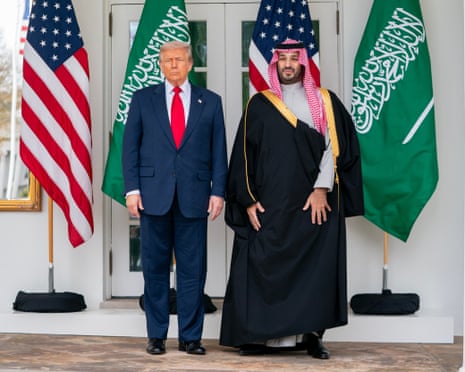
Amid the erupting violence, the Trump administration has moved to solidify its alliance with Riyadh through a landmark civil nuclear cooperation agreement. On Wednesday, the US Department of Energy announced that the US Secretary of Energy and his Saudi counterpart had signed a "peaceful nuclear cooperation agreement," accompanied by a "bilateral safeguards agreement." The deal is particularly controversial because it reportedly includes provisions that could eventually allow Saudi Arabia to enrich uranium on its own soil.
The timing of the announcement has drawn intense scrutiny from nonproliferation experts and members of Congress. The United States is currently engaged in a kinetic war with Iran, justified in part by the need to prevent Tehran from achieving domestic uranium enrichment capabilities and developing a nuclear weapon. Critics argue that providing Saudi Arabia with the technology to enrich uranium could spark a regional arms race, prompting other Middle Eastern nations to seek similar capabilities.
The agreement must now undergo a mandatory review period in the US Congress. Lawmakers from both parties have expressed concern over the lack of stringent "gold standard" safeguards, which would typically prohibit a partner nation from enriching uranium or reprocessing spent fuel. Proponents of the deal, however, argue that it is a necessary geopolitical maneuver to keep Saudi Arabia within the American sphere of influence, preventing Riyadh from turning to Russia or China for its nuclear energy needs.
Iranian Defense Doctrine and the "Eye for an Eye" Policy
In Tehran, officials have responded to the 12th night of American strikes with increasingly bellicose rhetoric. Iranian Foreign Minister Abbas Araghchi articulated the nation’s stance in a public statement, declaring that Iran’s defense doctrine is rooted in the principle of "an eye for an eye." Araghchi warned that any aggression against Iranian infrastructure would compel a "powerful and decisive response" from the Islamic Revolutionary Guard Corps (IRGC).
The Iranian Foreign Minister further expanded the scope of potential targets, stating that any nation providing support—logistical, territorial, or political—to the American military effort would be viewed as a legitimate target. This threat was seemingly realized on Thursday as Kuwaiti air defenses were forced to intercept hostile drone threats. The Kuwaiti army confirmed that it had engaged several targets "amid Iranian aggression," though it did not specify the origin of the drones.
The spillover of the conflict into neighboring states like Kuwait highlights the fragility of regional stability. Countries hosting American military bases, including Qatar, Bahrain, and the United Arab Emirates, have significantly increased their alert levels. The IRGC has historically utilized its "Axis of Resistance"—a network of proxies including Hezbollah in Lebanon, various militias in Iraq, and the Houthis in Yemen—to project power and conduct asymmetric warfare against US interests and allies.
Impact on Global Markets and Shipping Logistics
The escalating Middle East crisis and the Houthi attacks on Red Sea tankers have had an immediate impact on global economic indicators. Oil prices saw a sharp uptick following the news of the Encelia and Layla incidents, as traders factored in the increased risk of supply disruptions. Insurance premiums for vessels transiting the Red Sea and the Gulf of Aden have skyrocketed, leading some of the world’s largest shipping firms to once again consider rerouting vessels around the Cape of Good Hope.
The International Chamber of Shipping has reported that the Houthis are now broadcasting radio warnings to vessels in the region, explicitly stating that non-compliance with their maritime directives will result in military action. This psychological warfare, combined with the physical threat of drone and missile strikes, is creating a climate of extreme uncertainty for the maritime industry. If the blockade on Saudi ports is successfully enforced, it could lead to a significant reshuffling of global trade routes and a long-term increase in the cost of consumer goods and energy.
Furthermore, the domestic political landscape in the United States is being shaped by the conflict. President Trump has vowed to "take care of" the Houthi threat, using the strikes to project an image of strength and decisive leadership. However, the 12-day duration of the campaign has raised questions about the long-term strategy and the potential for "mission creep" in a region that has historically mired the US military in protracted engagements.
Future Implications for Regional Security Architecture
As the US enters a 13th night of potential operations, the diplomatic path to de-escalation appears increasingly narrow. The combination of direct military strikes on Iran, a burgeoning nuclear partnership with Saudi Arabia, and a violent maritime insurgency in the Red Sea has created a volatile environment with no clear exit strategy. The "eye for an eye" doctrine mentioned by Tehran suggests that the cycle of retaliation is likely to continue, with each side feeling compelled to have the final word.
The international community remains divided on the best course of action. While some European allies have expressed support for the principle of freedom of navigation, there is significant apprehension regarding the potential for a full-scale war between the US and Iran. The United Nations has called for restraint, but with the US and Iran now engaged in direct kinetic combat, the efficacy of traditional diplomatic channels has been severely diminished.
The coming days will be critical in determining whether the conflict remains a series of contained strikes and proxy engagements or if it will evolve into a broader regional conflagration. The security of the Red Sea, the stability of the global oil market, and the future of nuclear nonproliferation in the Middle East all hang in the balance as the 12th night of strikes gives way to an uncertain dawn.