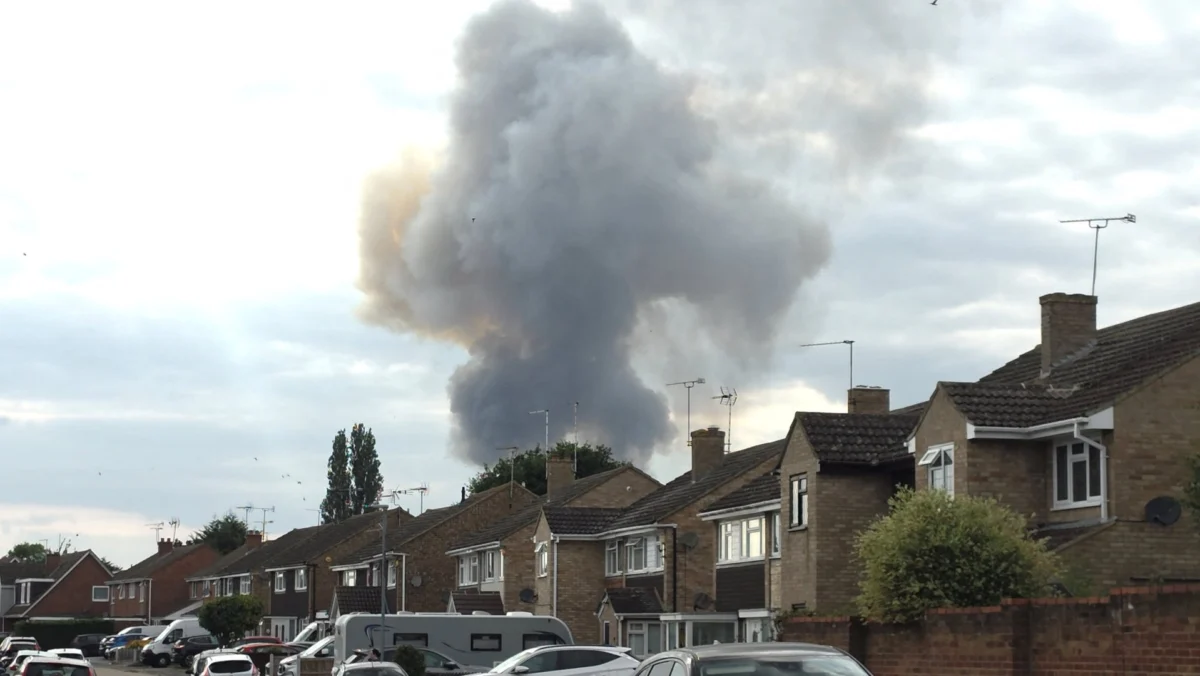
Fertilizer Explosion Ignites Major Industrial Fire in Essex
A significant explosion involving agricultural fertilizer at a farm in the rural heart of Essex, England, triggered a multi-agency emergency response on the morning of July 25, 2026. The detonation sent shockwaves through the surrounding countryside and ignited a substantial industrial fire that quickly consumed a large portion of the farm’s storage facilities. Fire services from across the county were mobilized, with initial reports indicating that over a dozen fire engines were on the scene at the height of the incident.
The blast occurred in the early morning hours, before most residents would have been awake, potentially mitigating the immediate risk of casualties. However, the ensuing fire presented a significant and evolving threat. Thick plumes of black smoke billowed into the sky, visible for miles around, raising immediate concerns about air quality and the potential spread of embers. Emergency responders were tasked with not only extinguishing the intense flames but also with establishing a robust perimeter to safeguard nearby homes and businesses.
Initial Response and Containment Efforts
The Essex County Fire and Rescue Service declared a "major incident" shortly after receiving multiple calls reporting the explosion and subsequent fire. The sheer scale of the blaze necessitated a coordinated effort, with resources drawn from neighboring fire authorities to bolster the on-site presence. Firefighters faced the challenging task of battling an inferno fueled by large quantities of combustible fertilizer, a substance known for its potential to exacerbate fires once ignited.
Initial efforts focused on containing the fire and preventing its spread to adjacent agricultural buildings and open fields. Water and foam were deployed in significant quantities, a testament to the intensity of the flames. The hazardous nature of the materials involved meant that firefighters had to operate with extreme caution, employing specialized equipment and protective gear to mitigate risks associated with potential secondary explosions and toxic fumes.
The Nature of Fertilizer Explosions and Fires
Agricultural fertilizers, particularly those containing ammonium nitrate, can be highly volatile under certain conditions. While typically stable when stored correctly, factors such as heat, contamination, or improper handling can increase their susceptibility to ignition and explosion. The chemical composition of these substances means that once a fire takes hold, it can burn with extreme intensity and release dangerous gases.
The incident in Essex highlights the inherent risks associated with the storage and handling of large volumes of agricultural chemicals. Farms, by their nature, often store significant quantities of such materials, making them potential sites for serious industrial accidents. The consequences can range from localized damage to widespread environmental and public health concerns, depending on the scale of the incident and the proximity of populated areas.
Timeline of Events and Key Developments
The incident unfolded rapidly on the morning of July 25, 2026. At approximately 6:30 AM local time, a powerful explosion was reported at the agricultural facility. Within minutes, emergency services began receiving a barrage of calls. Fire crews were dispatched immediately, arriving on the scene to find a rapidly developing and intense fire.
By 7:00 AM, the scale of the blaze was evident, prompting the declaration of a major incident. Additional resources were requested, and a multi-agency command structure was established, involving not only the fire service but also police, ambulance services, and local authority representatives. The primary objective was to establish a safe zone and begin the process of bringing the fire under control.
Throughout the morning and into the afternoon, firefighters continued their relentless efforts. The smoke plume remained a dominant feature of the landscape, prompting advisories for residents in nearby areas to stay indoors and keep windows and doors closed. Air quality monitoring was initiated to assess the potential impact of the fumes.
Public Impact and Safety Measures
The fertilizer explosion and subsequent fire had a tangible impact on the local community. While no immediate injuries were reported, the visual and auditory shock of the explosion, coupled with the pervasive smoke, caused considerable alarm. Road closures were implemented in the vicinity of the farm to facilitate emergency access and ensure public safety.
Local authorities issued guidance to residents, advising them to remain indoors, close windows and doors, and tune into local radio or official social media channels for updates. The presence of emergency services and the visible signs of the large-scale incident created a palpable sense of concern throughout the day. The long-term impact on the local environment, including potential soil and water contamination, would be a focus of ongoing assessment.
Broader Implications for Agricultural Safety
This incident serves as a stark reminder of the critical importance of stringent safety protocols within the agricultural sector, particularly concerning the storage and handling of hazardous materials like fertilizers. Regulatory bodies and industry associations will likely review existing guidelines in light of the Essex event, potentially leading to updated recommendations or stricter enforcement measures.
The economic implications for the farm involved are also significant. The destruction of storage facilities and the loss of fertilizer stock represent a considerable financial blow. Furthermore, any potential contamination of surrounding land could impact future agricultural productivity. The event may also lead to increased scrutiny of insurance policies and risk management strategies employed by farms across the country.
Expert Analysis and Future Concerns
Agricultural safety experts have noted that while such explosions are relatively rare, they underscore the need for continuous vigilance. Proper ventilation, segregation of incompatible materials, and regular inspections of storage facilities are paramount in preventing similar incidents. The age and condition of storage infrastructure, as well as employee training, are also crucial factors.
The environmental consequences of such a fire are another area of concern. Runoff from firefighting efforts could carry chemical contaminants into local waterways, requiring careful management and monitoring. The long-term health effects of exposure to the fumes, even at a distance, will also be a subject of study.
Conclusion: A Community’s Resilience and Ongoing Vigilance
The successful containment of the industrial fire following the fertilizer explosion in Essex demonstrated the effectiveness of coordinated emergency response. Firefighters worked under challenging and dangerous conditions to protect lives and property, a testament to their dedication and training. While the immediate crisis was managed, the incident leaves a legacy of questions regarding agricultural safety, environmental protection, and community preparedness. The focus now shifts to thorough investigation, environmental assessment, and the implementation of lessons learned to prevent future occurrences of such a devastating nature. The resilience of the affected community will be tested in the recovery and rebuilding phases, while the broader agricultural industry will undoubtedly engage in a renewed dialogue about safety and risk mitigation.