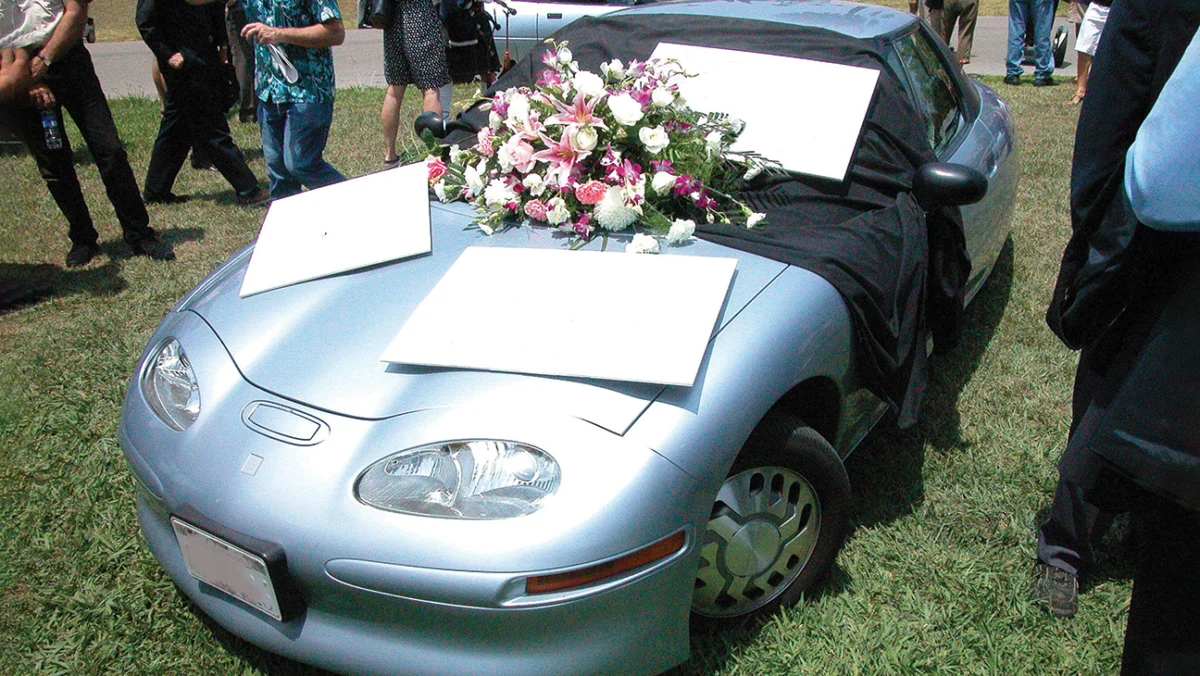
Two decades ago, as global events pushed gasoline prices to unprecedented highs, a timely and controversial documentary ignited public debate by posing a stark question: Who Killed the Electric Car? Filmmaker Chris Paine’s directorial debut, released amidst renewed concerns over fossil fuel dependence, investigated the perplexing disappearance of early mass-produced electric vehicles, particularly General Motors’ innovative EV1. The film quickly became a cultural touchstone, challenging corporate narratives and highlighting the complex forces that seemingly stifled a nascent revolution in automotive technology.
The Mid-2000s Energy Crisis and a Familiar Echo
The release of Who Killed the Electric Car? in 2006 coincided with a period of profound energy anxiety across the United States. Geopolitical instability in the Middle East, particularly the ongoing war in Iraq, had sent crude oil prices soaring, with gasoline costs at the pump reaching record levels. This economic pressure reignited widespread discussions about America’s reliance on foreign oil and the urgent need to explore alternative energy sources and sustainable transportation solutions. The documentary tapped directly into this public sentiment, presenting a narrative that resonated deeply with a population feeling the pinch of high fuel costs and seeking answers for why cleaner alternatives had failed to materialize. The parallels between the energy concerns of 2006 and today’s ongoing climate and energy debates remain striking, underscoring the film’s enduring relevance.
The Rise and Fall of the GM EV1
The central enigma explored by Paine’s film was the General Motors EV1, an ambitious project launched in 1996. Its existence stemmed largely from California’s pioneering Zero-Emission Vehicle (ZEV) mandate, introduced by the California Air Resources Board (CARB) in 1990. This regulation required automakers to produce a certain percentage of vehicles with zero tailpipe emissions for sale in the state. Faced with this mandate, GM invested heavily in developing the EV1, a sleek, two-seater coupe that was technologically advanced for its time.
The EV1 featured an impressive aerodynamic design, regenerative braking, and a range of approximately 70-100 miles on a single charge, depending on the battery type (initially lead-acid, later nickel-metal hydride). However, the vehicle was never sold; instead, it was offered exclusively through a lease program in California and Arizona. GM positioned it as a technological experiment, targeting environmentally conscious consumers and innovators. Despite a dedicated base of enthusiastic lessees who praised its performance and environmental benefits, GM abruptly discontinued the EV1 program in the early 2000s. In a move that shocked and angered its drivers, the company recalled all EV1s, citing a lack of profitability and insufficient consumer demand, before systematically crushing nearly all 1,117 units produced. This controversial decision fueled speculation and suspicion, forming the core mystery that Paine sought to unravel.
A Filmmaker’s Quest for Answers: Chris Paine and the Documentary’s Genesis
Chris Paine, an environmental activist and one of the devoted lessees of an EV1, found himself bewildered and frustrated by GM’s decision to recall and destroy the vehicles. Convinced that there was more to the story than simply a lack of demand, friends encouraged him to investigate, leading to the inception of Who Killed the Electric Car? Paine aimed to assess blame, meticulously examining the various stakeholders and factors that contributed to the EV1’s demise.
To bring his vision to life, Paine assembled a notable team. Veteran actor Martin Sheen lent his authoritative voice as the film’s narrator, reportedly donating his entire salary to charity. Producer Dean Devlin, known for blockbusters like Independence Day, joined the project, driven by his late father’s admiration for the EV1. Devlin’s connections proved invaluable, leading to the involvement of Mel Gibson, who spoke fondly about his personal experience with an EV1. The documentary also featured interviews with a diverse array of public figures, including environmental advocate Ed Begley Jr., consumer activist Ralph Nader, and even comedian Phyllis Diller, all offering their perspectives on the EV1’s potential and puzzling disappearance. Their collective voices underscored the broad interest and concern surrounding the issue.
Crafting the Narrative: Production and Industry Impact
The documentary gained significant traction even before its public release. Sony Pictures Classics acquired the project in November 2005, just prior to its acceptance into the prestigious Sundance Film Festival. Recognizing the film’s potential, Sony brought in Oscar-winning filmmaker Alex Gibney, fresh off the success of his Enron documentary, Enron: The Smartest Guys in the Room, as a consulting producer. Producer Jessie Deeter recalled a pivotal two-hour call with Gibney and Sony executives, where they provided extensive feedback that prompted a significant overhaul of the film. This collaborative process helped refine the narrative, creating a more compelling and cohesive "arc" for the investigation.
Following its "rousing" Sundance premiere, the film’s profile skyrocketed. Its trailer was strategically placed before screenings of Al Gore’s groundbreaking climate change documentary, An Inconvenient Truth, further amplifying its reach and impact. The high visibility and the film’s direct accusations against various entities, including major automakers, provoked a swift and strong reaction from General Motors. The automotive giant issued public statements attempting to discredit Who Killed the Electric Car?, denying its allegations and reiterating its official stance on the EV1’s discontinuation. This corporate pushback only served to highlight the documentary’s controversial nature and its ability to challenge powerful industry players.
Unmasking the "Killers": Theories and Counterarguments
The film meticulously explored several theories regarding the "killing" of the electric car, presenting a complex web of potential culprits. Paine’s investigation pointed fingers at various entities, including:
- Oil Companies: Accused of lobbying against ZEV mandates and promoting internal combustion engines to protect their vast financial interests in fossil fuels.
- Automakers (especially GM): Criticized for a perceived lack of commitment to the EV1, allegedly sabotaging its success through limited marketing, an unenthusiastic lease-only model, and ultimately, its controversial recall and destruction. The film suggested that traditional manufacturers feared the disruption EVs could bring to their profitable parts and service businesses.
- The U.S. Government: Implicated for weakening or abandoning crucial environmental regulations like the ZEV mandate under industry pressure, thereby removing the incentive for automakers to develop EVs.
- Consumers: While some were enthusiastic, the film also acknowledged a segment of the public that, at the time, was not yet ready for the perceived limitations of early EVs, such as range anxiety and limited charging infrastructure.
- Battery Technology: The film also addressed the technological hurdles of the era, acknowledging that lead-acid and early nickel-metal hydride batteries were expensive, heavy, and offered limited range compared to today’s lithium-ion advancements.
While the documentary presented a compelling case, critics argued that the "killing" was not a conspiracy but rather a complex interplay of economic realities, technological immaturity, and insufficient market demand at the time. The film undeniably sparked a critical examination of these factors, forcing a public dialogue about corporate responsibility and the future of clean transportation.
The Phoenix Rises: Tesla and the Electric Car’s Resurgence
In a moment of prophetic foresight, Who Killed the Electric Car? concludes on an optimistic note, featuring a brief shot of a prototype for the Tesla Roadster. This fledgling sports car, developed by a then-unknown startup led by Elon Musk, represented a glimmer of hope for the electric vehicle’s future. Indeed, within a few years, Tesla Motors would emerge as a disruptive force, proving that electric cars could be desirable, high-performance, and commercially viable.
Tesla’s success, coupled with advancements in lithium-ion battery technology, expanded charging infrastructure, and growing consumer awareness of environmental issues, effectively resurrected the electric car from its perceived grave. The company demonstrated that range anxiety could be mitigated and that EVs could offer superior performance and a compelling driving experience. This resurgence prompted Chris Paine to revisit the subject in a 2011 sequel, Revenge of the Electric Car, which celebrated the new wave of innovation and adoption.
A Refined Perspective: From "Death" to "Delay"
Looking back two decades later, Chris Paine offers a more nuanced perspective on the questions posed by his original film. He now acknowledges that electric vehicles weren’t truly "killed" in the early 2000s, but rather "delayed." The fundamental challenge, he explains, was not an inherent flaw in the technology or a lack of desire, but rather the difficulty companies faced in making them profitable with the technology and market conditions of the time.
Paine reflects that while the original film "asks the right question," it "maybe not the complete one." The shift from assigning blame to understanding economic viability and market readiness marks a maturation in the narrative surrounding EVs. The journey from the EV1’s controversial demise to today’s widespread EV adoption underscores a profound transformation in the automotive industry, driven by technological breakthroughs, evolving consumer preferences, and a renewed global commitment to sustainability.
The Enduring Legacy and Future of Electric Vehicles
The legacy of Who Killed the Electric Car? is multifaceted. The documentary undoubtedly played a significant role in raising public awareness about the potential of electric vehicles and the complex forces that can impede technological progress. It fueled public discourse, challenged corporate accountability, and arguably helped lay the groundwork for a more receptive market when next-generation EVs finally arrived.
Today, the electric car is no longer a niche experiment but a central pillar of the global push toward sustainable transportation. Major automakers are investing billions in EV development, governments are implementing ambitious emissions targets, and charging infrastructure continues to expand. While challenges remain, such as battery supply chains, raw material costs, and grid capacity, the narrative has shifted dramatically from one of "death" to one of inevitable, albeit sometimes difficult, progress. The questions posed by Paine’s documentary two decades ago continue to resonate, reminding us of the intricate interplay between innovation, policy, market forces, and public will in shaping the future of our planet.