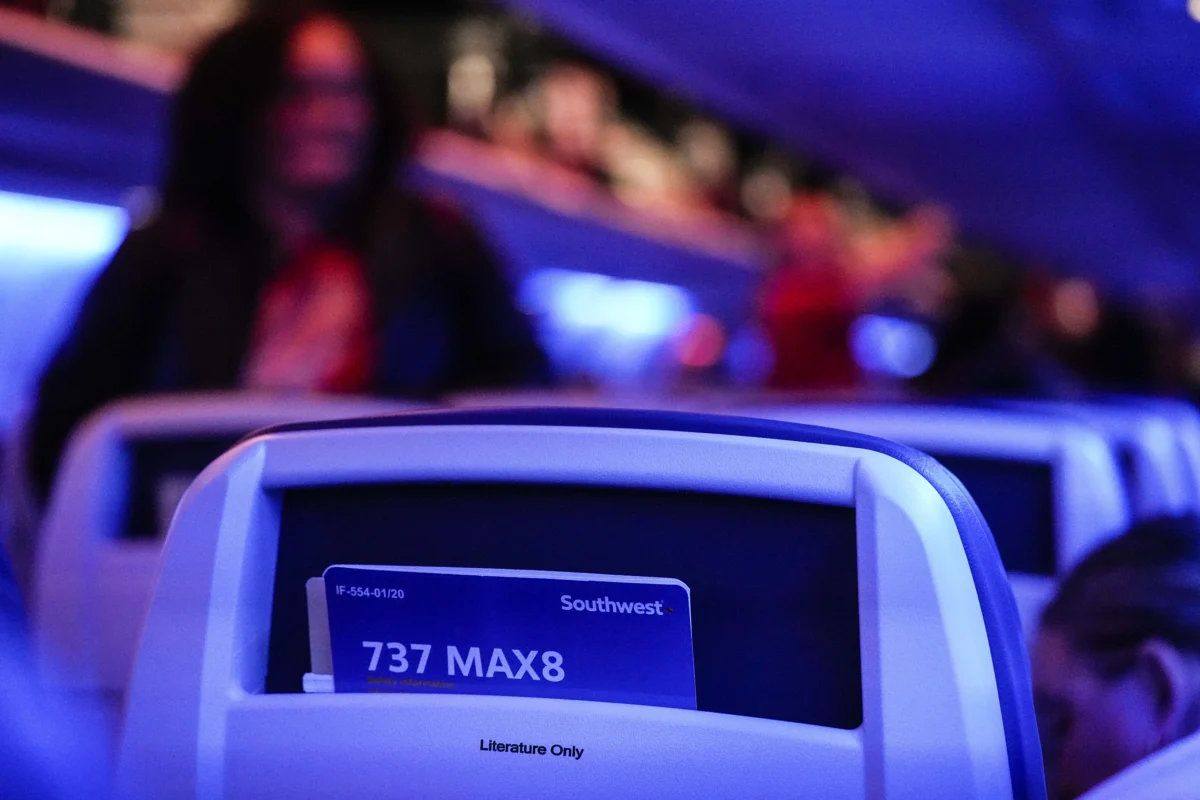
The Federal Aviation Administration (FAA) has issued a critical safety alert, proposing mandatory inspections for 453 U.S.-registered Boeing 737 MAX aircraft due to concerns that passenger seats may have been installed incorrectly. This regulatory action highlights ongoing safety scrutiny surrounding the aircraft manufacturer and could impact thousands of passengers if seats become dislodged during an emergency.
FAA Mandates Potential Inspections for Boeing 737 MAX Seats
The proposed directive from the FAA stems from the possibility that seats on a significant portion of the Boeing 737 MAX fleet operating within the United States may not have been secured according to proper installation procedures. The agency’s concern is that, in the event of a hard landing or emergency evacuation, these improperly installed seats could detach from the aircraft floor.
Such an event poses a dual threat to passenger and crew safety. Firstly, dislodged seats could become projectiles, causing injury to individuals onboard. Secondly, a compromised seat configuration might obstruct aisles, thereby hindering a swift and orderly evacuation of the aircraft. The FAA’s proposed rule specifically targets U.S.-registered planes, as it does not directly regulate foreign carriers. However, international aviation authorities often align their safety mandates with those issued by the FAA, especially when aircraft types are widely operated in their respective markets.
Boeing Acknowledges and Supports FAA Guidance
Boeing has acknowledged the issue, stating that it had previously issued guidance to its airline operators regarding seat installations in December 2025. A spokesperson for the aerospace giant confirmed that the company supports the FAA’s move to make this guidance a mandatory requirement. This collaborative stance suggests a commitment from Boeing to address the potential safety vulnerability proactively, aiming to rectify any discrepancies in seat installation across its fleet.
The company’s spokesperson conveyed this in an email to Reuters, emphasizing Boeing’s cooperative approach to the FAA’s proposed order. This development underscores the intricate relationship between aircraft manufacturers, regulatory bodies, and airlines in ensuring the highest standards of air travel safety.
A History of Heightened Scrutiny for Boeing
This latest warning from the FAA adds to a period of intense scrutiny for Boeing, particularly concerning the safety record of its 737 MAX aircraft. The air travel industry and the public have been closely following a series of incidents and investigations that have put Boeing under a microscope. The company has faced persistent questions about its manufacturing processes and quality control measures.
The most prominent incident that amplified these concerns occurred in January 2024, when a cabin panel detached from an Alaska Airlines 737 MAX 9 during flight. This harrowing event forced an emergency landing and led the FAA to ground 171 similar aircraft for immediate inspections. Subsequent investigations revealed a critical manufacturing defect: the panel was found to be missing four essential bolts that would have secured it in place.
Broader Safety Concerns and Investigations
The Alaska Airlines incident was not an isolated event and contributed to a broader pattern of safety concerns that have emerged globally. These include a spate of other accidents involving Boeing aircraft operating in various international markets, further intensifying the pressure on the company. The tragic death of Boeing whistleblower John Barnett in March 2024, while he was reportedly providing evidence for a safety lawsuit against the firm, also cast a somber shadow over the ongoing discussions about Boeing’s safety culture.
In June 2025, the U.S. National Transportation Safety Board (NTSB) released findings that criticized Boeing’s role in the Alaska Airlines incident. The NTSB concluded that the manufacturer had failed to provide adequate training, guidance, and oversight necessary to prevent such a catastrophic failure. These findings have been instrumental in shaping regulatory responses and pushing for more stringent oversight of Boeing’s operations.
The Global Reach of the Boeing 737 MAX Fleet
The Boeing 737 MAX is a cornerstone of modern commercial aviation, with a substantial global presence. According to data from aviation advisory and intelligence firm IBA, nearly 2,300 737 MAX jets are currently in operation worldwide. Of these, a significant portion, 823 aircraft, are based in the United States. This widespread deployment means that any safety issue affecting the 737 MAX has the potential to impact a vast number of travelers across continents.
The current proposed FAA mandate, focusing on U.S.-registered aircraft, directly addresses a substantial segment of this global fleet. The potential for incorrect seat installations on such a large number of aircraft underscores the complexity of maintaining safety standards across a globally distributed manufacturing and operational network.
Implications of Seat Installation Issues
The technical details surrounding the seat installation issue, while not fully disclosed in the initial FAA alert, point to a critical aspect of aircraft assembly and maintenance. Seats in commercial aircraft are not merely bolted to the floor; they are integrated into the structural integrity of the cabin floor and must withstand significant forces during flight and, critically, during emergency landing scenarios. The precise method of attachment, the type of fasteners used, and the torque applied are all subject to rigorous engineering specifications.
If seats are not installed according to these specifications, it could compromise their anchoring. This could range from using the wrong type of bolts to improper tightening sequences, or even a failure to engage all necessary attachment points. The consequences, as outlined by the FAA, are directly related to the dynamic forces experienced during a crash landing, where passenger seats must remain firmly in place to protect occupants and maintain evacuation pathways.
Regulatory Process and Public Impact
The FAA’s action is a proposed rule, meaning it is open for a period of public comment before being finalized. During this period, airlines, industry stakeholders, and the public can submit their feedback, which the FAA will consider before issuing a final order. This regulatory process is designed to ensure that safety directives are robust, practical, and based on comprehensive technical assessments.
For the traveling public, the immediate impact of this proposed rule is likely to be minimal in terms of flight disruptions. Airlines will be required to conduct inspections, which can often be performed during routine maintenance schedules. However, if the inspections reveal a widespread problem, airlines may need to undertake more significant remedial work, potentially leading to temporary flight cancellations or schedule adjustments. The overarching benefit for passengers is the enhanced safety assurance that comes from such proactive regulatory oversight.
The Broader Context of Aviation Safety
The ongoing scrutiny of Boeing and its 737 MAX program is part of a larger, continuous effort to enhance aviation safety. Regulatory bodies like the FAA and international counterparts are constantly evaluating aircraft designs, manufacturing processes, and operational procedures. Incidents, near misses, and even theoretical risks are meticulously analyzed to identify potential vulnerabilities before they can lead to accidents.
The evolution of aviation safety standards is a dynamic process, driven by technological advancements, operational experience, and a commitment to learning from past events. The current focus on seat installations on the 737 MAX is a testament to this ongoing dedication to minimizing risks and ensuring the well-being of air travelers worldwide. The industry’s ability to identify and address such issues, even those that appear minor at first glance, is crucial for maintaining public confidence in air travel.
Future Steps and Industry Response
Following the FAA’s proposed rule, the aviation industry will closely monitor the public comment period and the eventual finalization of the mandate. Boeing and its airline customers will work in tandem to implement any required inspections and repairs efficiently. The experience gained from this process will likely inform future manufacturing and maintenance protocols for the 737 MAX and potentially other aircraft models.
The transparency and responsiveness demonstrated by both the FAA and Boeing in addressing this potential safety concern are vital for the continued integrity of air travel. This proactive approach, even when dealing with a significant number of aircraft, reinforces the industry’s commitment to prioritizing safety above all else. The resolution of this issue will be a crucial step in further solidifying the safety record of the Boeing 737 MAX and rebuilding confidence in the aircraft and its manufacturer.