Former Australian Prime Minister Julia Gillard has issued a scathing condemnation of the political treatment of outgoing Victorian Premier Jacinta Allan, asserting that the state’s second female leader was the target of persistent and "vile sexism" throughout her tenure. Gillard, who made history as Australia’s first female prime minister, took to social media to defend Allan’s record, arguing that the departing premier faced a level of gender-based hostility that remains a systemic barrier for women in high office. The remarks have reignited a national conversation regarding the treatment of female politicians in Australia, specifically within the factional environment of the Victorian Labor Party.
Gillard’s intervention comes at a volatile moment in Victorian politics, following the sudden resignation of Jacinta Allan and the subsequent elevation of Ben Carroll to the premiership. In an Instagram post that quickly gained traction across political circles, Gillard described Allan as a "trailblazer" who prioritized the advancement of women and girls. She noted that while Allan would be remembered for her legislative and infrastructure achievements, her time in office was marred by a brand of misogyny that Gillard herself famously confronted over a decade ago.
Julia Gillard Denounces Vile Sexism in Victorian Politics
The former prime minister’s statement focused heavily on the unique challenges faced by women in executive leadership. Gillard argued that Jacinta Allan was subjected to vile sexism that often bypassed policy critique in favor of personal and gendered attacks. According to Gillard, Allan’s willingness to confront this behavior directly has served to pave a smoother path for future female leaders, even as she exits the premier’s office.

The rhetoric echoes Gillard’s own experiences in the federal arena. In 2012, Gillard delivered her "misogyny speech" on the floor of the Australian Parliament, a 15-minute rebuke of then-Opposition Leader Tony Abbott. That speech, which became a global viral sensation and inspired various cultural adaptations, established Gillard as a central figure in the global movement against sexism in politics. By framing Allan’s experience through the same lens, Gillard is highlighting what many advocates describe as a stagnant culture within Australia’s political institutions.
Gillard, who represented the Victorian electorate of Lalor for 15 years before moving into international advocacy for health and women’s rights, remains a deeply influential figure within the Labor Party. Her public support for Allan is seen by analysts as a move to protect the legacy of a leader who oversaw significant social reforms and a massive infrastructure build, even as internal party dynamics shifted against her.
Transition of Power and the Rise of Ben Carroll
The resignation of Jacinta Allan has led to a swift transition of leadership within the Victorian government. Ben Carroll, who previously served in senior ministerial roles, was selected to lead the state as the new premier. While Gillard was firm in her defense of Allan, she also extended congratulations to Carroll, noting his reputation for a strong work ethic and his focus on early childhood education.
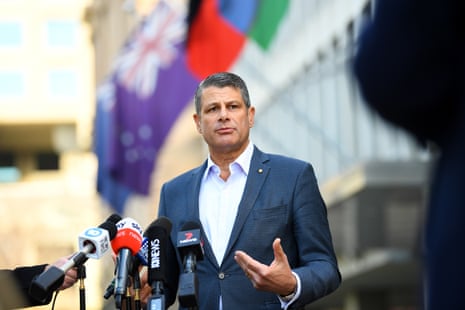
Former Victorian Premier Steve Bracks also weighed in on the transition, providing context on the internal pressures that led to Allan’s departure. Speaking on national radio, Bracks suggested that Allan had "no option" but to step down after losing the support of her parliamentary colleagues. Despite the abrupt end to her premiership, Bracks lauded Allan as one of the most significant contributors to Victorian public life since she was first elected in 1999.

Bracks indicated that the incoming premier, Ben Carroll, is likely to market himself as a "new type" of Labor leader. With a state election looming in November, Carroll faces the challenge of distancing himself from the controversies of the previous administration while maintaining the party’s core platform. Bracks noted that Carroll would attempt to frame his government not as a continuation of a fourth-term Labor ministry, but as a fresh start with a distinct set of policies and programs.
Royal Commission Into the Construction Sector Announced
One of the first major policy shifts under Premier Ben Carroll is the announcement of a royal commission into the Victorian construction sector. The move has received high-profile support from federal figures, including former Labor leader and union head Bill Shorten. Shorten characterized the decision as a necessary step to restore integrity to a sector that has been plagued by allegations of corruption and organized crime links.
The construction industry is a cornerstone of the Victorian economy, but it has recently come under intense scrutiny. Shorten, speaking in a televised interview, suggested that the "state mood" was ripe for such an inquiry. He pointed to the ballooning costs of public infrastructure projects and suggested that "something rotten" was occurring within the industry. By initiating a royal commission, Carroll is signaling a willingness to confront powerful interest groups, a move that Shorten described as serving the interests of all Victorians rather than playing simple politics.
Political experts suggest that a successful inquiry could bolster Labor’s electoral prospects by demonstrating a commitment to transparency. However, the commission also carries risks, as it may uncover deep-seated issues that reflect poorly on the government’s oversight of major projects during the previous decade.
Gangland Crime and International Justice: The Case of Kazem Hamad
As the state navigates a leadership transition, the shadow of organized crime continues to loom over Victoria. In a significant development for international law enforcement, former Melbourne gangster Kazem Hamad was recently sentenced to life in prison by a criminal court in Iraq. Hamad, believed to be a central figure in Melbourne’s violent "tobacco wars," was convicted of large-scale drug trafficking.
Hamad’s sentencing follows his deportation from Australia to Iraq in 2023. He was arrested earlier this year following an official request from the Australian government. According to the National Centre for International Judicial Cooperation, Hamad was one of the most wanted individuals globally, linked to transnational syndicates involved in murder, kidnapping, extortion, and money laundering.
The "tobacco wars" in Melbourne have been characterized by a series of firebombings and public shootings, as rival gangs fight for control of the illicit tobacco market. The life sentence handed to Hamad in Iraq is seen as a major blow to these criminal networks, though authorities warn that the vacuum left by his absence may lead to further instability within the underworld.
Scientific Research and Economic Pressures at CSIRO
The broader Australian landscape is also grappling with institutional changes driven by economic constraints. Doug Hilton, the chief executive of the CSIRO, Australia’s national science agency, is set to defend significant job cuts in an upcoming address to the National Press Club. The agency has announced plans to slash up to 350 research positions as it struggles with rising operational costs and a backlog of infrastructure repairs.

Hilton is expected to reveal that more than 80% of the CSIRO’s 800 buildings are no longer fit for purpose. Faced with a choice between maintaining a broad but underfunded research portfolio or narrowing the agency’s focus, leadership opted for the latter. The decision to exit certain areas of science has drawn criticism from the scientific community, but Hilton maintains that the agency must refocus to remain effective at scale.
The cuts at the CSIRO highlight a growing tension between the government’s desire for innovation and the reality of fiscal austerity. As the "cost of doing science" increases, national institutions are being forced to make difficult decisions about which sectors of research are prioritized for the future.
International Fiscal Cooperation: Australia and the UK
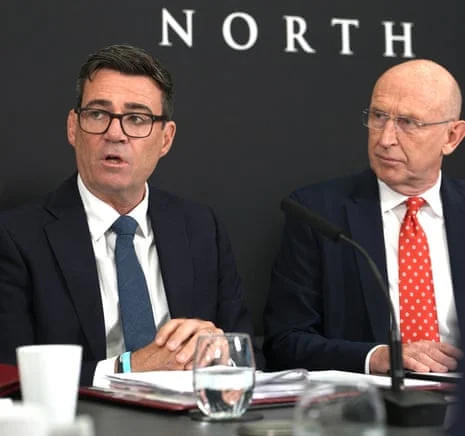
On the international stage, Australian Treasurer Jim Chalmers has initiated contact with the new leadership in the United Kingdom. Chalmers spoke with the newly appointed UK Chancellor, John Healey, following the rise of Andy Burnham to the role of British Prime Minister. The conversation marked the first high-level fiscal dialogue between the two nations under their respective new leadership teams.
Chalmers emphasized the importance of the Australia-UK relationship during a period of global economic uncertainty. The two officials discussed shared challenges, including inflation and the transition to renewable energy economies. Chalmers noted that the working relationship between the two treasuries would be vital in navigating the complexities of the global market in the months ahead.
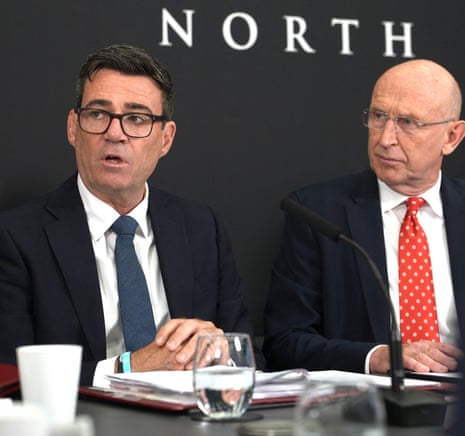
The dialogue underscores the ongoing alignment between the Australian Labor Party and the UK’s current administration. Both governments are navigating similar domestic pressures, including housing affordability and the need for industrial revitalization.
The Legacy of Jacinta Allan and the Path Forward
The departure of Jacinta Allan marks the end of a significant chapter in Victorian politics. As the state reflects on the "vile sexism" described by Julia Gillard, the focus remains on whether the culture of the political establishment will evolve under the leadership of Ben Carroll. Allan’s exit, though abrupt, leaves a legacy of massive infrastructure expansion and social policy shifts that have fundamentally altered the state.
The coming months will be a test for the new premier as he balances the demands of a royal commission, the pressures of a state election, and the need to maintain party unity. While the accusations of misogyny continue to stir debate, the immediate priority for the Victorian government will be convincing the electorate that it can provide stability and integrity in a rapidly changing political and economic environment.