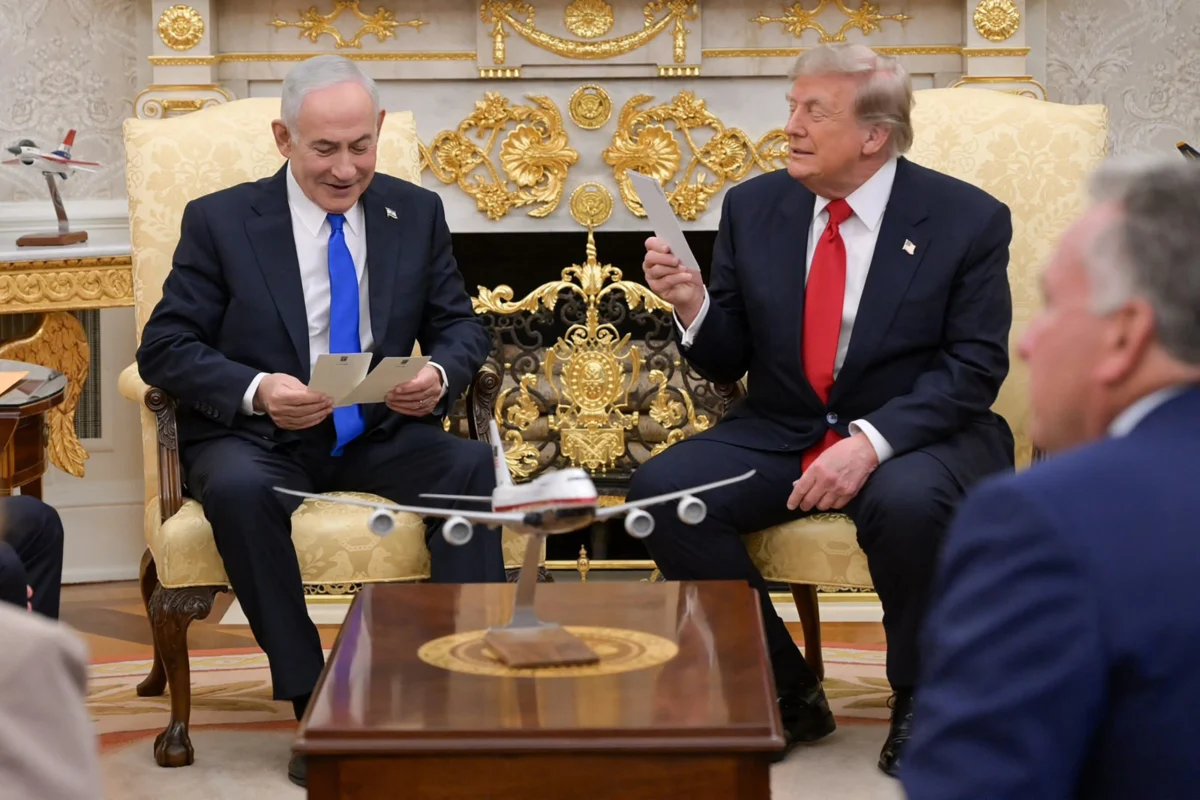
Iran launched a significant missile barrage targeting U.S. military installations across the Middle East on Wednesday, marking a dramatic escalation of regional tensions. The surprise attacks, confirmed by U.S. Central Command (CENTCOM), occurred as President Donald Trump was meeting with Israeli Prime Minister Benjamin Netanyahu at the White House, a confluence of events that analysts suggest signals Iran’s intent to assert its influence on diplomatic and military discussions.
The Islamic Revolutionary Guard Corps (IRGC) claimed responsibility for the missile strikes, describing them as an "attempted surprise attack on U.S. forces based in the Middle East." CENTCOM reported that multiple ballistic missiles were fired, but all were successfully intercepted by U.S. defenses. The statement emphasized that "U.S. forces remain vigilant and at a high state of readiness."
Iran’s Missile Barrage and Interceptions
According to the Jordan News Agency, five missile interceptions were reported over Jordanian airspace. The IRGC specifically stated that its air force had targeted a U.S. airbase and a Central Command center within Jordan, deploying "several ballistic missiles." This assertion from Iran directly contradicts the U.S. account of a complete interception, highlighting the fog of information in the ongoing conflict.
In a statement broadcast by Iran’s IRIB, the IRGC declared, "As long as threats against the Islamic Republic of Iran continue and illegal and vicious actions by American forces against our interests continue, the resistance will continue." This rhetoric underscores Iran’s strategic calculus, framing its actions as a response to perceived U.S. provocations and a commitment to continued resistance.
Resul Serdar, reporting for Al Jazeera from Tehran, characterized the latest escalation as a "pre-emptive attack, not a reactionary measure" by Iran. This perspective suggests a calculated move by Tehran to regain initiative rather than a spontaneous reaction to immediate events.
Geopolitical Context and Diplomatic Undertones
The timing of these Iranian attacks is particularly noteworthy, occurring concurrently with a high-profile meeting between President Trump and Prime Minister Netanyahu. Netanyahu has been a vocal advocate for a more aggressive stance against Iran, particularly concerning its nuclear program and regional influence. The meeting in Washington was expected to address these critical issues, making the Iranian missile strikes a direct challenge to the diplomatic dialogue.
"This is Iran sending a message to Trump that they need to be involved in all discussions," observed Alan Fisher of Al Jazeera from Washington, D.C. He added that reports from Israel indicated Netanyahu was eager to discuss what he termed "Pickaxe Mountain," a site where Israel believes Iran is developing another nuclear facility. This suggests that the U.S.-Iran missile exchange could complicate discussions regarding Iran’s nuclear capabilities and its regional military activities.
Jason Campbell, a senior fellow at the Middle East Institute, provided further analysis, suggesting that Tehran is "trying to retake the initiative and the momentum with these latest attacks." Campbell posited that Iran likely views the recent pause in U.S. strikes as a preparatory phase for renewed hostilities, prompting Iran to act proactively to disrupt such plans. This interpretation suggests a complex interplay of actions and reactions, where each side anticipates and attempts to counter the other’s strategic moves.
Impact on Oil Markets and Regional Stability
The confirmation of the Iranian attacks sent shockwaves through global energy markets. U.S. oil futures surged by more than 4 percent, surpassing $82 a barrel, while Brent crude futures climbed to over $88 a barrel. This sharp increase contrasts with earlier declines in oil prices on Tuesday, which had been attributed to the suspension of U.S. strikes and the prospect of renewed talks with Iran. The volatility in oil prices underscores the delicate balance of the global energy supply and its susceptibility to geopolitical instability in the Middle East.
The Strait of Hormuz, a critical chokepoint for global oil transport, has been a persistent source of tension between the U.S. and Iran. President Trump has frequently criticized Iran’s actions in the strait, including its alleged obstruction of some vessels. Iran, however, maintains its right to control shipping traffic through the waterway.
Hormuz Tensions Escalate with Tanker Incidents
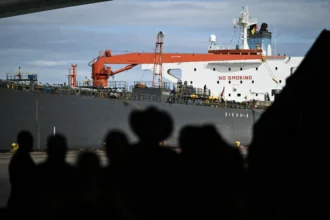
Adding to the day’s events, the IRGC announced that it had "struck and stopped" three oil tankers in the Strait of Hormuz. According to the Tasnim news agency, the tankers were apprehended for "continuing to move along an unsafe and illegal route, ignoring our warnings." This incident further inflames tensions in the vital waterway, raising concerns about the safety of commercial shipping.
Efforts to de-escalate tensions in the Strait of Hormuz have been ongoing, with Oman presenting Iran with a proposal for joint management of traffic. However, Iran has reportedly rejected this proposal. Deputy Iranian Foreign Minister Kazem Gharibabadi stated that Tehran rejected an equal division of transit routes, suggesting instead that Iran manage shipping on its side of the strait while Muscat would manage only a portion of the opposite lane. This disagreement highlights the complexities of establishing cooperative frameworks in the region and underscores Iran’s assertive stance on maritime control.
Broader Implications of Iranian Attacks on U.S. Bases
The series of Iranian attacks on U.S. bases represents a significant shift in the ongoing conflict, moving beyond proxy skirmishes to direct military engagement with American forces. The IRGC’s explicit targeting of a U.S. airbase and command center in Jordan indicates a deliberate effort to inflict damage and demonstrate capability. The interception of these missiles, while successful for U.S. forces, does not diminish the strategic message Iran sought to send.
The context of President Trump’s previous decision to call off a planned bombing campaign against Iran, citing "good talks," further complicates the narrative. This abrupt shift from de-escalation to renewed aggression suggests that Iran may perceive the U.S. pause not as a sign of diplomatic overture but as a strategic maneuver for future military action. Consequently, Iran’s response could be interpreted as an attempt to preemptively disrupt U.S. plans and assert its own agency in the conflict.
The involvement of Prime Minister Netanyahu in discussions with President Trump during these attacks adds another layer of complexity. Netanyahu’s government has consistently advocated for a firm stance against Iran, particularly regarding its nuclear ambitions and regional destabilization efforts. The timing of Iran’s strikes could be seen as an attempt to influence these high-level discussions and potentially derail any efforts towards de-escalation or negotiation that do not align with Iran’s interests.
The Role of Information Warfare and Perception
In the current geopolitical climate, the control and dissemination of information play a crucial role. Both Iran and the United States are engaged in a battle of narratives, seeking to shape international perceptions of the conflict. Iran’s claims of successful targeting, even if contested by U.S. officials, serve to bolster its image as a resilient adversary capable of challenging U.S. military superiority. Conversely, the U.S. emphasis on successful interceptions aims to project strength and deter further aggression.
The expert analysis suggesting that Iran’s actions were "pre-emptive" rather than "reactionary" points to a sophisticated strategic planning process. This implies that Iran is not simply responding to events but is actively shaping the conflict’s trajectory through calculated military actions. The objective appears to be not only to deter immediate U.S. actions but also to influence the broader geopolitical landscape and the terms of any future negotiations.
Future Trajectory and Potential Outcomes
The immediate aftermath of these attacks will likely be characterized by heightened alert levels across U.S. military installations in the region and intensified diplomatic activity. The U.S. response, both in terms of military posture and diplomatic pronouncements, will be closely scrutinized. The risk of miscalculation or unintended escalation remains significant, particularly given the charged atmosphere and the potential for retaliatory actions from either side.
The ongoing tensions in the Strait of Hormuz, coupled with Iran’s demonstrated willingness to target U.S. bases, create a volatile environment that could have far-reaching consequences. The impact on global energy markets, regional stability, and international relations will depend on how effectively leaders on all sides can manage the current crisis and whether pathways towards de-escalation can be found amidst the escalating rhetoric and military posturing. The confluence of military actions and high-level diplomatic meetings underscores the critical juncture at which regional security currently stands.