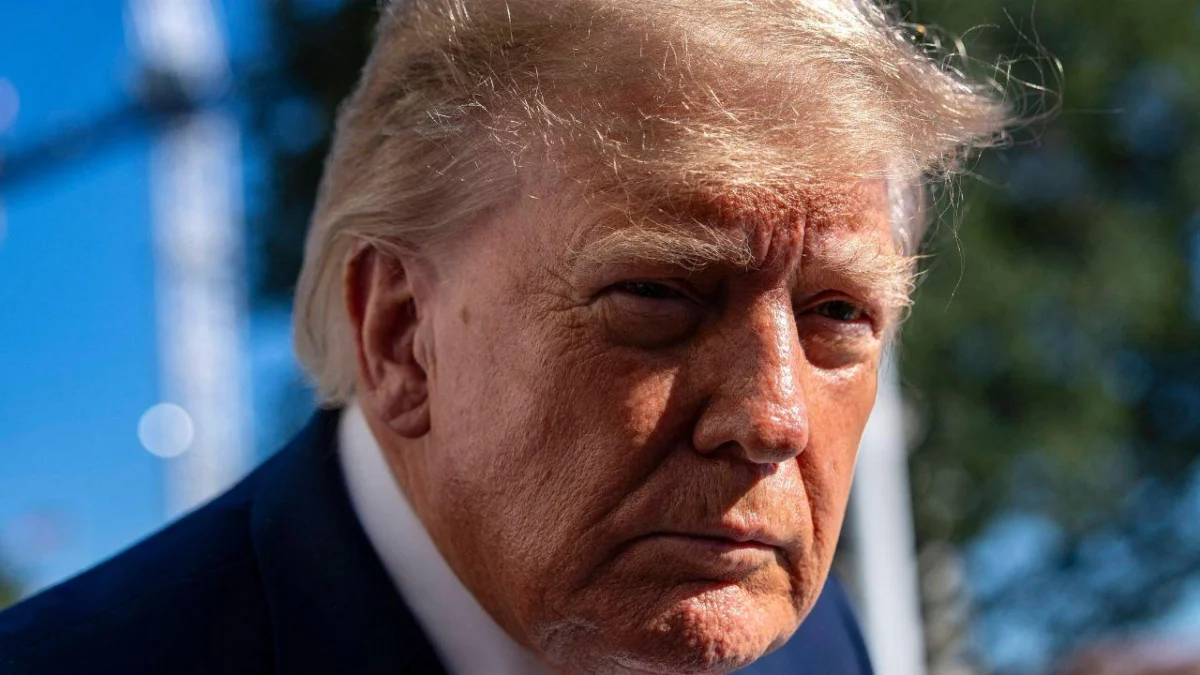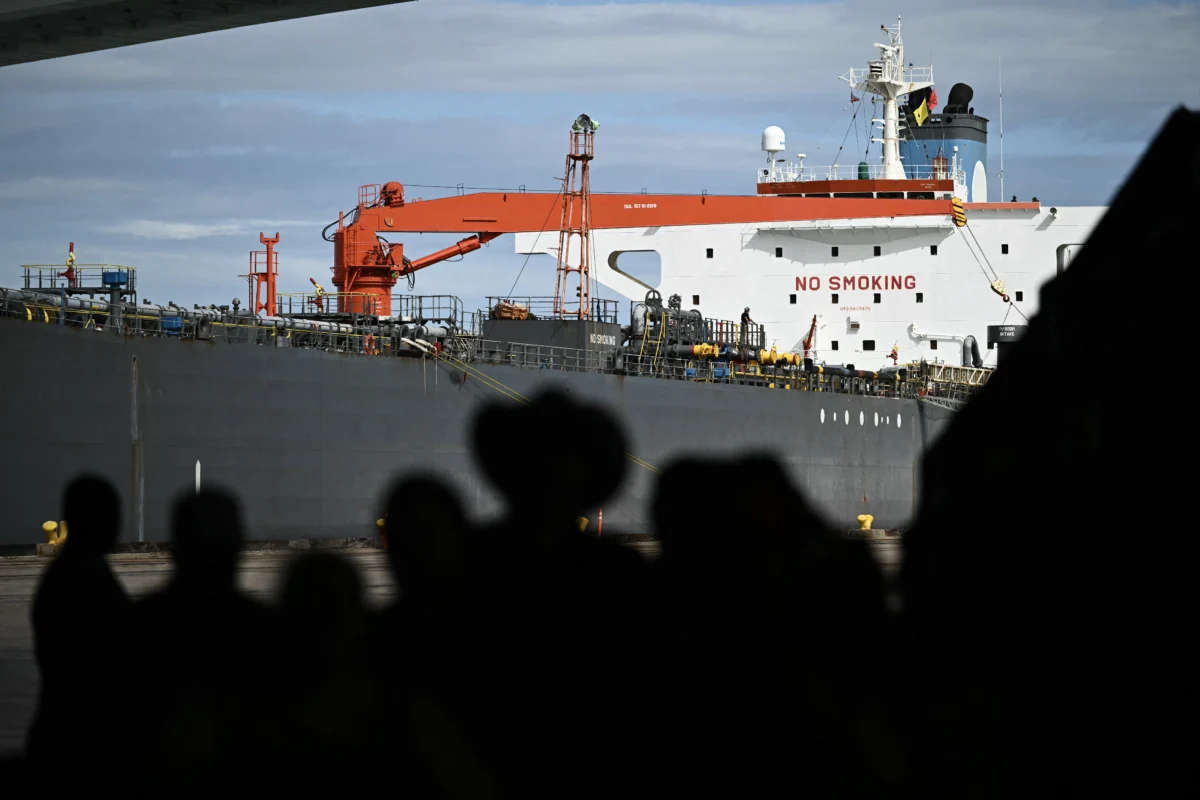
President Donald Trump utilized a recent visit to Corpus Christi, Texas, to highlight a ship he claimed was laden with Venezuelan oil, a move designed to energize his base and bolster Republican prospects in a pivotal Senate contest. The appearance underscored a broader campaign strategy that links foreign policy initiatives to domestic economic concerns, particularly as midterm elections loom.
During his remarks in the coastal city, Trump gestured toward a vessel in the distance, announcing, "It’s got 1 million barrels of oil on it from Venezuela." He attributed this development to what he termed a "big victory in our recent war with Venezuela," an assertion that raises questions about the nature of U.S.-Venezuelan relations and the specifics of the oil transfer. This focus on energy resources comes at a time when American consumers are grappling with elevated fossil fuel prices, a significant factor influencing voter sentiment in the upcoming midterm elections, further complicated by the ongoing U.S.-Israel conflict with Iran.
Trump proclaimed, "We’re celebrating the greatest oil victory in history," framing the Venezuelan oil shipment as a triumph for his administration’s energy policies and its assertive stance on the international stage. However, the precise circumstances under which the oil was shipped and the accuracy of the figures provided by the President remained unclear at the time of the report. Historically, the U.S. did receive crude oil shipments from Venezuela prior to the U.S. action leading to the apprehension of Venezuelan leader Nicolás Maduro on January 3. These transfers have reportedly seen an increase this year.
This display of Venezuelan oil occurs within a broader context of energy policy shifts and international engagement. In August, the Trump administration revealed a significant deal granting the Pentagon a 35 percent stake in North America Blue Energy Partners, a newly established entity tasked with managing an estimated 65 billion barrels of proven oil reserves in Venezuela. The White House had indicated in September that the initial shipment under this agreement was expected to reach U.S. reserves by November. Nevertheless, energy sector experts have expressed skepticism regarding the potential for this deal to yield substantial short-term impacts on the U.S. energy market.
Earlier in the day, speaking to reporters, Trump characterized the shipment as a "gift" from Venezuela, a statement that has not been directly addressed by Venezuela’s interim leader, Delcy Rodriguez, regarding the specific cargo. Adding a provocative element to his remarks, Trump also floated the idea of making Venezuela the "51st state," a hyperbolic suggestion intended to capture attention and underscore his administration’s ambitious foreign policy vision.
Texas Senate Race: A Crucial Battleground
President Trump’s repeated visits to Texas underscore the state’s critical importance for the Republican Party’s electoral strategy, particularly in the context of the upcoming midterm elections. The campaign’s focus on Texas is amplified by the highly contested Senate race, where incumbent Republican Senator John Cornyn faces a significant challenge.
Trump had previously endorsed Attorney General Ken Paxton in the Republican primary, bypassing the incumbent Senator Cornyn. Paxton, who has been embroiled in various scandals, now confronts a formidable opponent in Democrat James Talarico, a Presbyterian seminarian. Recent polling data consistently shows Talarico holding a lead over Paxton, although the margin has largely remained within the statistical margin of error. An average of polls compiled by RealClearPolitics indicated Talarico leading Paxton by 1.7 percentage points.
The potential victory of Talarico would signify a substantial political shift in Texas, a state that has not elected a Democrat to statewide office since 1994. Such an outcome would also represent a notable setback for President Trump and the Republican Party, which is striving to maintain its slim majority in the Senate. Concurrently, projections widely anticipate Democrats gaining control of the U.S. House of Representatives following the November 3rd vote.
Talarico’s Campaign Strategy and Affordability Concerns
In the final stretch of the campaign, Talarico has concentrated his efforts on highlighting the long-standing allegations of corruption against Paxton. His campaign narrative seeks to draw a stark contrast between his own platform and what he describes as the "broken, corrupt system" represented by Paxton. This approach directly addresses voter concerns about affordability and economic well-being, which have become central themes in the current political climate.
"Ken Paxton represents everything that’s wrong with this broken, corrupt system," Talarico stated during a recent event in Houston. He aims to position himself as an agent of change, appealing to voters disillusioned with the status quo and seeking accountability from elected officials.
Paxton’s Counter-Narrative and Trump’s Involvement
Conversely, Ken Paxton has attempted to frame Talarico as a "radical" candidate whose policies could negatively impact Texas’s pro-business environment. His campaign strategy focuses on portraying Talarico as out of step with the state’s economic ethos and traditional values.
President Trump and other administration officials, including Vice President JD Vance, have frequently employed cultural issues as a means to galvanize the Republican base. This strategy has involved misrepresenting Talarico’s past statements on sensitive topics such as transgender rights and border security, aiming to create a divisive narrative and mobilize conservative voters.
During his address in Corpus Christi, Trump reiterated these attacks, urging his supporters to participate in the election as if his own political future were directly on the ballot. "If you go out, and if you all vote, we win in a landslide," Trump declared, emphasizing the critical nature of the midterm elections for his administration and the broader Republican agenda.
Broader Economic and Geopolitical Context
The emphasis on Venezuelan oil by President Trump during his Texas visit cannot be viewed in isolation. It is intrinsically linked to the broader economic anxieties gripping the nation, particularly concerning energy costs. The ongoing conflict between the U.S. and Iran, which has disrupted global oil markets, has directly contributed to higher gasoline prices for American consumers. This economic pressure point is a central concern for voters as they head to the polls.
The administration’s engagement with Venezuela, a nation grappling with severe economic and political instability, also reflects a complex geopolitical strategy. While Trump touts the oil acquisition as a victory, critics question the long-term implications of such dealings, particularly concerning human rights and democratic governance within Venezuela. The U.S. has imposed sanctions on Venezuela aimed at pressuring the Maduro regime, yet the flow of oil suggests a pragmatic, albeit controversial, approach to securing energy resources.
The Significance of the Texas Senate Race
The Texas Senate race is more than just a contest for a single seat; it represents a potential tipping point in the balance of power in the U.S. Senate. A victory for Talarico would not only be a significant win for Democrats but would also send a strong message of dissent against the Republican Party’s current trajectory and President Trump’s influence. The Republican Party’s hold on the Senate is tenuous, making every race, especially in a large state like Texas, critically important for maintaining control.
The outcome of this race, alongside the broader midterm elections, will shape the legislative agenda and political landscape of the United States for the foreseeable future. The ability of the Republican Party to retain its Senate majority will significantly influence the scope of President Trump’s policy initiatives and his administration’s ability to confirm judicial nominees and pass key legislation.
Voter Engagement and the Midterm Mandate
President Trump’s rally in Texas aimed to harness the energy of his supporters and translate it into electoral victories. By focusing on tangible issues like energy resources and framing them within a narrative of national strength and economic prosperity, he sought to motivate voters to turn out in large numbers. The call to action, "If you go out, and if you all vote, we win in a landslide," underscores the administration’s belief that a high voter turnout among his base is crucial for securing Republican victories across the board.
The midterm elections are often viewed as a referendum on the incumbent president and his party. In this context, the administration’s efforts to link foreign policy successes, such as the acquisition of Venezuelan oil, to domestic economic benefits are a strategic attempt to bolster public confidence and secure a mandate for their continued governance. The narrative presented by Trump suggests that his assertive foreign policy is directly contributing to the economic well-being of the United States, a message intended to resonate with voters concerned about inflation and the cost of living.
The political machinations surrounding the Venezuelan oil shipment, the contentious Texas Senate race, and the broader economic anxieties facing the nation converge to create a high-stakes electoral environment. The decisions made by voters in Texas and across the country in the coming weeks will have profound implications for the future direction of American politics and its role on the global stage.