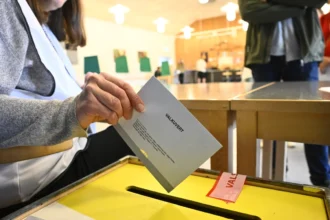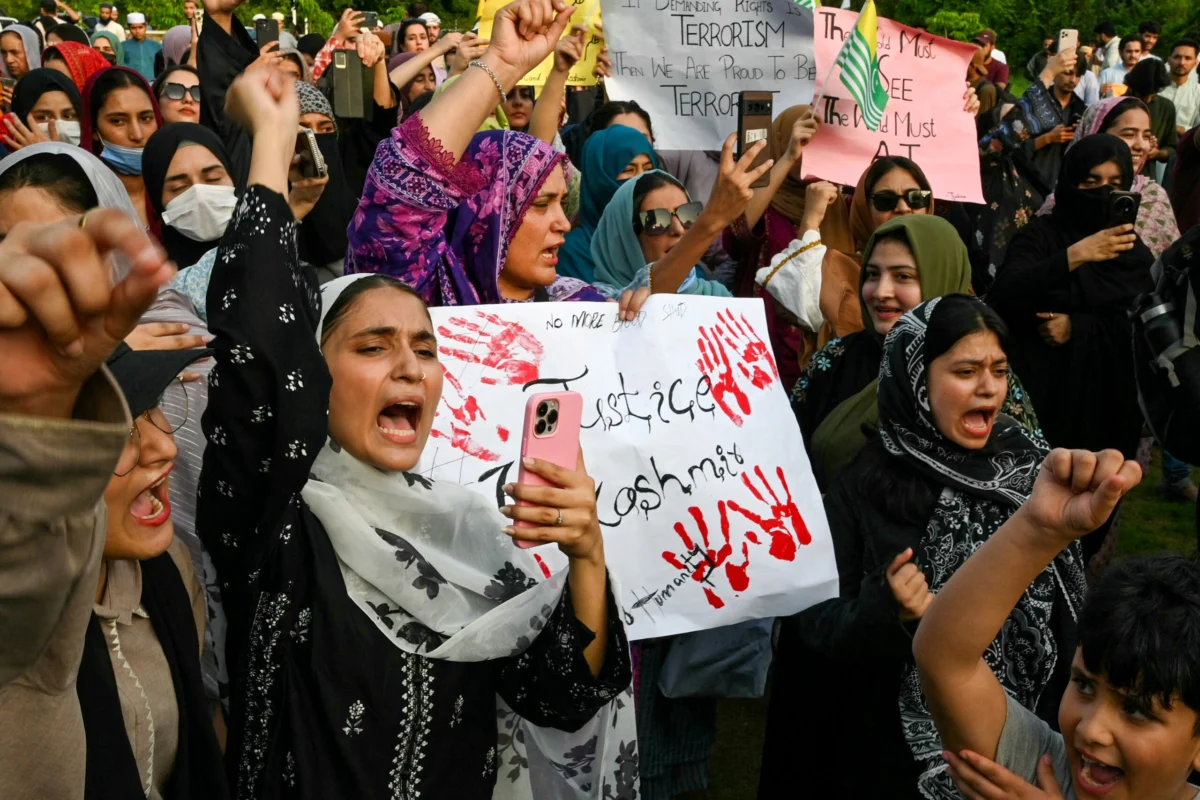
At least 30 people have died in Pakistan-administered Kashmir during the first round of regional elections, a prominent activist group reported, fueling concerns over escalating violence and the legitimacy of the electoral process. The Joint Awami Action Committee (JAAC), which has been boycotting the polls and staging protests, claims its supporters were among the fatalities. The clashes occurred as voters went to the polls on July 27, marking the beginning of a multi-phase election for the region’s legislative assembly.
The violence casts a dark shadow over the elections, which are crucial for determining the political landscape of Pakistan-administered Kashmir. The region, a territory disputed with India, has seen a surge in political activity and discontent in recent months. The JAAC, a coalition of various Kashmiri groups, has been at the forefront of protests demanding greater autonomy and an end to what they describe as discriminatory policies.
Sardar Umar Nazir, a member of the JAAC committee, detailed the casualties in a video statement, asserting that 20 of their activists were killed during a march on Monday, the day of the initial voting. He further reported that at least 10 other protesters lost their lives the following day in incidents across Rawalakot, Mirpur, and other towns, including during peaceful sit-in demonstrations. Nazir emphasized the non-violent nature of their demands, stating, "Our demand was peaceful, it was peaceful, we tried to keep it non-violent and bullets were fired at it."
Pakistani authorities, however, offered a different account of the clashes, confirming the death of one member of the security forces and injuries to five others during the protests on Monday. The government has alleged that armed elements, allegedly backed by India, infiltrated the protests to incite violence, accusations that India has consistently denied in similar contexts.
Human rights organizations have expressed grave concern over the reported use of lethal force against protesters. Amnesty International described the accounts as "disturbing" and called for an immediate and thorough investigation into the events. The organization has also been critical of the ban imposed on the JAAC, deeming it unlawful and arguing that it provides no justification for the state to employ deadly violence against its citizens.
The unrest is likely to significantly undermine the perceived legitimacy of the entire electoral exercise, according to Pear Pandya, a senior analyst at conflict monitor ACLED. The violence and the ensuing disruption to communication channels have made it difficult to independently verify the full extent of the situation on the ground. Internet and telecommunications services have been intermittently disrupted since the JAAC was banned in June, further complicating efforts to gather accurate information.
The first round of voting on July 27 covered the districts of Mirpur, Kotli, and Bhimber. The elections are scheduled to continue with two more rounds on August 2 and August 10. The Pakistan Muslim League-Nawaz (PML-N), Pakistan’s primary governing party, secured a significant victory in the initial phase, winning nine out of the 13 seats that were up for election.
Background to the Unrest in Pakistan-Administered Kashmir
The current wave of protests and the subsequent crackdown stem from broader grievances within Pakistan-administered Kashmir concerning political representation and economic development. The JAAC emerged as a powerful voice for these concerns, bringing together various trade unions, student groups, and civil society organizations. Their activism gained momentum following a series of economic policies and political decisions perceived as detrimental to the region’s interests.
The banning of the JAAC by the local government in June under "anti-terrorism laws" was a pivotal moment, triggering widespread demonstrations. These protests, which had already resulted in fatalities before the election period, highlighted deep-seated discontent. The government’s justification for the ban and subsequent actions often centers on claims of external interference and the presence of anti-state elements, a narrative that has been met with skepticism by human rights advocates and independent observers.
The disruption of essential services, including banking, road networks, and internet access, has had a tangible impact on the daily lives of residents, exacerbating feelings of isolation and marginalization. These disruptions not only hinder economic activity but also limit the ability of citizens to communicate and organize, further fueling tensions.
The Issue of Reserved Seats and Electoral Integrity
A central demand of the JAAC, directly impacting the regional elections, is the abolition of 12 assembly seats specifically reserved for Kashmiri refugees. These seats, according to JAAC supporters, are disproportionately used by major Pakistani political parties to influence the composition of the local parliament. Individuals residing outside the region, often in Pakistan proper, are eligible to contest and hold these seats, leading to accusations that the regional assembly’s mandate is being diluted by external interests.
The political dynamics of forming a regional government are intricately linked to these reserved seats. Political analyst Hasan Askari noted that the PML-N, despite its electoral success, would likely require the support of some of these 12 representatives to form a stable government. This dependence on seats perceived as "controversial" raises questions about the government’s ability to address the underlying issues that the JAAC advocates for, including the equitable representation of all segments of the Kashmiri population.
Beyond the boycott and protests, the electoral process itself has been marred by accusations of irregularities. Even among candidates who participated in the vote, allegations of "ballot box stuffing" and vote rigging were leveled by various political parties, further eroding public trust in the fairness of the elections.
International Scrutiny and Calls for Investigation
The escalating violence in Pakistan-administered Kashmir has drawn the attention of international human rights bodies and conflict monitors. Amnesty International’s call for an investigation into the use of force underscores the gravity of the situation and the need for accountability. The organization has also urged Pakistani authorities to reinstate full communication access and permit media and independent observers to enter the region, emphasizing the importance of transparency and unfettered access to information.
Isabelle Lassee, the acting regional director for South Asia at Amnesty International, stated the need for Pakistani authorities to restore all communications access and allow media and independent observers into the area. This call for openness is critical for independently assessing the human rights situation and ensuring that international standards are upheld.
The conflict monitor ACLED’s assessment that the violence will "overshadow the legitimacy of the entire electoral exercise" highlights the potential long-term consequences for governance and stability in Pakistan-administered Kashmir. A flawed or contested election outcome could deepen existing political divisions and further disenfranchise segments of the population.
Broader Implications and Future of Pakistan-Administered Kashmir
The current unrest in Pakistan-administered Kashmir is not merely an isolated incident but reflects a broader struggle for political voice and self-determination within the region. The demands of groups like the JAAC resonate with a segment of the population that feels marginalized and inadequately represented by the current political structures.
The Pakistani government faces a complex challenge in balancing its security concerns with the fundamental rights of its citizens to peaceful assembly and expression. The heavy-handed approach, including the ban on the JAAC and the reported use of force, risks alienating the local population further and potentially fueling greater dissent.
The outcome of the ongoing electoral process will have significant implications for the future governance of Pakistan-administered Kashmir. If the elections are perceived as unfair or illegitimate due to the violence and the unresolved issues surrounding reserved seats, it could lead to prolonged instability and increased political fragmentation.
The international community, while often hesitant to intervene directly in such matters, is closely watching the developments. The calls for investigations and the emphasis on human rights standards by organizations like Amnesty International signal a growing international awareness of the situation. The ability of Pakistan to manage these internal challenges with respect for human rights and democratic principles will be crucial for its regional standing and the long-term stability of Pakistan-administered Kashmir. The ongoing electoral process, even with its controversies, represents a critical juncture for the region, with the potential to either pave the way for a more inclusive political future or exacerbate existing tensions.